Dinner · Part 2 of 3: Instructions
Creamy Queso Chicken Enchiladas for a Quick Weeknight Dinner Step-by-step instructions
- Prep
- Cook
- Total
- Serves
- 6
Before you start
Before beginning the assembly, ensure your chicken is fully cooked and shredded to your preferred consistency. If using cold chicken from the refrigerator, let it sit on the counter for about 15 minutes to take the chill off, which helps the dish heat more evenly in the oven.
Prepare your workspace by laying out the tortillas, a spoon for the filling, and your baking dish, making sure everything is within easy reach to keep the process efficient and organized. Have your garnishes chopped and ready so you can finish the dish immediately after it comes out of the oven.
Ingredients at a glance (5)
- 3 cups cooked shredded chicken
- 6 flour tortillas
- 2 cups queso dip
- 1/4 cup diced tomatoes
- 1 tbsp fresh parsley, chopped
Instructions
Preparation of the filling
- Prepare the fillingIn a large mixing bowl, combine the shredded chicken with a small portion of the queso dip to ensure the filling is moist and flavorful. Stir well until the chicken is thoroughly coated in the creamy sauce.Look for The chicken should be evenly coated with the cheese sauce and have a spreadable consistency.Tip Adding a bit of sauce to the chicken filling helps keep the enchiladas from drying out during the baking process.
At this stage, the chicken should be thoroughly mixed with the queso. The mixture should feel moist and look uniform, with no dry patches of chicken visible. Everything should be ready for the assembly process, and your workspace should be clean and organized for quick rolling.
Assembly of the enchiladas
- Assemble the enchiladasSpoon the chicken mixture into the center of each flour tortilla. Roll each tortilla tightly and place them seam-side down in a baking dish. Pour the remaining queso dip over the top of the arranged enchiladas, spreading it to cover them completely.Look for The enchiladas should be packed snugly in the baking dish with enough sauce to coat them thoroughly.Tip Do not overfill the tortillas, as this makes them difficult to roll and more likely to split during baking.
The enchiladas should be rolled tightly and placed seam-side down in the baking dish to prevent them from unrolling during the cooking process. The entire surface of the enchiladas should be evenly covered with the remaining queso dip, ensuring no dry spots remain on the tortillas.
Baking and final garnish
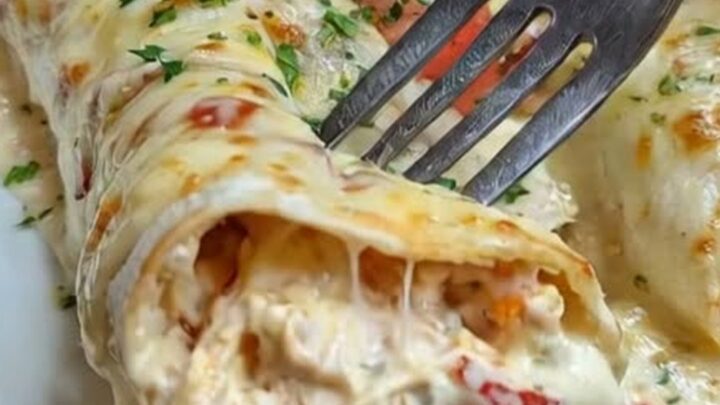
- Bake and garnishBake in a preheated oven at 350°F (175°C) until the cheese is bubbling and the chicken reaches an internal temperature of 165°F (74°C). Remove from the oven, top with diced tomatoes and fresh parsley, and let rest for 5 minutes before serving.Look for The cheese should be melted and bubbly, with the edges of the tortillas slightly golden brown.Safe temperature 165°F (74°C) internal temperature (poultry)Tip Letting the dish rest briefly allows the sauce to set slightly, making it easier to serve without the enchiladas falling apart.
Check that the cheese is bubbling across the entire surface of the dish. The fragrance should be rich and savory. Once the internal temperature reaches 165°F (74°C) and the garnish is added, the dish is ready to be served while still warm and creamy.
Common mistakes
A common mistake is overfilling the tortillas, which causes them to tear or overflow in the pan. Another error is using a baking dish that is too small, which results in uneven cooking and soggy tortillas.
Avoid skipping the resting period after baking, as this is crucial for the sauce to settle; serving too soon makes the enchiladas difficult to plate cleanly.
Finally, ensure the oven is fully preheated to the correct temperature before placing the dish inside, as this ensures the cheese melts evenly without drying out the chicken.
How to tell it’s done
The enchiladas are ready when the queso is bubbling vigorously and the internal temperature of the chicken reaches at least 165°F (74°C). The edges of the tortillas should appear soft but slightly firm, and the entire dish should be heated through.
Use a digital meat thermometer to verify the temperature in the center of the dish to ensure safety. Once the bubbling subsides slightly after resting, the texture will be perfectly creamy, indicating that the dish is at its peak quality for serving.
- Poultry: 165°F (74°C) in the thickest part
Up next · Part 3 of 3
2 variations · storage & make-ahead · 3 answers · printable card
Tips, FAQ & printable recipe (Part 3)← Back to the ingredients (Part 1)