Dinner · Part 2 of 3: Instructions
Creamy Ham and Cheddar Pasta Shells Bake Step-by-step instructions
- Prep
- Cook
- Total
- Serves
- 6
Before you start
Before beginning the assembly, preheat the oven to 375°F (190°C) to ensure it reaches the proper temperature for consistent baking. Gather all ingredients and prepare the ham by cutting it into uniform, bite-sized cubes. Ensure the baking dish is clean and dry.
Have the measuring cups and whisk ready to combine the liquid ingredients efficiently. Having everything measured and ready to go allows for a smooth assembly process, ensuring the pasta does not sit too long after being placed in the baking dish before the liquids are added.
Ingredients at a glance (6)
- 1 lb medium pasta shells
- 2 cups cooked ham cubes
- 2 cups whole milk
- 1 cup chicken broth
- 1 tbsp Dijon mustard
- 3 cups shredded sharp cheddar cheese
Instructions
Assembly of ingredients
- Prepare the pasta basePreheat the oven to 375°F (190°C). In a large 9x13-inch ceramic baking dish, combine the uncooked medium pasta shells with the cubed cooked ham. Spread the mixture evenly across the bottom of the dish to ensure even cooking during the baking process.Look for The pasta and ham should be distributed in a single, even layer across the baking dish.Tip Ensure the baking dish is large enough to prevent the liquid from bubbling over in the oven.
At this stage, the pasta and ham are evenly distributed in the baking dish. The surface should look uniform, with the cubes of ham tucked between the shells. This initial setup is crucial for ensuring that every portion served contains a balanced amount of both pasta and ham. Check that the baking dish is placed on a flat, stable surface before adding any liquids to avoid spills during the transition to the oven.
Incorporating the sauce
- Add the liquid and cheeseIn a separate medium bowl, whisk together the whole milk, chicken broth, and Dijon mustard until fully combined. Pour this mixture over the pasta and ham in the baking dish. Finally, sprinkle the shredded sharp cheddar cheese evenly over the top of the pasta, covering it completely.Look for The liquid should mostly submerge the pasta shells, and the cheese should form a thick, uniform crust.Tip Whisk the mustard thoroughly into the liquids to avoid clumps in the final sauce.
Once the milk, broth, and mustard mixture is poured over the shells, the dish should look well-hydrated. The liquid should reach about three-quarters of the way up the pasta.
After adding the cheese, the surface should be completely covered in a thick, even layer of shredded cheddar. At this point, the dish is ready for the oven, and the focus shifts to ensuring the baking time is monitored to achieve the desired golden brown finish.
Final baking and browning
- Bake until goldenPlace the baking dish into the preheated oven and bake for approximately 35 minutes, or until the pasta is tender and the cheese topping is golden and bubbling. Remove from the oven and allow it to rest for at least 5 minutes before serving to let the sauce thicken slightly.Look for The edges should be bubbling vigorously and the cheese on top should be melted and lightly browned.Tip Cover loosely with aluminum foil if the cheese begins to brown too quickly before the pasta is fully cooked.
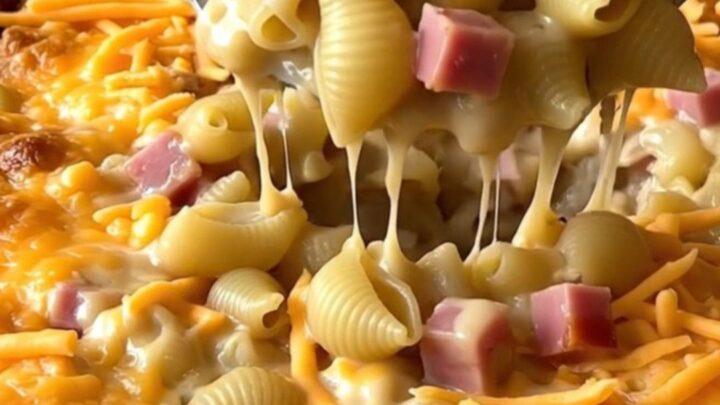
When the baking is complete, the entire surface of the dish should be golden and bubbling. The cheese should show signs of browning, and the sauce should have thickened considerably. The aroma should be savory and comforting. Upon testing a shell, it should be tender to the bite, and the sauce should cling to the pasta. If the top browns too quickly, a loose tent of foil can be used for the final few minutes.
Common mistakes
A common mistake is failing to fully cover the pasta with the liquid mixture. Ensure all shells are submerged or at least partially moistened to prevent them from drying out or becoming crunchy during the baking process.
Another error is overcrowding the dish, which can lead to uneven cooking. Using a dish that is too small can also result in the sauce bubbling over the sides, causing a mess in the oven. Always double-check the oven temperature to ensure the cheese melts properly without burning.
How to tell it’s done
The dish is considered done when the pasta shells have reached an al dente texture and are fully cooked through. The sauce should be thickened and creamy, with the cheese topping melted and golden brown across the surface.
When a spoon is inserted, the sauce should appear cohesive rather than watery. Allow the dish to rest for 5 minutes after removing it from the oven to let the sauce set properly, which makes it easier to serve and ensures the perfect consistency in every scoop.
Up next · Part 3 of 3
2 variations · storage & make-ahead · 3 answers · printable card
Tips, FAQ & printable recipe (Part 3)← Back to the ingredients (Part 1)