Dinner · Part 1 of 3: Ingredients
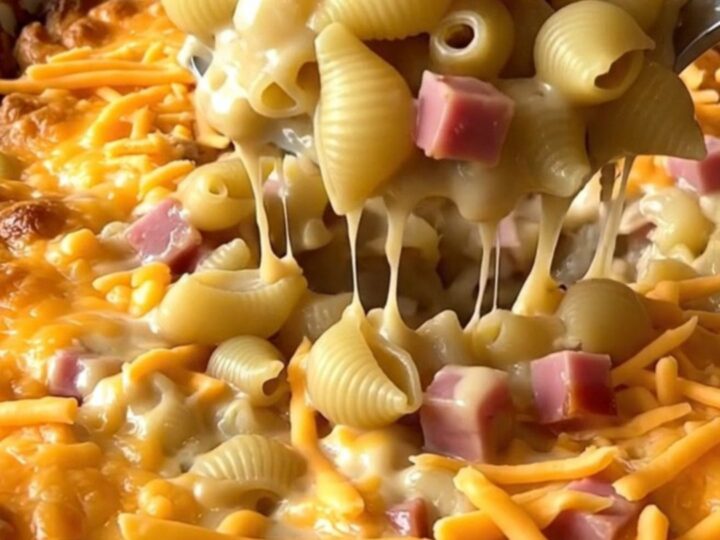
Creamy Ham and Cheddar Pasta Shells Bake
- Prep
- Cook
- Total
- Serves
- 6
Master the art of the perfect one-pan dinner with this creamy ham and cheddar pasta shells bake. By cooking the pasta directly in a savory Dijon-infused sauce, every bite absorbs maximum flavor, resulting in a dish that is both incredibly simple to prepare and deeply satisfying for any weeknight meal.
This method minimizes cleanup while delivering a restaurant-quality texture that will have everyone reaching for a second helping of this comforting, cheesy classic.
This recipe simplifies dinner by combining pasta, protein, and a rich sauce in one single dish. By baking the shells in a mixture of milk, broth, and tangy mustard, the starch from the pasta naturally thickens the sauce, creating a silky consistency that clings to every noodle.
Topped with a generous layer of sharp cheddar, the dish develops a beautiful golden crust that contrasts perfectly with the creamy interior. It is the ideal solution for busy evenings when a warm, home-cooked meal is the priority, requiring very little active time to achieve excellent results.
Ingredients
- 1 lb medium pasta shells
- 2 cups cooked ham cubes
sauce
- 2 cups whole milk
- 1 cup chicken broth
- 1 tbsp Dijon mustard
- 3 cups shredded sharp cheddar cheese
Why this recipe works
The primary advantage of this method is the starch release from the uncooked pasta. As the shells simmer in the milk and broth mixture, they release starches that emulsify with the dairy and mustard, creating a velvety sauce without the need for a traditional flour-based roux. This technique ensures that the flavor is cooked directly into the pasta rather than just coating the surface, resulting in a more cohesive and deeply savory dish.
Additionally, the baking process allows for the simultaneous cooking of the pasta and the development of the cheese crust. By using a controlled oven temperature, the heat penetrates the dish evenly, ensuring the ham cubes stay tender and the cheese melts into a stretchy, golden layer.
This approach simplifies the cooking process significantly, as the oven performs most of the work, allowing for a hands-off experience that produces consistent, reliable results every time.
Notes and substitutions
When selecting ingredients, opt for a high-quality sharp cheddar to provide the best flavor profile. Pre-shredded cheese often contains anti-caking agents that can affect the melt quality, so shredding a block of cheddar at home is recommended for the smoothest sauce.
The Dijon mustard is essential for cutting through the richness of the milk and cheese, providing a subtle tang that balances the overall profile of the dish without overpowering the other components.
Regarding equipment, a heavy-duty ceramic or glass baking dish is ideal for this recipe, as it retains heat well and promotes even cooking. Ensure the dish is deep enough to accommodate the liquid volume, as the pasta will expand as it absorbs the sauce. If the pasta seems to be drying out before it reaches the desired tenderness, a small splash of additional broth can be added during the final minutes of the baking cycle.
- chicken broth: vegetable broth or additional milk for a creamier texture
- sharp cheddar: gruyere or fontina for a different melting profile
Equipment
- 9x13-inch ceramic baking dish
- mixing bowl
- whisk
- measuring cups
- serving spoon
Up next · Part 2 of 3
3 steps · 35 min of cooking · what to look for at each stage
Step-by-step instructions (Part 2)