Dinner · Part 1 of 3: Ingredients
Creamy Garlic Parmesan Fettuccine Alfredo in 20 Minutes
- Prep
- Cook
- Total
- Serves
- 4
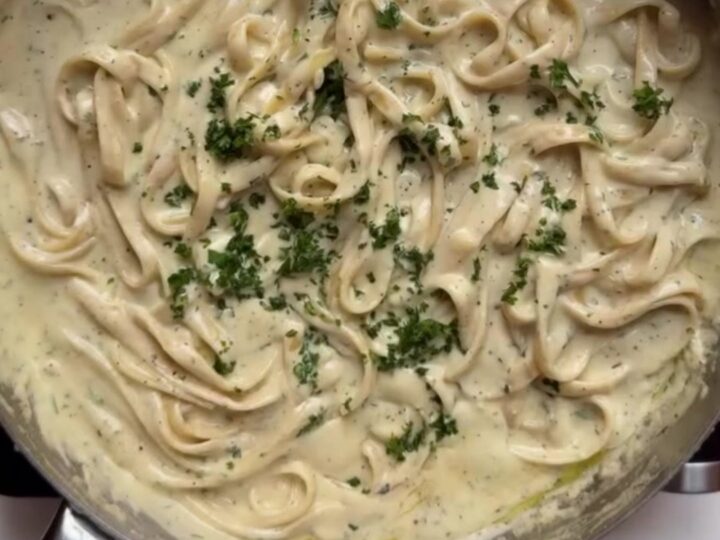
This stovetop fettuccine Alfredo is the antidote to jarred sauce: a silky, garlicky, Parmesan-laced sauce that clings to every ribbon of pasta. The secret is starchy pasta water, which transforms butter and cheese into a glossy emulsion without any cream. In just 20 minutes, you get a restaurant-quality bowl of comfort that tastes far more indulgent than it is.
There’s something deeply satisfying about a bowl of fettuccine Alfredo that’s made from scratch. The sauce comes together in the time it takes to boil pasta, using just butter, garlic powder, herbs, and a generous shower of Parmigiano Reggiano. The starch from the pasta water binds everything into a silky, velvety coating that hugs every noodle.
This recipe skips the heavy cream and relies on technique, yielding a sauce that’s both lighter and more intensely flavored than the classic. It’s the kind of weeknight dinner that feels special enough for a date night but simple enough for a busy Tuesday.
Ingredients
- 8 oz dry fettuccine pasta
- 1 tbsp kosher salt, plus more to taste
- 1 cup starchy pasta water, reserved
Sauce
- 3 tbsp unsalted butter
- 1 tsp garlic powder
- 1 tsp dried Italian herbs
- 1 cup freshly grated Parmigiano Reggiano
For serving
- Freshly cracked black peppercorns, for serving
- Minced flat-leaf parsley, for serving
Why this recipe works
The magic of this Alfredo lies in the starchy pasta water. When you cook fettuccine, the water absorbs starch from the pasta, turning cloudy and slightly viscous.
That starch acts as an emulsifier, helping the butter and cheese form a stable, creamy sauce that clings to the noodles instead of pooling at the bottom of the bowl. It’s the same technique used in many Italian pasta dishes, and it creates a sauce that’s both silky and light.
Using garlic powder rather than fresh garlic gives a mellow, rounded flavor that doesn’t overpower the Parmesan. Fresh garlic can be harsh and sometimes bitter when cooked briefly, but garlic powder dissolves into the butter and infuses the sauce evenly.
Combined with dried Italian herbs, it adds a savory depth that complements the nutty, salty cheese without masking it.
Notes and substitutions
The quality of the Parmesan matters here. Buy a wedge of Parmigiano Reggiano and grate it yourself on a microplane or the fine holes of a box grater. Pre-shredded cheese is coated with anti-caking agents that prevent it from melting smoothly, leaving you with a grainy sauce. Freshly grated cheese melts into a silky emulsion that coats the pasta beautifully.
Reserve a full cup of pasta water even if you think you won’t need it. The amount of water you add depends on how thick your sauce is and how hot your pan is.
Having extra on hand lets you adjust the consistency at the end, ensuring a glossy, flowing sauce rather than a sticky clump. If you do end up with leftover water, it’s great for loosening leftovers later.
- fettuccine: Use tagliatelle, pappardelle, or any long ribbon pasta. Gluten-free fettuccine works, but adjust the cooking time and reserve extra pasta water.
- Parmigiano Reggiano: Substitute Grana Padano or Pecorino Romano for a similar salty, nutty flavor. Avoid pre-shredded cheese; it won't melt as smoothly.
- unsalted butter: Salted butter can be used, but reduce the added salt in the pasta water or sauce to keep the dish from becoming too salty.
- dried Italian herbs: Use a pinch of dried oregano, basil, and thyme, or omit the herbs for a pure garlic-Parmesan flavor.
Equipment
- Large pot for pasta
- Colander
- Glass measuring cup
- Large skillet or sauté pan
- Wooden spoon or tongs
- Microplane or fine grater
Up next · Part 2 of 3
6 steps · 15 min of cooking · what to look for at each stage
Step-by-step instructions (Part 2)