Dinner · Part 2 of 3: Instructions
Creamy Garlic Parmesan Chicken Linguine with Spinach Step-by-step instructions
- Prep
- Cook
- Total
- Serves
- 4
Before you start
Before turning on the stove, organize all ingredients to ensure a smooth cooking process. Cut the boneless skinless chicken breasts into uniform bite-sized cubes and keep them refrigerated. Mince the fresh garlic cloves finely and measure out the butter, heavy cream, and grated parmesan.
Wash and thoroughly dry the fresh baby spinach. Bring a large pot of water to a boil for the linguine. Having everything measured and ready prevents the garlic from burning and ensures the sauce is assembled at the perfect tempo.
Ingredients at a glance (8)
- 1 lb boneless skinless chicken breasts, cut into cubes
- 12 oz linguine pasta
- 2 tbsp unsalted butter, divided
- 4 garlic cloves, minced
- 1 cup heavy cream
- 1 cup grated parmesan cheese
- 2 cups fresh baby spinach
- 1/2 tsp red pepper flakes
Instructions
Boiling Pasta and Searing Chicken
- Boil the LinguineBring a large pot of water to a boil. Add the linguine pasta and cook according to the package instructions until al dente. Reserve one cup of the pasta cooking water, then drain the pasta and set it aside. Do not rinse the cooked pasta.Look for The pasta is tender but still has a slight bite in the center.Tip Cooking the pasta until just al dente ensures it holds its shape when tossed in the hot cream sauce.
- Sear the Chicken CubesMelt one tablespoon of unsalted butter in a large deep skillet over medium-high heat. Add the cubed chicken breasts and cook, stirring occasionally, until they are golden brown on all sides and reach a safe internal temperature of 165°F (74°C), about 6 to 8 minutes. Remove the chicken from the skillet and set aside on a clean plate. Keep the chicken covered to retain warmth.Look for The chicken is golden brown and the thermometer reads 165 degrees Fahrenheit.Safe temperature 165°F (74°C) internal temperature (poultry)Tip Keep the raw chicken refrigerated until immediately ready to cook to ensure food safety.
By the end of this first phase, the linguine should be cooked to a perfect al dente texture, holding a slight bite in the center.
The chicken cubes will be beautifully seared with a golden-brown crust on the outside, and fully cooked to a safe internal temperature. The skillet will have a layer of flavorful browned bits stuck to the bottom, ready to flavor the upcoming sauce.
Building the Garlic Parmesan Cream Sauce
- Sauté the GarlicReduce the heat to medium and melt the remaining tablespoon of unsalted butter in the same skillet. Add the minced garlic and sauté, stirring constantly, for about 1 minute until it is highly fragrant and sizzling. Be careful not to let the garlic brown or burn, as this will introduce a bitter flavor to the delicate cream sauce.Look for The garlic is fragrant and sizzling gently without changing color.Tip Stir constantly with a wooden spoon to prevent the garlic from sticking and burning.
- Simmer the Cream and CheesePour the heavy cream into the skillet, stirring to scrape up the flavorful browned bits from the bottom of the pan. Bring the cream to a gentle simmer. Reduce the heat to low and gradually whisk in the grated parmesan cheese. Continue to whisk constantly until the cheese is completely melted and the sauce becomes smooth and slightly thickened.Look for The sauce is completely smooth, glossy, and free of cheese clumps.Tip Whisking the cheese on low heat prevents the dairy from separating or becoming grainy.
At this stage, the kitchen will be filled with the rich aroma of sautéed garlic and warm cream. The heavy cream should be gently bubbling, and once the parmesan is whisked in, the sauce will transform into a thick, glossy, and uniform liquid. There should be no clumps of cheese or separation of oil; the sauce must look completely smooth and velvety.
Tossing Pasta and Wilting Spinach
- Wilt the Spinach and Warm the ChickenAdd the cooked chicken cubes back into the skillet along with the fresh baby spinach. Cook over low heat, stirring gently, for 2 minutes until the spinach is fully wilted and the chicken is heated through.Look for The spinach is wilted into tender green ribbons throughout the sauce.Tip Add the spinach in handfuls if the skillet is too full; it wilts down quickly.
- Toss the Pasta and SpicesAdd the drained linguine pasta and red pepper flakes to the skillet. Toss everything together using tongs until the pasta is thoroughly coated in the rich, creamy sauce. If the sauce is too thick, stir in a splash of the reserved pasta cooking water to reach your desired consistency. Serve immediately.Look for The pasta is evenly coated and the sauce clings beautifully to the noodles.Tip The starch in the reserved pasta water helps emulsify and loosen the cream sauce.
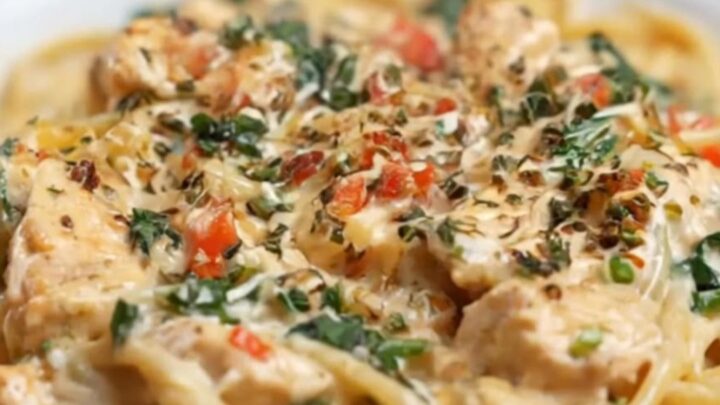
In this final phase, the spinach leaves will have wilted down into tender green ribbons distributed evenly throughout the skillet. The chicken cubes are reincorporated and fully warmed. The linguine is completely coated in the glossy sauce, with no excess liquid pooling at the bottom of the pan. The dish is hot, steaming, and ready for immediate plating.
Common mistakes
One common mistake is using high heat when adding the parmesan cheese, which causes the proteins in the cheese to clump and separate, resulting in a grainy sauce. Always reduce the heat to low before whisking in the cheese.
Another error is overcooking the garlic; garlic burns quickly and becomes bitter, ruining the delicate flavor of the cream. Sauté it just until fragrant, which takes about one minute. Lastly, do not rinse the pasta after draining, as the natural starches on the noodles help the cream sauce cling to them.
How to tell it’s done
To ensure the chicken is perfectly cooked and safe to eat, use a digital meat thermometer to check the thickest piece. The chicken is fully done when it reaches an internal temperature of 165°F (74°C).
The linguine is done when it is al dente, meaning it is tender but still has a firm bite. The sauce is done when it is thick enough to coat the back of a spoon. If the sauce becomes too thick, simply stir in a tablespoon or two of the reserved pasta water.
- Poultry: 165°F (74°C) in the thickest part
Up next · Part 3 of 3
2 variations · storage & make-ahead · 3 answers · printable card
Tips, FAQ & printable recipe (Part 3)← Back to the ingredients (Part 1)