Dinner · Part 2 of 3: Instructions
Creamy Garlic Herb Shells and Cheese Bake Step-by-step instructions
- Prep
- Cook
- Total
- Serves
- 4
Before you start
Before beginning, ensure the oven is fully preheated to the correct temperature. Gather all ingredients and have the baking dish ready on a stable surface. If using block cheese, grate it fresh to ensure it melts properly.
Verify that the sauce is prepared and ready to pour, as the assembly process is very quick. Preparing the workspace beforehand ensures a smooth transition from assembly to the oven without unnecessary delays.
Ingredients at a glance (3)
- 1 lb dry medium pasta shells
- 2 cups garlic herb cream sauce
- 2 cups shredded white cheddar cheese
Instructions
Pasta preparation
- Prepare the pasta basePreheat the oven to 375°F (190°C). Arrange the dry pasta shells evenly across the bottom of a large rectangular ceramic baking dish, ensuring they are spread out to cover the surface area effectively.Look for The shells form an even layer at the bottom of the dish.Tip Using dry pasta directly in the dish helps absorb the sauce flavors as it bakes.
The pasta shells should be spread in an even, single layer across the bottom of the dish. This uniform distribution is vital for ensuring that the heat and sauce penetrate the pasta equally, resulting in a consistent texture throughout the entire meal once it has finished baking in the oven.
Sauce and cheese layering
- Add sauce and cheesePour the garlic herb cream sauce over the dry shells, making sure that every piece of pasta is thoroughly coated and submerged in the liquid. Sprinkle the shredded white cheddar cheese evenly over the top of the dish.Look for The pasta is completely covered by the liquid and the cheese forms a uniform layer.Tip Ensure the sauce covers the edges of the dish to prevent the pasta from drying out during the baking process.
The sauce must completely submerge the pasta shells to ensure they rehydrate properly. The layer of white cheddar should be spread evenly from edge to edge, covering all visible pasta. This creates a protective barrier that locks in the moisture and flavor during the high-heat baking process.
Baking to perfection
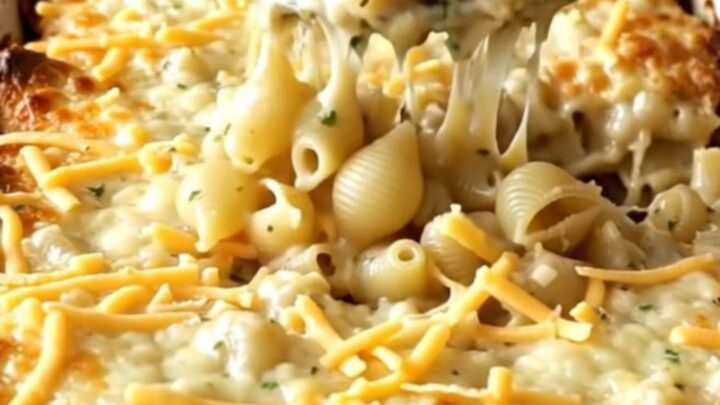
- Bake until goldenPlace the baking dish into the preheated oven. Bake for approximately 25 minutes or until the sauce is bubbling vigorously and the cheese on top has melted into a golden, slightly browned crust. Remove from the oven and let rest for 5 minutes before serving.Look for The edges are bubbling and the cheese topping is golden brown.Tip A short rest allows the sauce to thicken slightly and cling better to the pasta shells.
Look for a deep golden-brown color on the cheese and vigorous bubbling of the sauce along the edges of the dish. The aroma of garlic and herbs should be pronounced, and the pasta should look soft and hydrated when poked with a spoon. Ensure the center is as bubbly as the edges.
Common mistakes
A common mistake is using too little sauce, which leads to dried-out pasta that remains crunchy. Always ensure there is enough liquid to submerge the shells completely.
Another error is failing to let the dish rest after baking; allowing it to sit for five minutes is crucial as it lets the sauce settle and thicken, preventing a watery consistency when serving.
Finally, avoid using high-heat settings, as this may burn the cheese before the pasta is fully cooked.
How to tell it’s done
The dish is considered done when the sauce is bubbling actively throughout the dish and the cheese topping has transformed into a golden, bubbly layer. The pasta should be tender but not mushy, having absorbed most of the cream sauce.
Because there are no raw proteins involved, focus on the texture of the pasta and the appearance of the cheese crust to determine when to remove it from the oven.
Up next · Part 3 of 3
2 variations · storage & make-ahead · 3 answers · printable card
Tips, FAQ & printable recipe (Part 3)← Back to the ingredients (Part 1)