Dinner · Part 2 of 3: Instructions
Creamy Garlic Cheddar Beef Spaghetti Step-by-step instructions
- Prep
- Cook
- Total
- Serves
- 4
Before you start
Before starting, ensure all ingredients are measured and ready, as the cooking process moves quickly once the sauce is started. Shred the cheddar cheese ahead of time and keep it chilled until needed to ensure it melts properly. Mince the garlic finely so it disperses evenly through the meat mixture.
Have a large pot of water heating on the stove and a colander ready for draining the pasta. Having the workspace clear and all components prepped will make the cooking experience stress-free and efficient, allowing for a seamless transition between each phase of the recipe.
Ingredients at a glance (4)
- 1 lb ground beef
- 1 lb spaghetti
- 3 cloves garlic, minced
- 2 cups cheddar cheese, shredded
Instructions
Boiling the pasta
- Boil the pastaBring a large pot of salted water to a rolling boil. Add the spaghetti and cook according to the package instructions until al dente. Drain the pasta using a colander and set aside while preparing the sauce.Look for The pasta should be firm to the bite, known as al dente, usually taking about 8 to 10 minutes of boiling time.Tip Reserve a small splash of pasta water before draining to help emulsify the sauce later if it appears too thick.
The pasta is ready when it reaches an al dente texture, meaning it is cooked through but still has a firm bite. Ensure the water is well-salted, as this is the only opportunity to season the pasta itself, which enhances the overall flavor of the final dish. Drain the pasta thoroughly but do not rinse it, as the residual starch on the surface helps the sauce adhere better once everything is combined.
Browning the beef
- Cook the beef and aromaticsIn a large skillet over medium-high heat, brown the ground beef, breaking it apart with a wooden spoon until it is no longer pink. Drain excess fat if necessary. Add the minced garlic to the skillet and sauté for about one minute until fragrant, ensuring the meat reaches an internal temperature of at least 160°F (71°C).Look for The beef should be deeply browned and crumbled into small, even pieces, and the garlic should release a strong, aromatic scent.Safe temperature 160°F (71°C) internal temperature (ground meat)Tip Use a heavy-bottomed skillet to ensure even heat distribution and prevent the garlic from burning during the sautéing process.
The beef is perfectly browned when it is deeply colored and crumbled into small, uniform pieces. The garlic should be added only when the beef is nearly done to ensure it releases its flavor without burning.
Check that the meat has reached an internal temperature of 160°F (71°C) to ensure food safety. The skillet should smell savory and aromatic, indicating that the foundational flavors are fully developed and ready for the cheese.
Creating the cheese sauce
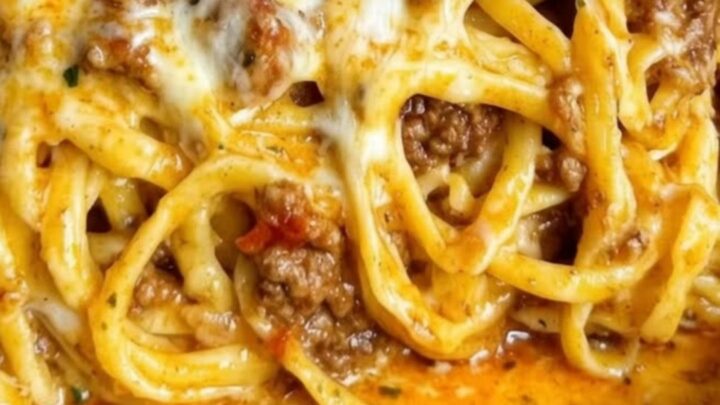
- Combine and melt the cheeseReduce the heat to low and stir in the shredded cheddar cheese until fully melted and smooth. Add the cooked spaghetti to the skillet and toss thoroughly with tongs until every strand is coated in the cheesy sauce.Look for The sauce should become thick, glossy, and uniform, clinging to the pasta strands with a noticeable cheese pull when lifted with tongs.Tip Keep the heat low when melting the cheese to prevent the sauce from separating or becoming grainy in texture.
The sauce is complete when the cheddar has fully melted, forming a thick and glossy coating for the spaghetti. The mixture should be uniform in color and texture, with no visible clumps of cheese. As the pasta is tossed in, the sauce should cling to every strand, creating the signature creamy finish. Taste the sauce carefully to ensure it is at the desired consistency before plating immediately while hot.
Common mistakes
A common mistake is using pre-shredded cheese, which contains starch that prevents a smooth, velvety melt and can leave the sauce feeling gritty. Another frequent error is boiling the sauce after adding the cheese, which can cause the dairy to separate and become oily.
Always maintain a low heat during the final stage to preserve the creamy texture. Additionally, failing to brown the beef sufficiently can result in a lack of depth in the final flavor, so take the time to ensure the meat is well-caramelized before adding the aromatics and cheese.
How to tell it’s done
The dish is considered done when the cheese has fully melted into a smooth, thick sauce that coats the spaghetti evenly. The ground beef should be cooked through, reaching an internal temperature of 160°F (71°C) as verified by a meat thermometer. The pasta should be tender yet retain a slight bite.
Visually, the sauce should appear glossy and thick, with no pockets of separated oil or undissolved cheese. When lifted with tongs, the pasta should exhibit a consistent, gooey cheese pull, indicating that the sauce is perfectly emulsified and ready to be served immediately.
- Ground meat: 160°F (71°C) in the thickest part
Up next · Part 3 of 3
2 variations · storage & make-ahead · 3 answers · printable card
Tips, FAQ & printable recipe (Part 3)← Back to the ingredients (Part 1)