Dinner · Part 2 of 3: Instructions
Creamy Garlic Butter Lobster Tail Mac and Cheese Skillet Step-by-step instructions
- Prep
- Cook
- Total
- Serves
- 4
Before you start
Before cooking, remove the lobster meat from the tails and chop it into bite-size pieces. Shred the cheddar and Gruyère and set them aside. Measure out all ingredients. Bring a large pot of salted water to a boil for the pasta.
Have a colander ready for draining. An 8-inch cast iron skillet is ideal for this recipe; if you don't have one, use a heavy oven-safe skillet of similar size. Preheat the broiler later in the process so the dish can go straight from stovetop to broiler.
Ingredients at a glance (11)
- 2 fresh lobster tails (about 300g total), meat removed and chopped
- 300 g (10 oz) cavatappi pasta
- 4 tbsp butter, divided
- 3 cloves garlic, minced
- 3 tbsp all-purpose flour
- 2 cups whole milk
- 2 cups sharp white cheddar, shredded
- 1 cup Gruyère cheese, shredded
- 1/2 cup panko breadcrumbs
- Salt to taste
- Black pepper to taste
Instructions
Searing and Sauce
- Cook the Pasta and Sear the LobsterBring a large pot of salted water to a boil. Add the cavatappi and cook until al dente according to package directions. Drain and set aside. Meanwhile, pat the chopped lobster meat dry. In an 8-inch cast iron skillet over medium-high heat, melt 2 tablespoons of the butter. Add the garlic and cook for 30 seconds until fragrant. Add the lobster meat and sear for 3 minutes, stirring occasionally, until opaque and lightly golden. Remove the lobster from the skillet and set aside.Look for Lobster turns opaque and gets golden edges; pasta is tender but still firm to the bite.Safe temperature 145°F (63°C) internal temperature (shellfish)Tip Do not overcook the lobster—3 minutes is enough. It will finish in the broiler.
- Make the Cheese SauceIn the same skillet, melt the remaining 2 tablespoons of butter over medium heat. Add the flour and whisk constantly for 1 minute to make a roux. Slowly pour in the milk while whisking to avoid lumps. Continue whisking until the sauce thickens and is smooth, about 3–4 minutes. Reduce the heat to low and add the shredded white cheddar and Gruyère. Stir until the cheeses are fully melted and the sauce is glossy and thick.Look for The sauce coats the back of a spoon and is smooth, without any graininess.Tip Grate the cheese yourself; pre-shredded cheese contains anti-caking agents that can make the sauce grainy.
At the end of this phase, the lobster is seared and golden, and the cheese sauce is smooth and glossy. The sauce should coat the back of a spoon without being too thick or too thin.
The pasta is cooked and drained, ready to be folded in. The kitchen smells of garlic, butter, and toasted cheese.
Combining and Topping
- Combine Pasta and Lobster with SauceAdd the drained cavatappi and the seared lobster meat to the skillet with the cheese sauce. Gently fold everything together with a wooden spoon or spatula until every spiral is coated in the sauce and the lobster is evenly distributed. Season with salt and black pepper to taste.Look for The pasta is fully coated, and the lobster pieces are visible throughout the mixture.Tip Fold gently to keep the lobster chunks intact.
- Top with PankoSprinkle the panko breadcrumbs evenly over the top of the mac and cheese in the skillet. Use your fingers or a spoon to press the crumbs lightly into the surface so they stick.Look for An even layer of crumbs covers the entire top.Tip For extra richness, you can dot the top with a little extra butter before broiling, but it's not necessary.
The cavatappi and lobster are folded into the sauce, and every spiral is coated. The mixture is creamy and evenly distributed, with lobster chunks visible. The panko topping is spread evenly, ready for the broiler.
Broiling and Serving
- Broil Until Golden and CrunchyPreheat the broiler to high. Place the skillet on an oven rack about 6 inches from the heat source. Broil for 3–5 minutes, watching closely, until the panko is deeply golden and crunchy. Remove the skillet from the oven and let it stand for 2 minutes before serving.Look for The top is browned and crisp, and the sauce is bubbling around the edges.Tip Watch the skillet constantly under the broiler—the crumbs can go from golden to burnt quickly.
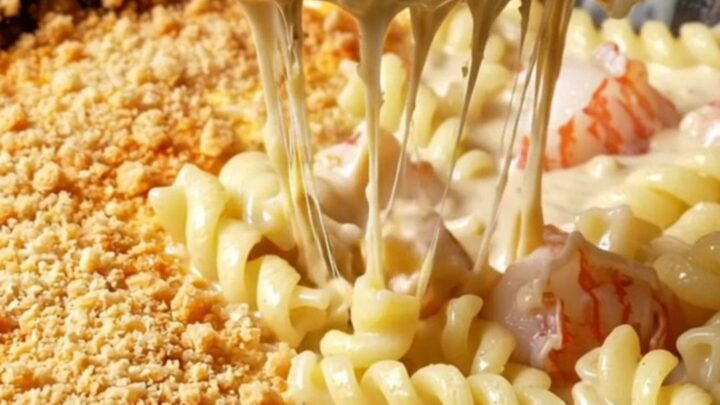
The panko is deeply golden and crunchy, and the sauce is bubbling around the edges. The top is crisp, while the interior remains creamy and hot. The lobster is tender and sweet, and the cheese pulls in long strings when scooped.
Common mistakes
One common mistake is overcooking the lobster. It only needs 3 minutes in the skillet; cooking it longer makes it rubbery. Another pitfall is overheating the cheese sauce, which can cause it to become grainy or separate.
Always melt cheese over low heat, and add it gradually while stirring. Skipping the roux cooking time can leave a raw flour taste; cook the flour for at least 1 minute. Also, be careful with the broiler—watch the panko closely, as it burns quickly.
How to tell it’s done
The dish is done when the panko topping is deeply golden and crunchy, and the sauce is bubbling around the edges. The lobster should be opaque and firm, reaching an internal temperature of 145°F (63°C) as measured with an instant-read thermometer.
The pasta should be tender but still have a slight bite, and the cheese sauce should be thick and creamy, coating the pasta evenly. Let the skillet rest for 2 minutes after broiling to allow the sauce to settle slightly before serving.
- Shellfish: 145°F (63°C) in the thickest part
Up next · Part 3 of 3
4 variations · storage & make-ahead · 5 answers · printable card
Tips, FAQ & printable recipe (Part 3)← Back to the ingredients (Part 1)