Dinner · Part 2 of 3: Instructions
Five-Cheese Crockpot Mac and Cheese for Holiday Crowds Step-by-step instructions
- Prep
- Cook
- Total
- Serves
- 12
Before you start
Before starting, shred the cheddar, Gruyère, and Monterey Jack if not using pre-shredded. Cube the cream cheese and let it soften at room temperature. Measure the evaporated milk, heavy cream, and butter.
Have the elbow pasta measured and ready. Set out a 6-quart slow cooker and a mixing spoon. For the topping, measure the panko and have a small skillet ready for toasting.
Ingredients at a glance (9)
- 16 oz uncooked elbow pasta
- 2 cups shredded sharp cheddar cheese
- 1 1/2 cups shredded Gruyère cheese
- 1 1/2 cups shredded Monterey Jack cheese
- 8 oz cream cheese, cubed and softened
- 12 oz evaporated milk
- 1 cup heavy cream
- 1/2 cup unsalted butter, melted (1 stick)
- 1 cup panko breadcrumbs, toasted
Instructions
Layer and Set
- Layer the IngredientsPlace the uncooked elbow pasta in the slow cooker. Add the shredded sharp cheddar, Gruyère, Monterey Jack, cubed cream cheese, evaporated milk, heavy cream, and melted butter. Stir everything together until the pasta is well coated and the cheeses are evenly distributed.Look for The pasta is coated in a thick, creamy mixture with visible cheese shreds and butter.Tip Use a large spoon to fold the ingredients gently; no need to pre-cook the pasta.
- Cover and Set to LowCover the slow cooker with the lid. Set the heat to LOW and cook for 2 hours. Do not stir during the first hour to allow the pasta to absorb the liquid evenly.Look for The mixture begins to bubble around the edges after about 1 hour.Tip Resist lifting the lid too often—each time releases heat and extends cooking time.
After layering all ingredients, the slow cooker is filled with a colorful mixture of pasta, cheese, and dairy. The butter is melted, and the cream cheese is visible in cubes. The mixture looks thick and chunky, with no dry spots. The aroma is buttery and cheesy. This phase is quick, taking just a few minutes.
Slow-Cook to Creamy
- Slow-Cook Until TenderContinue cooking on LOW for the remaining time, stirring once after the first hour. The pasta should become tender and the sauce should thicken into a velvety, bubbling cheese sauce. Cook until the pasta is al dente and the sauce is creamy.Look for The sauce is bubbling gently and the pasta is tender when pierced with a fork.Tip If the sauce seems thin after 2 hours, let it cook an additional 15-20 minutes.
- Check for DonenessTest the pasta for doneness by tasting a piece. It should be tender but still hold its shape. The cheese sauce should be smooth and coat the back of a spoon. If the pasta is still firm, cover and cook for another 10-15 minutes.Look for Pasta is al dente, and the sauce is thick and glossy without being grainy.Tip Avoid overcooking, as the pasta can become mushy and the sauce may separate.
After 2 hours on LOW, the mixture is bubbling gently around the edges. The pasta is tender, and the sauce has thickened to a velvety consistency.
The cheeses have melted completely, creating a glossy, smooth sauce. The kitchen smells intensely cheesy and comforting. The mixture should be stirred once to ensure evenness.
Finish and Serve
- Toast the Panko ToppingWhile the mac and cheese finishes cooking, toast the panko breadcrumbs in a dry skillet over medium heat. Stir frequently until golden brown and fragrant, about 3-4 minutes. Remove from heat and set aside.Look for The panko turns golden and smells nutty.Tip Keep the heat moderate to avoid burning; they brown quickly.
- Serve with Toasted PankoOnce the mac and cheese is done, scoop it into a serving dish or directly onto plates. Sprinkle the toasted panko breadcrumbs generously over the top just before serving to add a crunchy contrast to the creamy pasta.Look for The topping is golden and crisp, and the mac and cheese is steaming.Tip Add the panko right before serving so it stays crunchy.
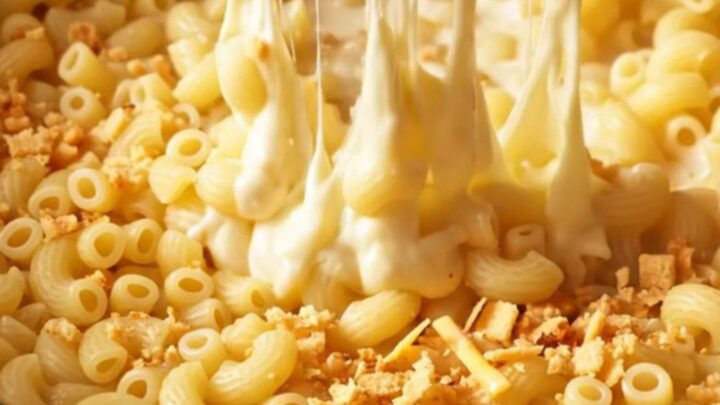
The mac and cheese is steaming and the sauce is thick and creamy. The toasted panko is golden and crisp, adding a crunchy contrast. When scooped, the mac and cheese holds its shape and stretches slightly. The topping is sprinkled generously, and the dish is ready to serve immediately.
Common mistakes
One common mistake is lifting the lid too often, which releases heat and extends cooking time. Another is overcooking, which can make the pasta mushy and the sauce grainy.
Also, avoid using pre-shredded cheese with anti-caking agents, as they can prevent smooth melting. Finally, don’t skip stirring after the first hour—this ensures even cooking and prevents sticking.
How to tell it’s done
The mac and cheese is done when the pasta is tender but still holds its shape, and the sauce is thick, creamy, and bubbling around the edges. To test, scoop a spoonful and let it cool slightly; the sauce should coat the spoon.
If the pasta is still firm, continue cooking in 10-minute increments. The internal temperature of the dish should reach at least 165°F (74°C) if you’re checking for food safety, though this recipe contains no raw proteins.
Up next · Part 3 of 3
4 variations · storage & make-ahead · 5 answers · printable card
Tips, FAQ & printable recipe (Part 3)← Back to the ingredients (Part 1)