Dinner · Part 2 of 3: Instructions
Creamy Crockpot Lemon Ricotta Pistachio Spaghetti Step-by-step instructions
- Prep
- Cook
- Total
- Serves
- 6
Before you start
Before starting, zest and juice the Meyer lemons, mince the garlic, and measure out all the other ingredients. Cook the spaghetti in a large pot of salted boiling water until al dente, then drain it well.
Have the baby spinach and grated Parmigiano-Reggiano ready to toss in. The slow cooker sauce needs 1 1/2 hours on low, so plan accordingly. This is a great recipe to prep in the morning and let cook while you go about your day.
Ingredients at a glance (11)
- 15 oz whole-milk ricotta
- 1 cup heavy cream
- 1 1/2 cups vegetable broth
- 3 Meyer lemons, zested and juiced
- 4 cloves garlic, minced
- 2 tbsp olive oil
- 16 oz spaghetti
- 3 cups baby spinach
- 1 cup grated Parmigiano-Reggiano
- 1/2 cup crushed pistachios
- 1/4 cup fresh basil leaves, torn
Instructions
Whisk and Slow-Cook the Sauce
- Whisk the Sauce BaseIn the Crockpot, whisk together the whole-milk ricotta, heavy cream, vegetable broth, zest and juice of the Meyer lemons, minced garlic, and olive oil until smooth and well combined. Make sure the ricotta is fully incorporated so the sauce is silky, with no large lumps remaining.Look for The mixture should look pale yellow and creamy, with a uniform texture.Tip Zest the lemons before juicing them; it's much easier when they're whole.
- Slow-Cook the SauceCover the Crockpot and cook on LOW for 1 1/2 hours, until the sauce is warm, velvety, and slightly thickened. Stir once halfway through, scraping the sides to keep the sauce from sticking.Look for The sauce should be hot and fragrant, with a glossy sheen when stirred.Tip Resist lifting the lid too often; the heat escapes and slows cooking.
After whisking, the sauce should be smooth, pale yellow, and free of ricotta lumps. As it slow-cooks, it will become fragrant with lemon and garlic. After 1 1/2 hours, it should be hot, silky, and slightly thickened. Give it a stir—if it looks too thin, let it cook a little longer, but don’t let it bubble aggressively.
Add Pasta, Spinach, and Cheese
- Cook the SpaghettiWhile the sauce cooks, bring a large pot of salted water to a boil and cook the spaghetti until al dente according to package directions. Drain well, reserving about 1/2 cup of pasta water.Look for The spaghetti should be tender but still firm to the bite.Tip Reserve some pasta water; it helps loosen the sauce if it thickens too much.
- Combine Pasta and SpinachAdd the drained spaghetti and baby spinach to the Crockpot. Toss gently with tongs until the spinach wilts and the pasta is fully coated in the creamy lemon sauce. If the sauce seems too thick, splash in some reserved pasta water.Look for The spinach should be bright green and just wilted, and the sauce should cling to the pasta.Tip Use tongs to toss; a spoon can break the spaghetti strands.
- Add the ParmesanSprinkle the grated Parmigiano-Reggiano over the pasta and toss again until the cheese melts into the sauce, creating a rich, savory finish.Look for The cheese should be completely melted, and the sauce should look smooth and creamy.Tip Add the cheese off the heat if possible to prevent clumping.
The spaghetti should be al dente and drained. When added to the sauce, the spinach will wilt quickly. Toss until everything is evenly coated. The sauce should cling to the pasta, and the spinach should look bright green.
The Parmesan should melt into the sauce, making it creamy and savory. If the sauce is too thick, add reserved pasta water a splash at a time.
Finish with Pistachios and Basil
- Finish with Pistachios and BasilJust before serving, top the spaghetti with the crushed pistachios and torn basil leaves. Give it one final gentle toss or leave the toppings scattered over the top for a pretty presentation.Look for The pistachios should be evenly distributed, and the basil should be bright and fragrant.Tip Add the pistachios at the very end so they stay crunchy.
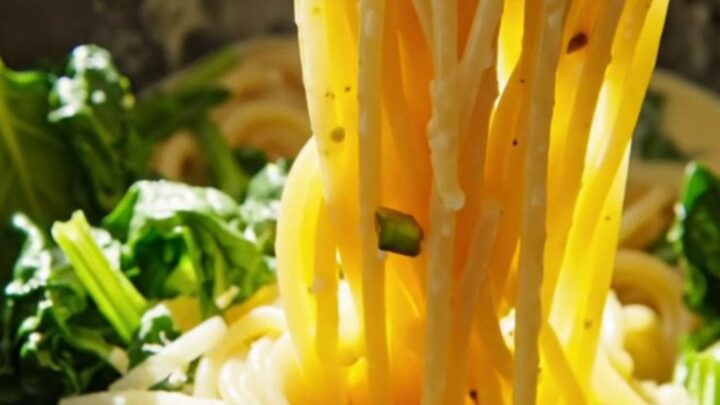
The final dish should look vibrant: golden spaghetti with flecks of green spinach and basil, and crunchy pistachios scattered on top. The sauce should be smooth and creamy, not separated. The pasta should be well-coated but not swimming in sauce. Give it a taste—it should be bright, rich, and well-seasoned. Serve immediately.
Common mistakes
One common mistake is adding the spaghetti to the slow cooker before the sauce is ready—it will soak up too much liquid and become mushy. Don’t skip the pasta water; it’s essential for adjusting the sauce consistency.
Overcooking the sauce on high can cause the dairy to separate, so always use low. Also, don’t add the pistachios too early, or they’ll lose their crunch. Finally, be gentle when tossing the pasta to avoid breaking the strands.
How to tell it’s done
The sauce is done when it’s hot, velvety, and slightly thickened—it should coat the back of a spoon. The spaghetti should be al dente, and when tossed with the sauce, it should look glossy and well-coated.
The spinach should be wilted but still bright green. The dish is ready to serve as soon as the Parmesan is melted and the pistachios are sprinkled on top. There’s no protein to check for temperature, so the visual cues are your guide.
Up next · Part 3 of 3
4 variations · storage & make-ahead · 5 answers · printable card
Tips, FAQ & printable recipe (Part 3)← Back to the ingredients (Part 1)