Desserts · Part 1 of 3: Ingredients
Creamy Coconut Pudding — One Saucepan, Twenty Minutes
- Prep
- Cook
- Total
- Serves
- 4
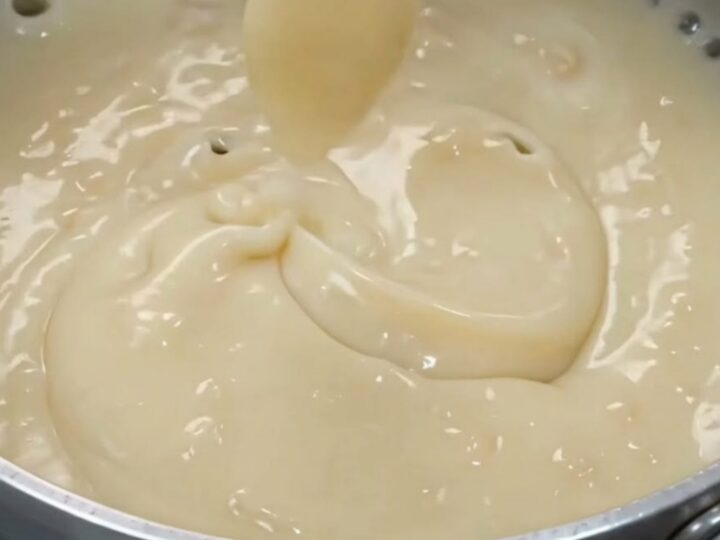
Velvety, glossy coconut pudding that comes together in one saucepan in about twenty minutes. Full-fat coconut milk and coconut cream are whisked with cornstarch and simmered until the spoon lifts a thick ribbon, then ladled into bowls while still warm. Every ingredient is a pantry staple, there is no oven, no eggs to temper and no water bath to babysit — just steady whisking and a handful of simple cues to watch for as the pudding turns from thin milk to spoon-coating cream.
Coconut pudding rewards two things: full-fat canned coconut products and patience with the whisk. The base here is a simple cornstarch-thickened cream — coconut milk for body, coconut cream for richness — cooked over medium heat until it turns glossy and thick enough to coat the back of a spoon. Nothing is baked, tempered or strained; the whole recipe happens in one heavy saucepan, from cold milk to finished pudding in under twenty minutes.
The trick that separates silky pudding from a starchy disappointment is time: once the mixture thickens, it simmers a full two minutes more so the cornstarch reaches its complete set and loses every trace of chalky flavor. Served warm, the pudding pours in ribbons and mounds gently in the bowl; chilled, it sets into a firm, scoopable spoonful.
Ingredients
- 2 cups full-fat coconut milk, shaken well (dairy-free)
- 1 cup coconut cream, shaken well (dairy-free)
- 1/3 cup granulated sugar
- 1/4 cup cornstarch
- 1/4 tsp fine salt
- 1 tsp vanilla extract
Why this recipe works
Cornstarch does the structural work here, and the method is built around how it behaves. Whisking the starch into cold coconut milk, rather than into a hot slurry, gives every granule time to hydrate evenly as the pan warms — that is why the dry ingredients are blended with the sugar first and whisked in before any real heat arrives.
As the mixture approaches a simmer, constant whisking keeps the swelling granules suspended instead of letting them sink, clump and burn against the pan bottom. The result is a pudding with no lumps to strain out and no thin, watery layer hiding at the base. Medium heat matters as much as motion: coconut fat is quick to separate when pushed, and a gentle, steady climb to the thickening point keeps the emulsion intact and the surface glossy.
The two-minute simmer after thickening is the step most recipes cut short, and it is the one that decides the texture. Cornstarch reaches its full thickening power and its cleanest flavor only after it has held a gentle simmer long enough — pull the pan early and the pudding tastes chalky and relaxes again as it cools.
Full-fat coconut milk and coconut cream carry enough fat to give the finished pudding its plush, custard-like body without eggs, so the recipe stays dairy-free and egg-free by design rather than by substitution. Serving warm shows the pudding at its most dramatic: a ladle lifts a slow, thick ribbon and steam rises from the bowl. Chilling simply continues the same starch set into a firmer, scoopable version of the very same pudding.
Notes and substitutions
Buy full-fat canned coconut milk, not the beverage-style carton meant for coffee or cereal — carton versions are diluted and will never thicken properly at these proportions. Coconut cream sits on the same supermarket shelf, usually beside the coconut milk; it is thicker and richer, and it is what gives the pudding its luxurious, almost custard-like weight.
Shake both cans vigorously before opening so the cream that separates to the top blends back in; if a can refuses to blend, warm it briefly and whisk. Granulated sugar keeps the flavor clean, but light brown sugar works if a faint caramel note sounds good. Fine sea salt or table salt dissolves instantly; skip coarse kosher here, since the crystals can linger in a pudding this thick.
Choose a medium, heavy-bottomed saucepan — two to three quarts — so the heat spreads evenly and the bottom cannot scorch while the whisk is busy elsewhere. A balloon whisk plus a silicone spatula is the ideal pairing: the whisk smooths and aerates, the spatula clears the corners where starch loves to hide. The 1/3 cup of sugar produces a gently sweet pudding that lets the coconut flavor lead; taste after the two-minute simmer and whisk in up to two tablespoons more if a sweeter finish is preferred. Vanilla is whisked in off the heat, where its aroma survives. If the pantry is out of coconut cream, a full cup of additional coconut milk works — the pudding will be a touch lighter but still thick and glossy.
- cornstarch: Arrowroot powder works in the same amount and gives a slightly glossier finish; whisk it in exactly the same way and keep the two-minute simmer.
- coconut cream: Replace with 1 additional cup of full-fat coconut milk. The pudding will be a touch lighter but still thick, glossy and perfectly spoonable.
- granulated sugar: Light brown sugar swaps in one for one and adds a faint caramel note that suits the coconut; keep the same 1/3 cup volume.
- vanilla extract: Half a teaspoon of ground cinnamon whisked in off the heat gives a warm, spiced version without changing anything else in the method.
Equipment
- Medium heavy-bottomed saucepan (2 to 3 quarts)
- Balloon whisk
- Silicone spatula
- Small mixing bowl
- Ladle
- 4 small serving bowls
Up next · Part 2 of 3
8 steps · 12 min of cooking · what to look for at each stage
Step-by-step instructions (Part 2)