Dinner · Part 2 of 3: Instructions
Creamy Cheesy Baked Chicken Step-by-step instructions
- Prep
- Cook
- Total
- Serves
- 4
Before you start
Before turning on the stove, gather all your ingredients and equipment to ensure a smooth cooking process. Preheat the oven to 375°F (190°C) and prepare a 9x13-inch baking dish.
Pat the chicken breasts completely dry with paper towels; this is essential for getting a proper sear in the skillet. Measure out the heavy cream, mince the garlic cloves, shred the mozzarella cheese, and chop the fresh parsley.
Ingredients at a glance (5)
- 4 boneless skinless chicken breasts
- 4 cloves garlic, minced
- 1 cup heavy cream
- 1 1/2 cups shredded mozzarella cheese
- 2 tbsp chopped fresh parsley
Instructions
Searing the Chicken
- Sear the ChickenHeat a large skillet over medium-high heat. Add the chicken breasts to the hot skillet and sear for 3 to 4 minutes per side, or until a golden-brown crust forms. The chicken will not be fully cooked through at this stage. Transfer the seared chicken breasts to a 9x13-inch baking dish.Look for The chicken should have a rich, golden-brown crust on both sides.Tip Avoid overcrowding the skillet so the chicken sears rather than steams.
At the end of this initial phase, the chicken breasts should have a beautiful, golden-brown crust on both sides, though they will still be raw in the center. The skillet will have savory browned bits stuck to the bottom, and a rich, meaty aroma will fill the kitchen. The chicken is now ready to be transferred to the baking dish to await the sauce.
Preparing the Garlic Cream Sauce
- Simmer the Garlic Cream SauceReduce the heat of the skillet to medium. Add the minced garlic to the pan, sautéing for about 1 minute until fragrant. Pour in the heavy cream, using a wooden spoon to scrape up any flavorful browned bits stuck to the bottom of the skillet. Simmer the mixture gently for 2 to 3 minutes until the cream is hot, smooth, and slightly thickened.Look for The sauce should gently bubble and turn a warm, off-white color.Tip Do not let the garlic burn, as this will make the cream sauce bitter.
The garlic cream sauce is ready when the minced garlic is fragrant and soft, and the heavy cream has simmered into a smooth, slightly thickened sauce.
It should coat the back of a spoon gently and have scraped up all the delicious browned bits from the bottom of the skillet, changing color to a warm, off-white hue. The aroma of sweet garlic and warm cream should be highly pronounced.
Baking to Golden Perfection
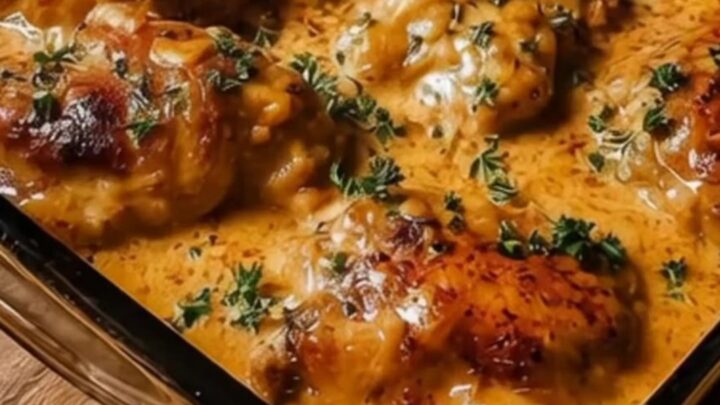
- Assemble and Bake the CasserolePour the warm garlic cream sauce evenly over the seared chicken breasts in the baking dish. Sprinkle the shredded mozzarella cheese over the top of the chicken and sauce. Bake at 375°F (190°C) for 15 to 20 minutes, or until the cheese is completely melted, golden-brown in spots, and bubbling vigorously. Verify that the thickest part of the chicken registers an internal temperature of 165°F (74°C).Look for The cheese should be melted, golden-brown, and bubbling at the edges.Safe temperature 165°F (74°C) internal temperature (poultry)Tip Use a digital meat thermometer to ensure perfect doneness without overcooking.
- Garnish and Rest before ServingRemove the baking dish carefully from the oven. Garnish the hot casserole immediately with the chopped fresh parsley. Allow the chicken to rest in the baking dish for 5 minutes before slicing or serving. This resting period lets the meat juices redistribute and allows the rich cheese sauce to cool slightly and set.Look for The parsley should look bright green against the melted golden cheese.Tip Resting prevents the hot sauce from running too thin when served.
The casserole is fully cooked when the cheese on top is completely melted, deeply golden-brown in spots, and vigorously bubbling around the edges of the dish. Wisps of steam should rise from the casserole, and a meat thermometer inserted into the thickest part of the chicken must register a safe internal temperature of 165°F (74°C). The sauce will appear thick and luscious.
Common mistakes
One common mistake is skipping the searing step or rushing through it. Searing creates a flavor barrier and adds color that baking alone cannot replicate.
Another error is using milk or half-and-half instead of heavy cream; these lighter dairy options lack the fat content required to withstand high heat, which often causes the sauce to break and turn watery. Finally, do not overcook the chicken, as breasts dry out quickly once they surpass the safe target temperature.
How to tell it’s done
To guarantee the chicken is perfectly cooked and safe to consume, always use a digital meat thermometer. Insert the probe into the thickest part of the largest chicken breast without touching the bottom of the baking dish.
The chicken is done when the thermometer reads exactly 165°F (74°C). At this temperature, the meat remains tender and juicy. Avoid cutting into the chicken immediately; let it rest so the hot juices redistribute throughout the meat.
- Poultry: 165°F (74°C) in the thickest part
Up next · Part 3 of 3
2 variations · storage & make-ahead · 3 answers · printable card
Tips, FAQ & printable recipe (Part 3)← Back to the ingredients (Part 1)