Dinner · Part 2 of 3: Instructions
Creamy Cheddar Cauliflower Chicken Thighs Crockpot Dinner Step-by-step instructions
- Prep
- Cook
- Total
- Serves
- 4
Before you start
Before you start, gather all your ingredients: chicken thighs, a head of cauliflower, a can of condensed cream of broccoli soup, shredded sharp cheddar, and butter. Cut the cauliflower into bite-size florets and cut the butter into small pieces.
You'll also want to have your slow cooker ready and a serving spoon on hand. There's no need to pre-cook anything or brown the chicken—just layer the ingredients in the order given and let the slow cooker work its magic.
Ingredients at a glance (6)
- 1 1/2 lb boneless skinless chicken thighs
- 1 medium head cauliflower, cut into florets
- 1 can (10.5 oz) condensed cream of broccoli soup
- 2 cups shredded sharp cheddar cheese
- 2 tbsp butter, cut into small pieces
- Steamed white jasmine rice, for serving
Instructions
Layer the Ingredients
- Layer the Chicken and CauliflowerPlace the chicken thighs in an even layer across the bottom of a 6-quart slow cooker. Scatter the cauliflower florets around and between the chicken pieces, tucking them in so they are nestled among the meat.Look for The chicken and cauliflower should fill the bottom of the slow cooker in a single, even layer.Tip For even cooking, try to keep the chicken thighs from overlapping too much.
- Add the SoupSpoon the condensed cream of broccoli soup over the center of the chicken and cauliflower. Use a spatula or the back of a spoon to gently spread it over the top, but do not stir.Look for The soup should cover most of the surface, creating a thick, creamy layer.Tip Spreading the soup helps it melt evenly as the slow cooker heats.
The slow cooker should be filled with an even layer of chicken thighs and cauliflower, topped with a thick layer of condensed soup. The soup will look like a creamy blob in the center, but that's fine—it will spread as it melts.
The cheese and butter are scattered on top, creating a patchwork of yellow and white. The raw ingredients look simple, but the aroma will soon fill the kitchen.
Slow Cook
- Top with Cheese and ButterSprinkle the shredded sharp cheddar cheese evenly over the soup layer. Dot with the butter pieces, distributing them across the top.Look for The cheese and butter form a golden, patchy crust over the soup.Tip Cutting the butter into small pieces helps it melt quickly and evenly.
- Cook Low and SlowCover the slow cooker and cook on low for 4 hours, or until the chicken is tender and easily pulls apart with a fork. Do not lift the lid during the first 3 hours to keep the heat steady.Look for The sauce will be bubbling gently at the edges and the kitchen will smell richly of cheese and broccoli.Safe temperature 165°F (74°C) internal temperature (poultry)Tip Resist the urge to peek; every time the lid lifts, heat escapes and cooking time increases.
After 4 hours on low, the sauce is bubbling gently around the edges, and the cheese has melted into the soup, creating a golden, creamy sauce. The chicken is visibly tender, and the cauliflower is soft. The kitchen smells richly of cheddar and broccoli. Use a fork to test the chicken—it should shred easily. The sauce should be thick and coat the back of a spoon.
Finish and Serve
- Check and StirAfter 4 hours, check that the chicken reaches an internal temperature of 165°F (74°C) with an instant-read thermometer. Gently stir the mixture to combine the sauce, being careful not to break up the chicken too much.Look for The sauce should be thick and creamy, and the chicken should shred easily with a fork.Safe temperature 165°F (74°C) internal temperature (poultry)Tip If the sauce seems thin, let it cook uncovered for 15–20 minutes to thicken.
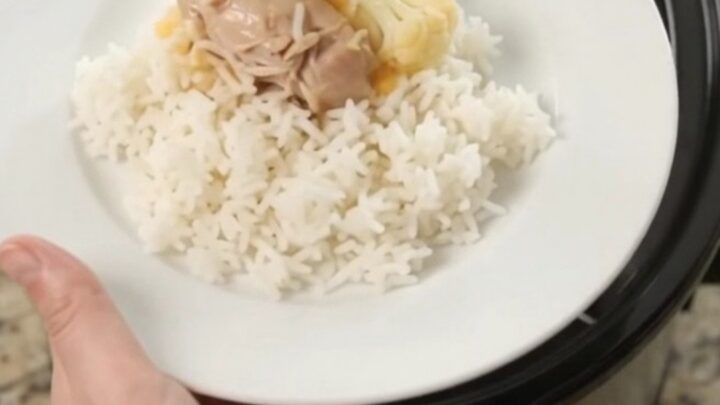
- Serve Over RiceSpoon the creamy chicken and cauliflower mixture over steamed white jasmine rice. Serve hot, with extra cheese or a sprinkle of black pepper if desired.Look for The sauce coats the rice and the chicken pulls apart with a gentle tug.Tip For a low-carb option, serve over cauliflower rice or mashed cauliflower.
The final dish is a bubbling pot of creamy, cheesy goodness. The chicken is pull-apart tender, the cauliflower is velvety, and the sauce is thick and glossy. When spooned over rice, the sauce clings to every grain. The aroma is irresistible, and the first bite is warm, rich, and deeply satisfying. Serve immediately while it's hot.
Common mistakes
One common mistake is lifting the lid too often to check on the food. Every time the lid is opened, heat escapes and adds to the cooking time. Try to resist until the 3-hour mark. Another is overcooking the cauliflower, which can make it mushy.
If you prefer firmer cauliflower, add it halfway through the cooking time. Also, be careful not to over-stir the finished dish; gentle stirring keeps the chicken and cauliflower intact.
How to tell it’s done
The dish is done when the chicken is fork-tender and easily pulls apart, and the cauliflower is soft but still holds its shape. The sauce should be thick and creamy, not watery.
To be safe, check the internal temperature of the chicken with an instant-read thermometer; it should read at least 165°F (74°C) in the thickest part. If the sauce seems too thin, remove the lid and let it cook on high for another 15 to 20 minutes to reduce.
- Poultry: 165°F (74°C) in the thickest part
Up next · Part 3 of 3
4 variations · storage & make-ahead · 5 answers · printable card
Tips, FAQ & printable recipe (Part 3)← Back to the ingredients (Part 1)