Dinner · Part 2 of 3: Instructions
Creamy Cajun Sausage & Shrimp Penne Skillet Step-by-step instructions
- Prep
- Cook
- Total
- Serves
- 4
Before you start
Before you start, bring a large pot of salted water to a boil for the pasta. Have all your ingredients prepped: slice the andouille into coins, peel and devein the shrimp, dice the bell peppers, mince the garlic, and grate the parmesan.
Measure out the cream, broth, and Cajun seasoning. Having everything ready ensures the cooking process goes smoothly, since the actual skillet work is fast. Set a large cast iron skillet over medium-high heat so it’s hot when you’re ready to sear.
Ingredients at a glance (11)
- 10 oz penne pasta
- 2 tbsp olive oil, divided
- 8 oz andouille sausage, sliced into coins
- 1 lb large shrimp, peeled and deveined
- 2 tbsp Cajun seasoning
- 1 cup diced bell peppers (any color)
- 3 cloves garlic, minced
- 1 cup heavy cream
- 1/2 cup chicken broth
- 1/2 cup grated parmesan cheese
- 2 tbsp chopped fresh parsley, for garnish
Instructions
Sear and Sauté
- Cook the pasta and sear the proteinsBring a large pot of salted water to a boil and cook the penne according to package instructions until al dente. Drain and set aside. While the pasta cooks, heat 1 tablespoon of olive oil in a large cast iron skillet over medium-high heat. Add the sliced andouille sausage and cook until browned and crisp, about 3 minutes per side. Remove the sausage to a plate. Add the remaining tablespoon of olive oil to the skillet, then add the shrimp.Look for The sausage is browned and crisp, the shrimp are pink and just cooked through.Safe temperature 145°F (63°C) internal temperature (shellfish)Tip Don't crowd the skillet; cook the sausage and shrimp in batches if needed to get a good sear.
- Sauté the aromaticsIn the same skillet, add the diced bell peppers and garlic. Sauté over medium heat for 2-3 minutes, until the peppers are tender and the garlic is fragrant, scraping up any browned bits from the bottom of the skillet.Look for The peppers soften and the garlic becomes aromatic.Tip If the skillet seems dry, add a splash of olive oil or broth.
At the end of this phase, the sausage is browned and crisp, the shrimp are pink and just cooked through, and the peppers and garlic are tender and fragrant. The skillet should have a nice fond on the bottom, which will flavor the sauce. The pasta is cooked and drained, ready to be added later.
Build the Sauce and Combine
- Build the creamy Cajun saucePour the heavy cream and chicken broth into the skillet with the peppers and garlic. Stir in the remaining 1 tablespoon of Cajun seasoning. Bring the sauce to a simmer and let it cook for 2-3 minutes, stirring occasionally, until it thickens slightly and turns a rich orange color.Look for The sauce is smooth, bubbling gently, and has a deep orange hue.Tip Taste the sauce and adjust the Cajun seasoning to your preferred heat level.
- Combine pasta, sausage, and shrimpAdd the cooked penne, seared sausage, and shrimp to the skillet. Stir gently to coat everything in the creamy sauce. Sprinkle in the grated parmesan cheese and continue to toss until the cheese is melted and the sauce clings to every noodle.Look for The pasta is glossy and coated, and the cheese is fully melted.Safe temperature 160°F (71°C) internal temperature (ground meat)Tip Use tongs or a spatula to toss without breaking the shrimp.
The sauce is simmering and has turned a rich orange color. It should be smooth and slightly thickened.
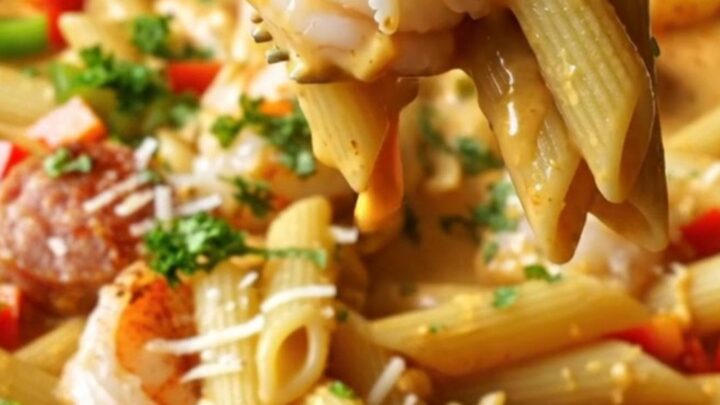
The pasta, sausage, and shrimp are coated in the sauce, and the parmesan is melted, creating a glossy, creamy texture. The whole skillet is bubbling gently and smells intensely savory and spicy.
Garnish and Serve
- Garnish and serveRemove the skillet from the heat. Sprinkle the chopped parsley over the top. Serve immediately, twirling a forkful of pasta, shrimp, and sausage to enjoy the full experience.Look for The parsley adds a fresh green contrast to the rich orange sauce.Tip For extra heat, add a pinch of cayenne or a few dashes of hot sauce before serving.
The parsley is sprinkled over the top, adding a fresh green contrast. The dish is ready to serve immediately, with the sauce still warm and creamy. Each forkful should have pasta, shrimp, and sausage all together, with the sauce clinging beautifully.
Common mistakes
One common mistake is overcooking the shrimp, which makes them rubbery. They only need 2 minutes per side, so watch them closely. Another is adding the pasta to a sauce that’s too thick—if the sauce seems too thick, add a splash of pasta water to loosen it.
Also, be careful not to overseason: Cajun seasoning can be salty, so taste before adding more. Finally, don’t skip searing the sausage—that browning is what gives the sauce its deep flavor.
How to tell it’s done
The dish is done when the pasta is al dente, the shrimp are pink and opaque throughout, and the sauce has thickened enough to coat the back of a spoon. The internal temperature of the shrimp should reach 145°F (63°C) for food safety.
The sausage should be browned and crisp on the edges. The sauce should be smooth and creamy, not thin or watery—if it seems too thin, let it simmer for another minute or two to reduce.
- Shellfish: 145°F (63°C) in the thickest part
- Ground meat: 160°F (71°C) in the thickest part
Up next · Part 3 of 3
4 variations · storage & make-ahead · 5 answers · printable card
Tips, FAQ & printable recipe (Part 3)← Back to the ingredients (Part 1)