Dinner · Part 1 of 3: Ingredients
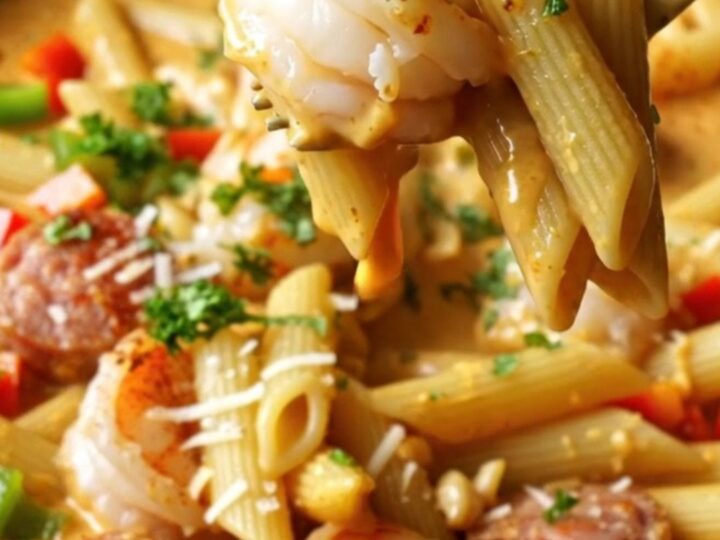
Creamy Cajun Sausage & Shrimp Penne Skillet
- Prep
- Cook
- Total
- Serves
- 4
This creamy Cajun sausage and shrimp penne skillet is a one-pan dinner that brings the bold, spicy flavors of New Orleans straight to your kitchen in under 20 minutes. Smoky andouille sausage, juicy seared shrimp, and al dente penne are tossed in a rich, velvety Cajun cream sauce that’s both comforting and exciting. The sauce is built right in the same skillet, picking up all the caramelized bits from the sausage and shrimp for maximum depth.
When you need a dinner that feels indulgent but comes together quickly, this creamy Cajun sausage and shrimp penne skillet delivers. The recipe follows the classic technique of searing the proteins first, then building a luscious cream sauce in the same pan to capture every bit of flavor.
Andouille sausage brings its signature smokiness, while Cajun seasoning adds warmth and a gentle kick. The shrimp cook in minutes and stay tender, and the penne soaks up the creamy, spicy sauce beautifully. This is the kind of meal that turns an ordinary weeknight into something special—all in one skillet and on the table in about 25 minutes.
Ingredients
- 10 oz penne pasta
- 2 tbsp olive oil, divided
- 8 oz andouille sausage, sliced into coins
- 1 lb large shrimp, peeled and deveined
- 2 tbsp Cajun seasoning
- 1 cup diced bell peppers (any color)
- 3 cloves garlic, minced
- 1 cup heavy cream
- 1/2 cup chicken broth
- 1/2 cup grated parmesan cheese
- 2 tbsp chopped fresh parsley, for garnish
Why this recipe works
The method here is all about layering flavor. Searing the andouille and shrimp first creates a deeply browned fond in the skillet, which then gets deglazed by the cream and broth.
That fond is pure umami—it infuses the sauce with a smoky, savory richness that can’t be achieved by simply simmering ingredients together. The order of operations ensures every component is cooked perfectly: the sausage is crisp, the shrimp are just cooked through, and the pasta is al dente.
The cream-based sauce is the perfect vehicle for Cajun seasoning. The fat in the cream carries the spices and mellows their heat, while the broth adds a savory backbone.
Tossing the cooked pasta directly into the sauce lets it absorb some of the liquid, so every bite is coated in flavor. The parmesan melts into the sauce, adding a salty, nutty note that balances the spice. Everything comes together in one pan, minimizing cleanup and maximizing taste.
Notes and substitutions
Andouille sausage is the classic choice for this dish, but any smoked sausage works. Look for a firm, fully cooked sausage that slices easily. The shrimp should be large (21-25 count) and peeled—leaving the tails on is fine for presentation, but removing them makes eating easier.
Cajun seasoning varies in heat and salt, so taste the sauce and adjust accordingly. If you prefer a milder dish, use a little less; for more heat, add a pinch of cayenne or a dash of hot sauce.
A cast iron skillet is ideal because it holds heat well and helps create that beautiful sear on the sausage and shrimp. If you don’t have one, a heavy stainless steel or nonstick skillet will work. Use a good-quality heavy cream for the richest sauce—light cream or half-and-half will be thinner. Grate the parmesan yourself for the best melt and flavor; pre-shredded cheese often contains anti-caking agents that can make the sauce grainy.
- andouille sausage: Smoked kielbasa or a spicy smoked sausage works well. For a milder flavor, use a sweet Italian sausage.
- heavy cream: Use half-and-half for a lighter sauce, though it will be less thick. For dairy-free, use full-fat coconut milk.
- chicken broth: Vegetable broth or even water can be used. The broth adds depth, but the Cajun seasoning carries the flavor.
- penne: Any short pasta like rigatoni, fusilli, or ziti works. Whole wheat or gluten-free pasta also works.
Equipment
- Large pot for pasta
- Large cast iron skillet
- Colander
- Wooden spoon or spatula
- Chef's knife
- Cutting board
- Measuring cups and spoons
Up next · Part 2 of 3
5 steps · 15 min of cooking · what to look for at each stage
Step-by-step instructions (Part 2)