Dinner · Part 2 of 3: Instructions
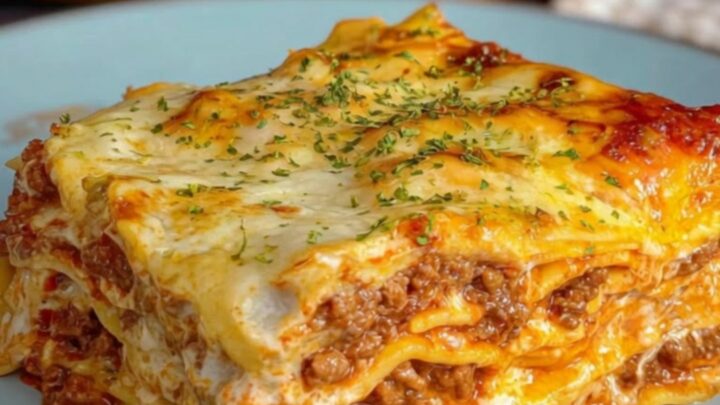
Creamy Alfredo Beef Lasagna with Melted Mozzarella Step-by-step instructions
- Prep
- Cook
- Total
- Serves
- 8
Before you start
Before beginning the assembly, ensure all ingredients are measured and ready on your counter. Brown the ground beef in the skillet, draining any excess fat to prevent the lasagna from becoming greasy.
If using traditional lasagna sheets instead of oven-ready ones, boil them ahead of time, rinse with cold water, and lay them flat on parchment paper to prevent sticking. Shred the mozzarella cheese and chop the fresh parsley so everything is ready for layering.
Ingredients at a glance (6)
- 1 1/2 lb ground beef
- 1 tbsp seasoning
- 3 cups Alfredo sauce, store-bought or made ahead
- 12 oven-ready lasagna sheets
- 3 cups shredded mozzarella cheese
- 2 tbsp finely chopped fresh parsley
Instructions
Browning and Seasoning the Beef
- Brown and Season the BeefPlace a large skillet over medium-high heat. Add the ground beef, breaking it apart with a wooden spoon. Sprinkle with the seasoning. Cook, stirring occasionally, until the meat is browned throughout and reaches a safe internal temperature of 160°F (71°C) to ensure it is fully cooked. Drain any excess fat from the skillet.Look for The meat should be deeply browned with no pink remaining.Safe temperature 160°F (71°C) internal temperature (ground meat)Tip Drain the fat thoroughly to prevent the lasagna from becoming greasy.
At the end of this phase, the ground beef should be fully browned with no pink remaining, releasing a savory aroma of herbs and spices. The meat should reach an internal temperature of 160°F (71°C). The excess fat must be completely drained from the skillet, leaving moist, finely crumbled, and highly seasoned beef ready for layering.
Assembling the Lasagna Layers
- Start the LayersPreheat the oven to 375°F (190°C). Spread 1/2 cup of the Alfredo sauce over the bottom of a 9x13-inch baking dish. Place 3 to 4 lasagna sheets on top of the sauce, overlapping them slightly if necessary to cover the bottom.Look for The bottom of the dish should be lightly coated to prevent sticking.Tip Oven-ready noodles work best when they do not touch the sides of the dish directly.
- Layer Sauce, Beef, and CheeseSpread half of the seasoned cooked ground beef over the pasta sheets. Pour 1 cup of Alfredo sauce evenly over the beef, then sprinkle with 1 cup of shredded mozzarella cheese. Repeat the layers, starting with another layer of pasta sheets, the remaining beef, 1 cup of Alfredo sauce, and 1 cup of mozzarella cheese.Look for Ensure the layers are distributed evenly to the edges.Tip Press down gently on the pasta sheets to compact the layers.
- Add the Top LayerPlace the final layer of pasta sheets on top. Pour the remaining Alfredo sauce over the noodles, spreading it to cover them completely. Sprinkle the remaining 1 cup of shredded mozzarella cheese evenly over the top layer.Look for The top noodles must be completely covered in sauce so they cook properly.Tip Moisture from the sauce is what cooks the oven-ready noodles.
After completing the assembly, the baking dish will be filled to near the top with clean, distinct layers. The pasta sheets should be completely covered by the Alfredo sauce and mozzarella cheese, with no dry edges exposed. The top layer of shredded mozzarella should form an even, white blanket over the entire surface of the dish.
Baking and Garnishing
- Bake the LasagnaCover the baking dish tightly with aluminum foil, ensuring it does not touch the cheese. Bake in the preheated oven for 25 minutes. Carefully remove the foil and bake for an additional 15 minutes, until the cheese is melted, golden, and bubbling at the edges.Look for The edges should bubble vigorously and the top should be golden brown.Tip Spray the underside of the foil with nonstick spray to prevent cheese from sticking.
- Garnish and RestRemove the lasagna from the oven and sprinkle the finely chopped fresh parsley over the hot melted cheese. Let the lasagna rest for 15 minutes before slicing. This allows the layers to set, ensuring clean slices when serving.Look for The cheese will firm up slightly and the steam will subside.Tip Use a sharp serrated knife to cut clean squares through the pasta layers.
At the end of the baking process, the mozzarella on top should be completely melted, bubbling vigorously at the edges, and beautifully browned in spots.
After resting for fifteen minutes, the lasagna will feel slightly firm to the touch, and the fresh green parsley sprinkled on top will stand out vibrantly against the golden, melted cheese.
Common mistakes
One of the most common mistakes is using a thin, watery Alfredo sauce, which results in a runny lasagna that collapses when sliced. Another frequent error is failing to cover the lasagna with foil during the first phase of baking; this dries out the top pasta sheets, leaving them hard and chewy.
Additionally, cutting into the lasagna immediately after removing it from the oven will cause the layers to slide apart, so patience during the resting period is absolutely crucial.
How to tell it’s done
To determine if the lasagna is perfectly cooked, check that the edges are bubbling vigorously and the cheese on top is completely melted and golden brown. The ground beef must be cooked to a safe internal temperature of 160°F (71°C) during the initial browning step.
Inserting a butter knife into the center of the baked lasagna should meet no resistance, indicating that the pasta sheets are completely tender and cooked through.
- Ground meat: 160°F (71°C) in the thickest part
Up next · Part 3 of 3
3 variations · storage & make-ahead · 4 answers · printable card
Tips, FAQ & printable recipe (Part 3)← Back to the ingredients (Part 1)