Dinner · Part 2 of 3: Instructions
Cranberry Orange Glazed Chicken Step-by-step instructions
- Prep
- Cook
- Total
- Serves
- 4
Before you start
Before starting, pat the chicken breasts completely dry with paper towels to ensure a proper sear. Slice one orange into thin rounds and juice the other orange to yield about one-half cup of fresh juice.
Rinse the fresh cranberries and discard any soft or bruised ones. Strip the fresh thyme leaves or keep the sprigs intact. Arrange all ingredients near the stove, as the cooking process moves quickly once the skillet is hot.
Ingredients at a glance (4)
- 4 boneless skinless chicken breasts
- 2 oranges, one juiced and one sliced
- 1 cup fresh cranberries
- 4 sprigs fresh thyme
Instructions
Searing the Chicken and Oranges
- Sear the chicken breastsHeat a heavy cast-iron skillet over medium-high heat. Add the chicken breasts to the hot skillet and sear for 5 to 6 minutes on each side until a deep golden-brown crust forms. Remove the chicken from the skillet and set aside on a plate; the chicken will finish cooking later in the sauce.Look for The chicken should release easily from the skillet when a proper crust has formed.Tip Do not move the chicken around in the skillet during the first few minutes of searing.
- Caramelize the orange slicesAdd the orange slices directly to the same skillet over medium-high heat. Sear the slices for 1 to 2 minutes per side until they are lightly charred and caramelized. Remove the caramelized orange slices from the skillet and set them aside with the chicken.Look for The orange slices will develop dark golden edges and become highly fragrant.Tip Use tongs to gently flip the orange slices so they do not break apart.
At the end of this phase, the chicken breasts should have a beautiful golden-brown crust on both sides, though they will not be fully cooked through yet.
The orange slices will be lightly charred and caramelized around the edges, releasing a sweet, warm citrus aroma into the kitchen.
Reducing the Cranberry Citrus Glaze
- Reduce the glazePour the fresh orange juice into the skillet, scraping up any browned bits from the bottom of the pan. Add the fresh cranberries to the skillet. Bring the mixture to a simmer over medium heat and cook for 3 to 4 minutes until the cranberries begin to soften and pop open, releasing their juices.Look for The liquid will bubble actively and turn a vibrant, glossy red as the cranberries burst.Tip Press gently on a few cranberries with a wooden spoon to help them release their juices.
The fresh cranberries will begin to soften, swell, and pop open, releasing their deep red juices into the bubbling orange reduction. The sauce will transform into a vibrant ruby-red color and start to thicken slightly, filling the air with a sweet and tart fruity fragrance.
Simmering and Basting the Dish
- Simmer and baste the chickenReturn the seared chicken breasts, caramelized orange slices, and any accumulated juices to the skillet. Nestled the fresh thyme sprigs into the sauce. Simmer gently over medium-low heat for 5 to 7 minutes, spooning the bubbly glaze over the chicken frequently, until the chicken reaches a safe internal temperature of 165°F (74°C).Look for The chicken is cooked through and the glaze is thick, glossy, and ruby-red.Safe temperature 165°F (74°C) internal temperature (poultry)Tip Baste the chicken continuously during the last few minutes of cooking for a glossy finish.
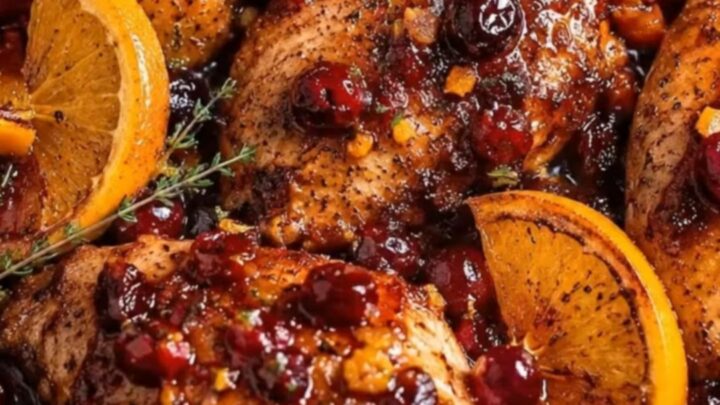
The glaze will be thick, glossy, and clinging to the chicken breasts. The chicken will be tender, fully cooked, and coated in a rich, ruby-red sauce, while the fresh thyme sprigs will have wilted slightly, infusing the entire dish with an earthy, herbal aroma.
Common mistakes
One common mistake is overcrowding the skillet when searing the chicken, which traps steam and prevents a golden crust from forming; sear in batches if necessary.
Another error is rushing the reduction of the orange juice and cranberries; if the heat is too high, the sugars can burn, turning the glaze bitter instead of sweet and tart. Keep the heat at a steady simmer to allow the flavors to concentrate slowly.
How to tell it’s done
The chicken is done when it is tender and the thickest part of the breast registers an internal temperature of 165°F (74°C) on an instant-read digital meat thermometer.
Avoid overcooking the chicken beyond this point, as white meat dries out quickly. The glaze should be thick enough to coat the back of a spoon, clinging beautifully to the chicken and caramelized orange slices.
- Poultry: 165°F (74°C) in the thickest part
Up next · Part 3 of 3
2 variations · storage & make-ahead · 3 answers · printable card
Tips, FAQ & printable recipe (Part 3)← Back to the ingredients (Part 1)