Desserts · Part 2 of 3: Instructions
Condensed Milk Cheesecake with Buttery Biscuit Crust Step-by-step instructions
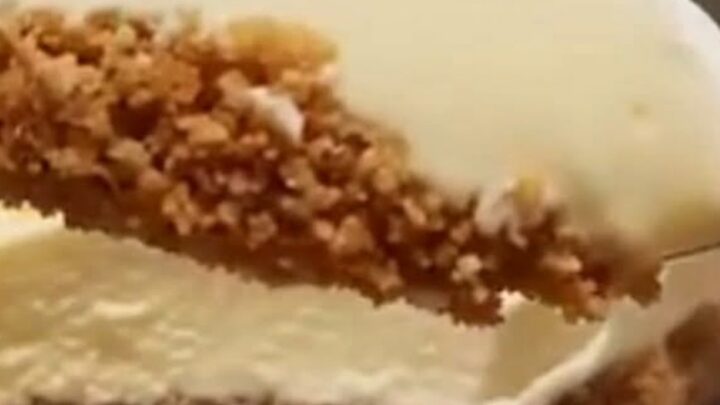
- Prep
- Cook
- Total
- Serves
- 10
Before you start
Take the cream cheese and the eggs out of the refrigerator about an hour before mixing so everything reaches room temperature. Melt the butter for the crust and the topping and let it cool slightly. Preheat the oven to 350°F (175°C), grease the base of the springform pan and line it with a round of parchment.
Ingredients at a glance (9)
- 1 1/2 cups graham cracker crumbs (about 12 full sheets, crushed)
- 5 tbsp unsalted butter, melted
- 2 tbsp granulated sugar
- 16 oz cream cheese, softened to room temperature
- 14 oz can sweetened condensed milk
- 2 large eggs, at room temperature
- 1 tsp vanilla extract
- 1/2 cup biscuit crumbs, coarsely crushed for the topping
- 2 tbsp unsalted butter, melted
Instructions
Crust first
- Heat the oven and prep the panHeat the oven to 350°F (175°C). Lightly grease the bottom of a 9-inch springform pan, then press a round of parchment paper into the base. This keeps the biscuit crust from sticking and makes it easy to lift the finished cheesecake off the plate cleanly for serving.Look for The oven should be fully preheated before the crust goes in, so the butter sets quickly around the crumbs.Tip Wrap the outside of the pan in foil if the base tends to leak butter during baking.
- Crush the biscuitsPulse the graham crackers in a food processor until they resemble coarse sand, or seal them in a zip-top bag and crush with a rolling pin. Measure out 1 1/2 cups for the crust and set 1/2 cup of coarser crumbs aside for the crumb topping so it stays visibly textured.Look for The crust crumbs should be fine and even; the topping crumbs should keep some pea-sized pieces for crunch.Tip Weighing the sheets before crushing keeps the crust-to-topping split accurate.
- Build and press the crustStir the 1 1/2 cups of fine crumbs with the sugar and the 5 tbsp of melted butter until every particle looks damp. Tip the mixture into the pan and press it firmly and evenly across the base with the bottom of a measuring cup, going right into the edges so the crust holds together when sliced.Look for Press until the surface feels solid and no loose crumbs slide when the pan is tilted.Tip A flat-bottomed cup compacts more evenly than fingertips and keeps the crust level.
- Pre-bake the crustBake the crust for 10 minutes, then set it on a cooling rack while the filling is mixed. Pre-baking toasts the butter and crumbs, so the base stays crisp instead of turning soggy under the filling during the long bake to come.Look for The crust should smell toasty and look a shade darker at the edges when it comes out.Tip Keep the oven running at 350°F (175°C) for the filling; no temperature change is needed.
At the end of this phase the crust should be baked for ten minutes, smelling distinctly of toasted butter and biscuit, and feeling firm when pressed with a fingertip. The edge should be a shade darker than the center.
The 1/2 cup of coarse topping crumbs should already be set aside so they are not accidentally mixed into the base. Check that the crust is even and packed into the corners before moving on.
The filling
- Beat the cream cheeseBeat the softened cream cheese in a large bowl with an electric mixer on medium speed for about 2 minutes, scraping the bowl once, until it is completely smooth and glossy. Starting with a lump-free base is the single most reliable way to get a velvety filling with no streaks.Look for No lumps should remain; scrape the bottom of the bowl where stiff pockets hide.Tip Cold cream cheese stays lumpy no matter how long it is beaten, so let it soften first.
- Add the condensed milk and vanillaPour in the sweetened condensed milk and the vanilla extract and beat on medium-low for about 1 minute, scraping the bowl once, until the mixture is thick, pale and uniform. The condensed milk provides both the sweetness and much of the creamy body, so no extra sugar goes into the filling.Look for The batter should fall from the beater in a thick, glossy ribbon.Tip Scrape the can and the bowl thoroughly — condensed milk is dense and hides at the bottom.
- Add the eggs gentlyAdd the eggs one at a time, mixing on low just until each one disappears before adding the next. Mixing on low speed and stopping as soon as the batter is smooth keeps excess air out of the filling, which helps prevent the top from cracking during the bake.Look for Stop mixing the moment the last egg is fully incorporated; the batter should look dense, not frothy.Tip Room-temperature eggs blend in seconds and leave no streaks behind.
- Fill and topPour the filling over the warm crust and smooth the surface with a spatula. Toss the reserved 1/2 cup coarse crumbs with the 2 tbsp melted butter and sprinkle them evenly over the top, pressing very lightly so they cling to the filling without sinking.Look for The topping should cover the surface in an even, thin layer with no gaps.Tip A warm crust grabs the filling slightly, which helps the two layers stay attached when sliced.
The finished batter should be completely smooth, thick and glossy, falling from the beater in a heavy ribbon with no visible lumps or egg streaks.
It should look dense rather than frothy — if the surface is full of bubbles, the mixer ran too fast or too long. The buttered crumb topping should sit evenly over the surface with no bare patches.
Bake, cool, chill
- Bake low and slowLower the oven to 325°F (163°C) and bake for 45 to 50 minutes. The cheesecake is done when the edges are set and puffed slightly but the center still trembles gently as one piece when the pan is nudged — an internal temperature of 160°F (71°C) in the middle confirms the eggs are fully cooked through.Look for Edges look matte and risen; the center wobbles gently, like set gelatin, when shaken.Safe temperature 160°F (71°C) internal temperature (egg dishes)Tip Check at 40 minutes; a slightly under-center bake finishes as it cools without cracking.
- Cool slowly, then chillTurn the oven off, crack the door open and leave the cheesecake inside for 20 minutes. Then cool on a rack for another 40 minutes, cover and refrigerate at least 4 hours, ideally overnight. This gradual cooling keeps the filling dense and creamy and helps the crumb topping stay intact.Look for Before chilling, the pan should feel barely warm and the center should no longer wobble.Tip Run a thin knife around the rim right after the oven rest so the cake releases cleanly as it sets.
- Slice and serveUnclip the springform ring, lift the cheesecake onto a serving plate and cut slices with a knife wiped clean between cuts. Lift each piece with a pie server onto a plate — the filling should hold a clean edge and look thick and velvety, exactly as a well-chilled condensed milk cheesecake should.Look for A warm, dry knife gives sharp corners and a glossy, creamy face on every slice.Tip Slice straight from the fridge; a cold cheesecake cuts far more cleanly than a room-temperature one.
After 45 to 50 minutes at 325°F (163°C), the edges should be set and matte while the center trembles gently as one piece when the pan is nudged; 160°F (71°C) in the middle confirms the eggs are cooked all the way through. After the oven rest and rack cooling, the surface should no longer wobble at all.
Common mistakes
The most common fault is overbeating after the eggs go in: too much air makes the cake rise, crack and then collapse into a dense, dry ring. Mix on low and stop as soon as the batter is smooth.
The second fault is overbaking — waiting for a completely stiff center before removing the cake means an overdone, grainy result; trust the wobble and the thermometer instead.
How to tell it’s done
The cheesecake is done when the outer two inches of the filling look matte, set and slightly puffed, while the center still trembles gently as one piece when the pan is nudged — it should never look unset.
For certainty, an instant-read thermometer in the center should read 160°F (71°C), which fully cooks the eggs.
- Egg dishes: 160°F (71°C) in the thickest part
Up next · Part 3 of 3
4 variations · storage & make-ahead · 5 answers · printable card
Tips, FAQ & printable recipe (Part 3)← Back to the ingredients (Part 1)