Dinner · Part 3 of 3: Tips & recipe card
Coconut Cream Spinach Saag Lamb Cubes: Slow-Cooker Comfort Tips, FAQ & printable recipe
- Prep
- Cook
- Total
- Serves
- 6
Tips for success
For the most tender lamb, choose a well-marbled cut like shoulder and cut it into uniform 1-inch cubes. This ensures even cooking and prevents some pieces from becoming dry while others are still tough.
If you have time, sear the lamb cubes in a hot skillet before adding them to the slow cooker for extra depth of flavor, though this step is optional and the recipe works beautifully without it.
Toasting the cumin seeds before adding them intensifies their nutty, earthy aroma. Simply heat them in a dry skillet over medium heat for 1–2 minutes, shaking frequently, until they smell fragrant.
If you prefer a smoother sauce, you can blend the cooked curry with an immersion blender before serving, but leaving it chunky showcases the tender lamb. Adjust the salt at the end, as the spinach and coconut cream can vary in seasoning.
Variations
- Spicy Saag: Add 1–2 finely chopped green chilies or a teaspoon of red chili flakes along with the aromatics. For extra heat, stir in a pinch of cayenne pepper with the cumin. Serve with a dollop of plain yogurt to cool the palate.
- Creamy Cashew Saag: Replace the coconut cream with 1 cup of cashew cream (soaked cashews blended with water) for a nuttier, richer sauce. Add 1/4 cup of toasted cashews as a garnish before serving. This variation is dairy-free and adds a subtle sweetness.
- Vegetarian Saag: Swap the lamb for 2 cups of paneer cubes or chickpeas. If using paneer, add it during the last 30 minutes of cooking to prevent it from becoming too soft. For chickpeas, use canned and rinse well; add them at the beginning so they absorb the flavors.
- Herb-Infused Saag: Add a handful of fresh mint leaves and a cinnamon stick along with the spinach. The mint adds a refreshing note, while the cinnamon provides warmth. Remove the cinnamon stick before serving. Garnish with additional cilantro and a squeeze of lemon.
Storage and make-ahead
- Fridge
- Store in an airtight container in the refrigerator for up to 4 days. Reheat gently on the stovetop or in the microwave, adding a splash of water if needed.
- Freezer
- Freeze in a freezer-safe container for up to 3 months. Thaw overnight in the refrigerator before reheating.
- Reheat
- Reheat in a saucepan over medium-low heat, stirring occasionally, until hot. Add a splash of coconut milk or water to loosen the sauce if necessary.
Store any leftover lamb saag in an airtight container in the refrigerator for up to 4 days. The flavors will continue to meld, making it even more delicious the next day.
Reheat gently in a saucepan over medium-low heat or in the microwave, adding a splash of water or coconut milk if the sauce has thickened too much. The curry also freezes well for up to 3 months; thaw overnight in the refrigerator before reheating.
You can assemble the slow cooker insert the night before: layer the lamb, spinach, aromatics, and coconut cream, then cover and refrigerate. In the morning, simply place the insert into the slow cooker and cook on LOW for 8 hours.
This makes it even easier to get dinner started on a busy day. Alternatively, cook the full curry and refrigerate it for up to 4 days; reheat gently before serving.
Serving ideas
Serve the lamb saag over steamed basmati rice or with warm garlic naan for sopping up the sauce. A side of cooling cucumber raita or a simple green salad would complement the rich curry nicely. For a low-carb option, serve over cauliflower rice. Garnish with fresh cilantro leaves and a squeeze of lemon juice for brightness, if desired.
This dish is hearty enough to be a complete meal on its own, but it also pairs well with other Indian-inspired sides like roasted vegetables or a simple lentil dal. When serving a crowd, set out the curry, rice, and naan in separate bowls and let everyone assemble their own plates. The leftovers are just as good the next day, so consider making a double batch.
Frequently asked questions
Can this recipe be made on high heat instead of low?
Why is the sauce thin after cooking?
Can this dish be frozen?
What is the best cut of lamb for this recipe?
Can the spinach be replaced with frozen spinach?
Coconut Cream Spinach Saag Lamb Cubes: Slow-Cooker Comfort
Ingredients
- 2 lb lamb shoulder, cut into 1-inch cubes
- 5 oz fresh baby spinach
- 1 tbsp fresh ginger, grated
- 4 cloves garlic, minced
- 2 tsp toasted cumin seeds
- 1 can (13.5 oz) coconut cream
- 1/2 cup fresh cilantro leaves, chopped
- 1 tsp kosher salt
- Steamed basmati rice, for serving
- Warm garlic naan, for serving
Instructions
- Place the cubed lamb shoulder directly into the bottom of a 6-quart slow cooker. Scatter the baby spinach over the lamb, then add the grated ginger, minced garlic, toasted cumin seeds, and kosher salt. Pour the coconut cream evenly over the top, and finish with the chopped cilantro. Do not stir; the layers will meld during cooking.
- Place the lid on the slow cooker and set it to LOW. Cook for 8 hours, or until the lamb is fork-tender and easily shreds. The spinach will wilt into the sauce, and the coconut cream will form a rich, aromatic gravy. Avoid opening the lid during cooking to maintain steady heat. Let it rest for 3 minutes before slicing.
- Turn off the slow cooker and let the lamb rest in the sauce, uncovered, for at least 3 minutes. This allows the juices to redistribute within the meat, ensuring each cube is moist and tender. The sauce will thicken slightly as it rests.
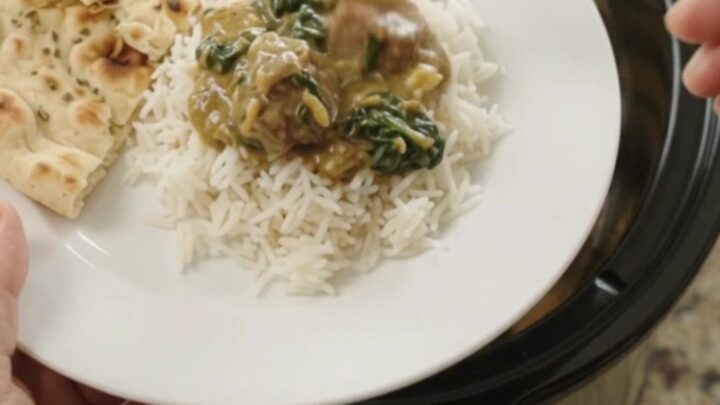
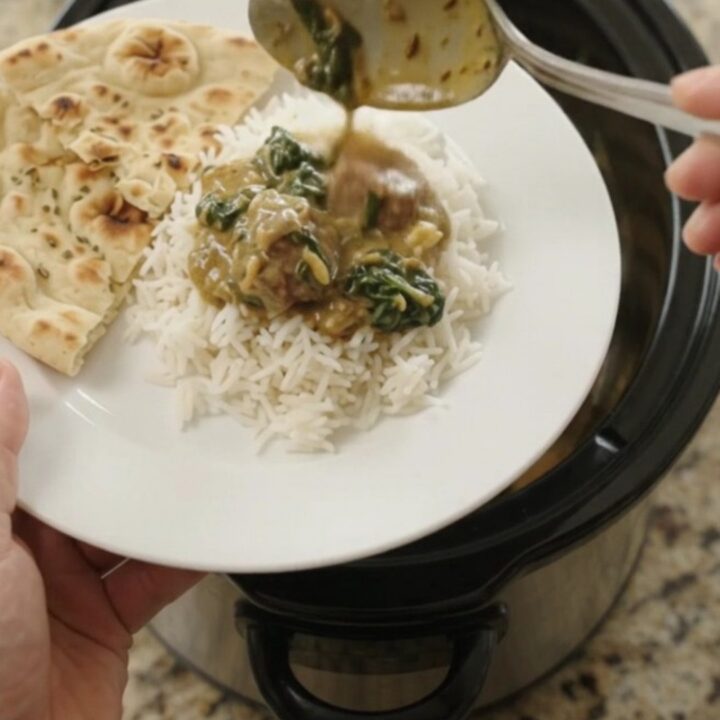
- Spoon steamed basmati rice onto each plate, then ladle the lamb and saag curry over the top. Serve with warm garlic naan on the side for dipping. Garnish with extra cilantro if desired, though the recipe is complete without it.
Estimated nutrition per serving
- Calories
- 520
- Protein
- 35 g
- Carbohydrates
- 12 g
- Fat
- 36 g
Next recipe

Slow Cooker Coconut Korma Lamb Cubes: Dump-and-Go
See the recipe → →This recipe is based on a short cooking video and is published under the pen name Clara Weller. It was checked before publication, but errors can slip through. Nutrition, when shown, is an estimate. Read more in our editorial policy and on our food safety page.
More recipes to try

Garlic Butter Golden Korma Lamb Cubes: One-Pot Slow Cooker
Total time: 8 h 15 min
Creamy Crockpot Korma Lamb Cubes
Total time: 8 h 10 min
Slow-Cooker Garlic Butter Red Curry Lamb Cubes
Total time: 8 h 15 min
Creamy Ghee Red Curry Lamb Cubes: Slow-Cooker Set-and-Forget
Total time: 8 h 10 min
Slow-Cooker Cashew Cream Red Curry Lamb Cubes
Total time: 8 h 15 min