Desserts · Part 3 of 3: Tips & recipe card
Classic Crème Brûlée with a Perfect Glassy Sugar Crust Tips, FAQ & printable recipe
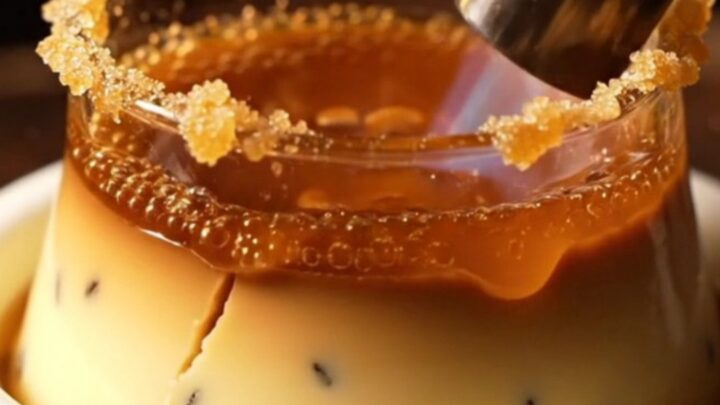
- Prep
- Cook
- Total
- Serves
- 4
Tips for success
For a perfectly even sugar crust, sprinkle the raw sugar in a thin, even layer. Too much sugar will be hard to caramelize evenly, and too little will leave gaps.
Use a kitchen torch with a fine flame and keep it moving in small circles to avoid burning. If you don't have a torch, you can use the broiler, but watch closely — it can burn quickly.
The custards can be made a day ahead and kept in the refrigerator, but the sugar crust should be torched just before serving.
If the caramelized sugar sits too long, it will absorb moisture from the custard and become sticky instead of crisp. For the best experience, torch and serve within 10 minutes.
Variations
- Citrus Crème Brûlée: Add the zest of one orange or lemon to the cream while warming. Let it steep for 10 minutes, then strain it out before tempering. The bright citrus notes complement the vanilla beautifully.
- Chocolate Crème Brûlée: Melt 4 oz (115 g) of dark chocolate into the warm cream before tempering. Whisk until smooth, then proceed with the recipe. The result is a rich, chocolatey custard with the same crackly sugar top.
- Coffee Crème Brûlée: Add 1 tablespoon of instant espresso powder to the warm cream and stir until dissolved. The coffee flavor pairs wonderfully with the vanilla and adds a sophisticated depth.
- Lavender Crème Brûlée: Infuse the warm cream with 1 tablespoon of dried culinary lavender for 10 minutes, then strain before tempering. The floral aroma is delicate and elegant, perfect for spring.
Storage and make-ahead
- Fridge
- Store baked, un-torched custards covered in the refrigerator for up to 3 days. Torch the sugar just before serving to keep the crust crisp.
Leftover crème brûlée (without the sugar crust) can be stored in the refrigerator, covered, for up to 3 days.
If the sugar crust has already been torched, it will soften over time; it's best to scrape it off and re-torch fresh sugar if you want to serve it again. Keep the custards covered to prevent them from absorbing other odors.
The custards can be fully prepared, baked, and chilled up to 2 days in advance. Keep them covered in the refrigerator. Torch the sugar crust just before serving to maintain the crisp texture. This makes crème brûlée an excellent make-ahead dessert for dinner parties.
Serving ideas
Serve crème brûlée in its ramekin, placed on a small plate or saucer. The contrast between the warm, crackling sugar and the cold, creamy custard is the highlight.
A simple garnish of a few fresh berries or a mint sprig adds color, though it's not necessary — the dessert is stunning on its own.
For a more indulgent presentation, pair with a crisp butter cookie or a shortbread. The dessert is rich, so small portions are ideal. Serve immediately after torching, so the sugar crust is still crisp and the custard is cold. This classic is a perfect ending to any meal.
Frequently asked questions
Why does the crème brûlée need a water bath?
Can the crème brûlée be made without a kitchen torch?
Why is the sugar crust soft instead of crackly?
Can the custard be made with vanilla extract instead of vanilla beans?
How long can the prepared custards be stored?
Classic Crème Brûlée with a Perfect Glassy Sugar Crust
Ingredients
- 6 large egg yolks
- 100 g granulated sugar (about 1/2 cup)
- 2 Madagascar vanilla pods, seeds scraped
- 500 ml heavy cream (about 2 cups)
- 20 g raw sugar per ramekin (about 1 1/2 tbsp)
Instructions
- In a large bowl, whisk the egg yolks with the granulated sugar until the mixture is pale and slightly thickened, about 2 minutes. Scrape the seeds from the vanilla pods into the yolk mixture and whisk to distribute the seeds evenly.
- In a saucepan, warm the heavy cream over medium heat until steaming and small bubbles appear around the edges, but do not let it boil. Slowly pour the warm cream into the yolk mixture in a thin stream, whisking constantly to temper the eggs and create a smooth custard base.
- Set a fine-mesh strainer over a large measuring cup or bowl. Pour the custard through the strainer to remove any cooked egg bits and the vanilla pod husks. This ensures a silky-smooth texture.
- Divide the custard evenly among four shallow ramekins, filling each about three-quarters full. Tap each ramekin gently on the counter to release any air bubbles that may have formed.
- Place the ramekins in a large roasting pan. Carefully pour hot water into the pan until it reaches halfway up the sides of the ramekins. Transfer the pan to the oven and bake at 325°F (165°C) for 35 minutes, or until the custards are set around the edges but still slightly wobbly in the center.
- Remove the ramekins from the water bath and let them cool to room temperature on a wire rack. Once cool, cover each ramekin with plastic wrap and refrigerate for at least 4 hours, or until thoroughly chilled and set.
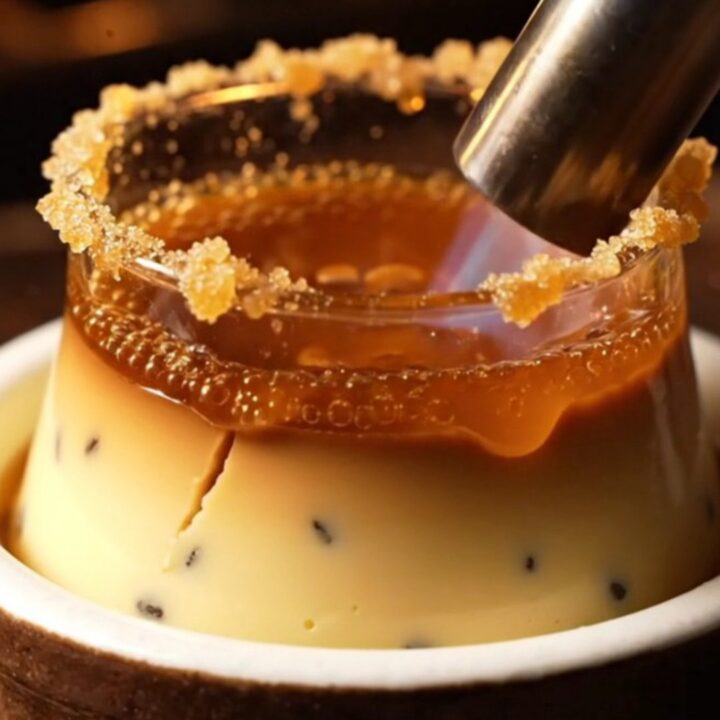
- Just before serving, sprinkle about 20 g (1 1/2 tablespoons) of raw sugar evenly over the top of each chilled custard. Use a kitchen torch to caramelize the sugar, moving the flame in a circular motion until the sugar melts and turns deep amber and glassy.
- Let the caramelized sugar cool for 1 minute to harden completely. Serve immediately, tapping the crust with the back of a heavy spoon to crack it open and reveal the cold, creamy custard beneath.
Estimated nutrition per serving
- Calories
- 520
- Protein
- 6 g
- Carbohydrates
- 45 g
- Fat
- 35 g
Next recipe
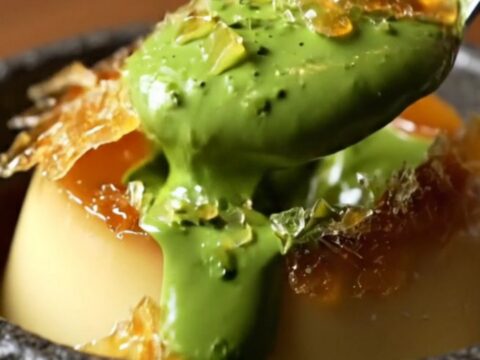
Earthy Uji Matcha Crème Brûlée with a Shattering Sugar Crust
See the recipe → →This recipe is based on a short cooking video and is published under the pen name Clara Weller. It was checked before publication, but errors can slip through. Nutrition, when shown, is an estimate. Read more in our editorial policy and on our food safety page.
More recipes to try
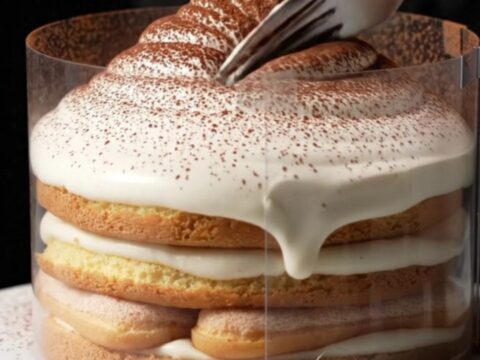
Viral Tsunami Tiramisu Cake
Total time: 2 h 30 min
Velvety Ube Halaya Coconut Tiramisu
Total time: 5 h 20 min
Salted Caramel Banana Tiramisu for Easy Make-Ahead Dessert
Total time: 5 h 25 min
Pumpkin Spice Chai Latte Tiramisu for Cozy Autumn Evenings
Total time: 6 h 20 min
Decadent Black Forest Chocolate Tiramisu
Total time: 5 h 25 min