Dinner · Part 2 of 3: Instructions
Classic Swiss Potato Rösti with Crispy Golden Crust Step-by-step instructions
- Prep
- Cook
- Total
- Serves
- 4
Before you start
Before you begin, ensure your potatoes are parboiled and cooled slightly so they are easier to handle when grating. Have your skillet, spatula, and a wooden board ready nearby.
Measure out your herbs and grate the garlic beforehand, as the frying process moves quickly once the butter hits the hot pan. Ensure your skillet is the correct size to create a rösti with enough thickness to achieve the contrast between the crispy edges and the soft, steaming center.
Ingredients at a glance (6)
- 700 g waxy Yukon Gold potatoes, parboiled and coarsely grated
- 2 tbsp fresh rosemary and thyme, chopped
- 1.5 tsp sea salt
- 3 cloves garlic, grated
- 50 g clarified butter
- 1/2 cup sour cream chive dip and flaky sea salt, for serving
Instructions
Seasoning and Preparation
- Prepare the Potato MixturePlace the coarsely grated parboiled potatoes into a large mixing bowl. Add the freshly chopped rosemary, thyme, grated garlic, and sea salt. Toss the mixture gently with your hands or a fork to ensure the herbs and seasoning are evenly distributed without breaking or mashing the potato strands, which keeps the texture light and airy.Look for The herbs are evenly distributed throughout the potato strands.Tip Keep the potato strands long and intact for the best final texture.
The potato strands should be well-coated with the herbs and garlic, appearing uniform and vibrant. The mixture should feel slightly tacky to the touch, indicating that the starch is ready to help bind the rösti together in the pan. Ensure the seasoning is evenly distributed before proceeding to the heat, as you will not be able to adjust the flavor once the cooking process begins.
Forming the Crust
- Fry the RöstiHeat the clarified butter in a 24cm skillet over medium-high heat until it is shimmering and hot. Add the potato mixture to the skillet, pressing it down loosely into an even layer. Fry the rösti undisturbed for ten minutes. Avoid moving or stirring the potatoes, as this allows the interlocking strands to form a deep, mahogany crust on the bottom side.Look for The bottom forms a deep, crisp mahogany shell.Tip Resist the urge to flip too early to ensure a solid crust forms.
The skillet should be sizzling loudly as the butter melts. The potatoes will begin to release their moisture and the edges will start to brown. You should smell the aroma of toasted garlic and herbs rising from the pan.
The rösti should remain undisturbed, allowing the bottom to harden into a solid, golden-brown disc that can withstand the flip without crumbling or losing its integrity.
Final Golden Finish
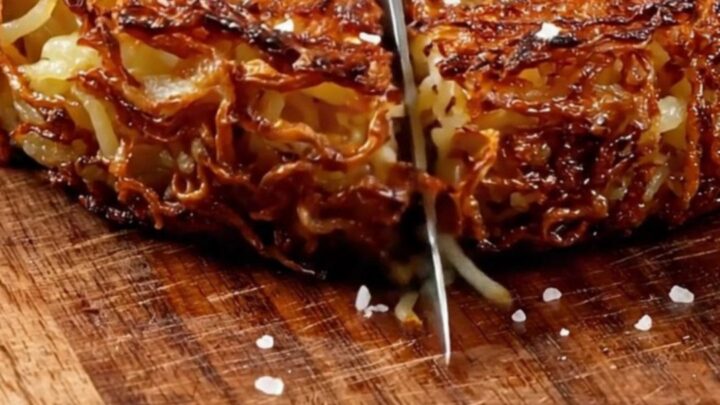
- Flip and FinishCarefully flip the rösti and continue to cook the other side for another ten minutes until it reaches the same deep, crisp golden-brown color. Once finished, invert the rösti onto a wooden board. Garnish with a sprinkle of flaky sea salt and serve immediately alongside a generous dollop of sour cream chive dip for a classic, satisfying experience.Look for Both sides are golden-brown and crispy.Tip Use a large plate or a flat lid to help invert the rösti safely.
Both sides of the rösti should be uniformly deep brown and visually crispy. The structure should be firm and hold together well when inverted onto the board. The final result should look like a large, golden-brown pancake with a distinct, crunchy shell. It should sound hollow when tapped, and the aroma should be rich with the scent of browned butter and fresh herbs.
Common mistakes
A common mistake is using raw potatoes instead of parboiled ones, which leads to a rösti that is either burnt on the outside and raw in the middle or too soft and mushy.
Another error is moving or stirring the potatoes while they are frying; this prevents the crust from forming and causes the strands to separate. Finally, crowding the pan or using too little fat can result in an uneven, pale crust that lacks the signature crunch of a traditional rösti.
How to tell it’s done
The rösti is done when both sides have reached a deep, mahogany-brown color and the crust feels firm and crisp to the touch. A metal spatula should slide easily underneath the edges without the potato strands breaking apart.
The center should be hot and tender, with the potato strands fully cooked through but still retaining their individual shape, providing a soft, buttery mouthfeel that perfectly complements the shattering exterior.
Up next · Part 3 of 3
2 variations · storage & make-ahead · 3 answers · printable card
Tips, FAQ & printable recipe (Part 3)← Back to the ingredients (Part 1)