Dinner · Part 1 of 3: Ingredients
Classic Swiss Potato Rösti with Crispy Golden Crust
- Prep
- Cook
- Total
- Serves
- 4
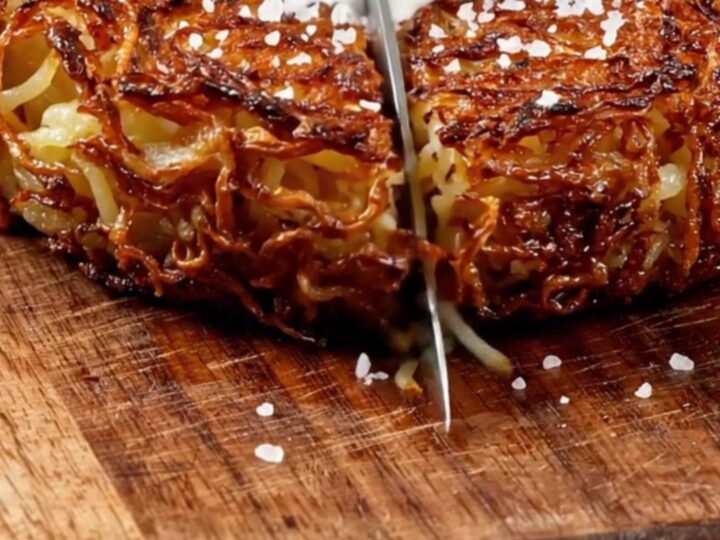
Discover the secret to the ultimate Swiss potato rösti, a dish defined by its contrasting textures. With a shattering, mahogany-colored crust on the outside and soft, buttery potato strands within, this recipe provides a masterclass in simple, high-impact cooking.
By following these precise steps, you can recreate the iconic bistro experience at home, turning humble potatoes into a sophisticated and deeply satisfying meal that is perfect for any occasion.
The Swiss rösti is a culinary classic that transforms grated potatoes into a singular, crispy cake. Unlike a hash brown, which is often loose, a proper rösti relies on the starch of parboiled potatoes and the precision of a hot skillet to hold its shape.
This version uses fresh rosemary, thyme, and garlic to infuse the potatoes with aromatic depth, while clarified butter ensures the exterior achieves an impeccable, uniform crispness that is impossible to resist. It is a dish that celebrates the beauty of simplicity and the perfection of classic techniques.
Ingredients
Main Ingredients
- 700 g waxy Yukon Gold potatoes, parboiled and coarsely grated
- 2 tbsp fresh rosemary and thyme, chopped
- 1.5 tsp sea salt
- 3 cloves garlic, grated
- 50 g clarified butter
For Serving
- 1/2 cup sour cream chive dip and flaky sea salt, for serving
Why this recipe works
The method of using parboiled waxy potatoes is essential for the structure of the rösti. By partially cooking the potatoes before grating, the starch becomes slightly tacky, which helps the strands adhere to one another during the frying process. This creates a cohesive structure that remains tender inside while allowing the exterior to crisp up properly without falling apart in the skillet.
Frying the rösti undisturbed is the secret to achieving that signature mahogany crust. When the potatoes are left to cook without being moved or pressed down too firmly, the gaps between the strands allow the heat to penetrate and the butter to circulate, creating a delicate, web-like lattice that turns into a shattering shell.
This patience is rewarded with the perfect textural contrast between the exterior and the interior.
Notes and substitutions
Choosing the right potato is critical for success. Waxy varieties like Yukon Gold or red-skinned potatoes are ideal because they contain less starch than starchy baking potatoes, which prevents the rösti from becoming gummy or overly soft.
Using a coarse grater ensures the strands are thick enough to provide texture, while parboiling them just until they are tender but still firm to the touch makes them easy to work with.
Clarified butter is the preferred fat for this recipe because it has a higher smoke point than regular butter. It allows you to fry the rösti at the necessary temperature for the required duration without the milk solids burning. If you do not have clarified butter, you can use ghee or a high-quality neutral oil, though the butter provides a rich, nutty flavor that is traditional to the dish.
- clarified butter: ghee or a high-smoke point neutral oil like grapeseed oil
- Yukon Gold potatoes: any waxy or all-purpose potato variety that holds its shape well
Equipment
- coarse grater
- 24cm non-stick skillet
- wooden board
- spatula
- mixing bowl
Up next · Part 2 of 3
3 steps · 20 min of cooking · what to look for at each stage
Step-by-step instructions (Part 2)