Desserts · Part 2 of 3: Instructions
Classic Southern Banana Pudding with Vanilla Wafers Step-by-step instructions
- Prep
- Cook
- Total
- Serves
- 8
Before you start
Before beginning, ensure that the bananas are ripe but firm, as overripe fruit may become mushy too quickly. Prepare the vanilla pudding in advance if it requires cooking, and let it cool completely to room temperature before starting the assembly.
Have all ingredients measured and ready, and ensure the glass dish is clean and dry. Keeping the workspace organized will make the layering process much smoother and prevent the pudding from becoming messy during the assembly phase.
Ingredients at a glance (4)
- 3 cups vanilla pudding, prepared
- 1 box vanilla wafers
- 4 bananas, sliced
- 2 cups whipped topping
Instructions
Preparing the pudding
- Prepare the baseBegin by preparing the vanilla pudding according to the package instructions if not using pre-made custard. Ensure the pudding is smooth and free of lumps. Use a rubber spatula to gently fold the mixture until it reaches a thick, pourable consistency suitable for layering.Look for The pudding should be thick and glossy.Safe temperature 160°F (71°C) internal temperature (egg dishes)Tip Chill the pudding slightly before assembly to help the layers hold their shape better.
The custard should be smooth, thick, and completely free of lumps. It should coat the back of a spoon comfortably, indicating that it has been cooked properly to the required temperature of 160°F (71°C). Once achieved, remove it from the heat immediately and allow it to cool to room temperature before proceeding to the assembly stage to ensure the layers remain distinct.
Layering the ingredients
- Layer the ingredientsSpread a thin layer of vanilla pudding at the bottom of the glass casserole dish. Arrange a layer of vanilla wafers over the pudding, followed by a layer of sliced fresh bananas. Repeat these layers until all ingredients are used, finishing with a generous layer of pudding on top.Look for The dish should be filled with uniform, distinct layers.Tip Press the banana slices gently into the pudding so they do not slide during serving.
The layers should be visually distinct through the sides of the glass dish. Ensure each layer of wafers is arranged in a single, even row and that the banana slices are placed in a consistent pattern. The pudding should be spread gently to cover the bananas and wafers completely without pushing them out of place, creating a uniform foundation for the next layer.
Topping and chilling
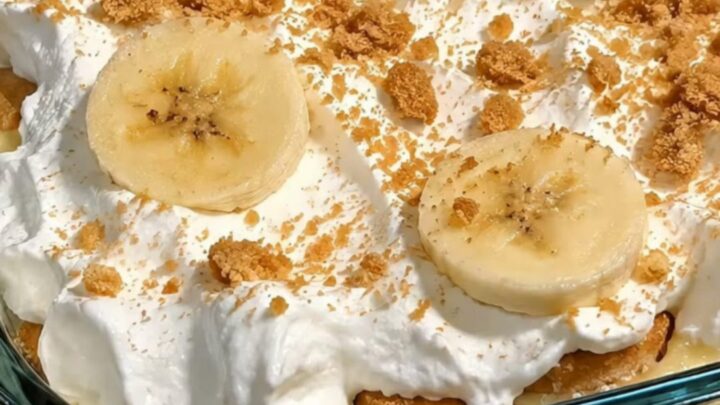
- Add topping and garnishSpread the whipped topping evenly over the final layer of pudding. Crush a handful of remaining vanilla wafers and sprinkle them over the top for texture. Place the dish in the refrigerator for at least two hours to allow the wafers to soften and the flavors to meld together perfectly before serving.Look for The whipped topping should be smooth and the crumbs evenly distributed.Tip Garnish with a few extra banana coins right before serving to keep them from browning.
The whipped topping should be spread in an even, smooth layer over the top of the pudding. The crushed wafers should be sprinkled uniformly to add visual interest and texture.
Once assembled, the dish should look complete and appetizing. After chilling for two hours, the pudding will have firmed up and the flavors will be perfectly integrated, indicating it is ready to serve.
Common mistakes
A common mistake is using bananas that are too soft or overripe, which can make the pudding watery. Another error is failing to allow enough chilling time; the dessert needs at least two hours for the wafers to absorb the moisture from the custard, which is what gives the pudding its signature texture.
Avoid over-mixing the whipped topping, as this can cause it to deflate and lose its light, fluffy consistency when spread over the top of the dish.
How to tell it’s done
The pudding is ready when the layers have set firmly after the required chilling period. The custard should be thick enough to hold its shape when scooped, and the wafers should be soft yet retain a slight structure.
Because this recipe uses eggs in the custard base, ensure the internal temperature of the custard reaches 160°F (71°C) during the initial cooking stage to ensure safety and proper thickening before cooling and assembly.
- Egg dishes: 160°F (71°C) in the thickest part
Up next · Part 3 of 3
2 variations · storage & make-ahead · 3 answers · printable card
Tips, FAQ & printable recipe (Part 3)← Back to the ingredients (Part 1)