Breakfast · Part 2 of 3: Instructions
Classic One-Blender Dutch Baby Pancake Step-by-step instructions
- Prep
- Cook
- Total
- Serves
- 2
Before you start
Before beginning, ensure all ingredients are measured and ready for the blender. Preheat your oven to 425°F (220°C) and place the empty cast-iron skillet inside so it heats up along with the oven.
This ensures that the butter melts instantly and the skillet is at the correct temperature when the batter is added. Prepare your garnishes, such as washing the raspberries and slicing the lemon, so you are ready to serve the pancake immediately when it comes out of the oven.
Ingredients at a glance (9)
- 3 eggs, room temperature
- 120 ml whole milk
- 65 g all-purpose flour
- 15 g sugar
- 5 ml vanilla extract
- 35 g butter, for the skillet
- 80 g fresh raspberries
- powdered sugar, for serving
- fresh lemon juice, to taste
Instructions
Blending the batter
- Prepare the batterCombine the eggs, whole milk, all-purpose flour, sugar, and vanilla extract in a blender. Blend the mixture on high speed for approximately thirty seconds until the texture is completely smooth and noticeably frothy. Ensure no dry flour pockets remain stuck to the sides of the blender container for the best results.Look for The mixture should be pale, light, and airy with a layer of foam on the surface.Tip Using room-temperature eggs helps the batter emulsify more effectively, resulting in a better rise during baking.
The batter should be completely uniform, smooth, and frothy after blending. It should have a thin, pourable consistency, similar to a heavy cream. Check that no dry flour remains at the bottom of the blender container. A good, bubbly top layer indicates that the batter has been properly aerated, which is a key requirement for the pancake to achieve its dramatic rise in the oven.
Baking the pancake
- Heat the skillet and bakePreheat the oven to 425°F (220°C). Place the butter into a cast-iron skillet and put it in the oven to melt. Once the butter is foaming and hot, carefully pour the prepared batter directly into the center of the skillet. Return the skillet to the oven and bake for sixteen minutes until the pancake is dramatically puffed, bronzed, and the eggs reach an internal temperature of 160°F (71°C) to be considered fully cooked.Look for The sides should climb high up the skillet walls, becoming crispy and golden-brown.Safe temperature 160°F (71°C) internal temperature (egg dishes)Tip Do not open the oven door during the first twelve minutes of baking to prevent the pancake from collapsing prematurely.
During the baking phase, the pancake will undergo a significant transformation. It will rise dramatically above the edges of the cast-iron skillet, forming ruffled, crispy, golden-brown walls.
The center will remain lower and custardy. The kitchen should smell like toasted butter and warm vanilla. Ensure the pancake is cooked through and reaches the safe internal temperature of 160°F (71°C) before removing it from the oven.
Garnishing and serving
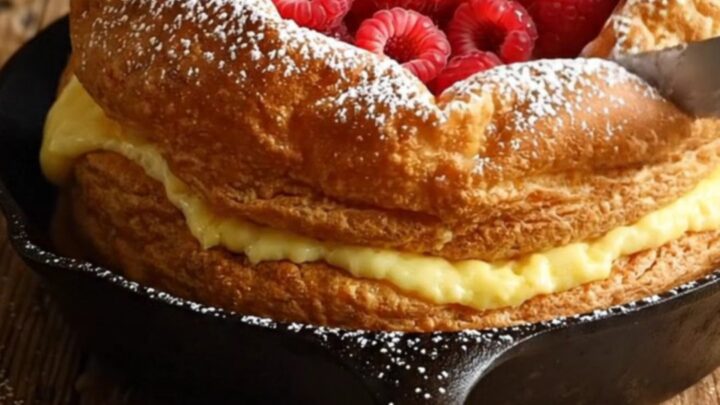
- Garnish and serveRemove the skillet from the oven and immediately sprinkle the top with a generous dusting of powdered sugar. Scatter the fresh raspberries over the surface and drizzle with a small amount of fresh lemon juice. Slice into wedges while still hot and serve immediately to enjoy the contrast between the crispy edges and custardy interior.Look for The pancake should look golden and crisp, holding its dramatic shape for a few moments before settling.Tip Serve immediately, as the Dutch baby will naturally deflate slightly once removed from the intense heat of the oven.
Once removed from the oven, the pancake will begin to deflate slightly, which is perfectly normal. The edges should be crisp and light, while the center is tender. The addition of fresh raspberries and a dusting of powdered sugar should provide a beautiful contrast in color and texture. Serve immediately while the pancake is hot to enjoy the best possible texture and flavor experience.
Common mistakes
A common mistake is opening the oven door too early, which causes the pancake to collapse. Avoid the temptation to peek until the baking time is nearly complete.
Another issue is using a cold skillet; the pan must be preheated to ensure the butter sizzles upon contact, which is vital for the pancake to rise correctly. Finally, ensure the batter is thoroughly blended so that no flour clumps remain, as this can negatively impact the final texture.
How to tell it’s done
The Dutch baby is done when it is dramatically puffed and the edges are a deep, golden-brown. The center should be set but still retain a slightly soft, custardy texture.
The internal temperature of the egg-based mixture should reach 160°F (71°C) to ensure it is cooked through. If the pancake looks pale, continue baking for another minute or two, but watch closely to avoid burning the crispy edges.
- Egg dishes: 160°F (71°C) in the thickest part
Up next · Part 3 of 3
2 variations · storage & make-ahead · 3 answers · printable card
Tips, FAQ & printable recipe (Part 3)← Back to the ingredients (Part 1)