Desserts · Part 2 of 3: Instructions
Classic Marble Butter Cake with a Gorgeous Zebra Swirl Step-by-step instructions
- Prep
- Cook
- Total
- Serves
- 10
Before you start
Before starting, bring the butter and eggs to room temperature for the best results. Measure all ingredients accurately, and preheat the oven to 350°F (175°C). Grease a 9x5-inch loaf pan with butter or nonstick spray, and line the bottom with parchment paper if desired.
Have a large mixing bowl, an electric mixer, a rubber spatula, and a separate bowl for dry ingredients ready. The recipe is quick to assemble, so having everything prepped means the batter can go into the oven without delay.
Ingredients at a glance (10)
- 1/2 cup unsalted butter, softened
- 1 1/2 cups granulated sugar
- 3 large eggs
- 1 cup whole milk
- 2 tsp pure vanilla extract
- 2 cups all-purpose flour
- 2 tsp baking powder
- 1/2 tsp salt
- 1/4 cup unsweetened cocoa powder
- 1 tbsp confectioners' sugar, for dusting
Instructions
Creaming and Mixing
- Cream Butter and SugarIn a large bowl, beat the softened butter and granulated sugar together with an electric mixer on medium speed until light and fluffy, about 3 minutes. Add the eggs one at a time, beating well after each addition. Scrape down the sides of the bowl as needed.Look for The mixture should look pale and airy, with no streaks of butter.Safe temperature 160°F (71°C) internal temperature (egg dishes)Tip Ensure the butter is truly softened to room temperature for the best creaming.
- Add Milk and VanillaPour in the milk and vanilla extract, then mix on low speed until just combined. The mixture may look slightly curdled; that's fine.Look for The batter will be smooth and liquidy.Tip If the mixture curdles, it will come together once the flour is added.
- Combine Dry IngredientsIn a separate bowl, whisk together the flour, baking powder, and salt. Add the dry ingredients to the wet mixture and stir with a spatula until just combined. Do not overmix.Look for The batter should be thick and smooth with no dry streaks.Tip Overmixing can make the cake tough; fold gently.
At the end of this phase, the butter and sugar should be pale and fluffy, and the eggs fully incorporated. The batter will look smooth and slightly glossy.
After adding the milk and flour, it should be thick but pourable, with no dry streaks. The vanilla batter is ready to be divided.
Layering and Swirling
- Divide and Chocolate the BatterTransfer half of the batter to another bowl. Sift the cocoa powder over one half and stir until well combined. The chocolate batter will be slightly thicker.Look for The chocolate batter should be uniform in color.Tip Sifting the cocoa prevents lumps.
- Layer the BattersPreheat the oven to 350°F (175°C). Grease a 9x5-inch loaf pan. Spoon alternating scoops of vanilla and chocolate batter into the pan, creating a checkerboard pattern.Look for The pan should be about three-quarters full.Tip Use a large spoon or cookie scoop for even layers.
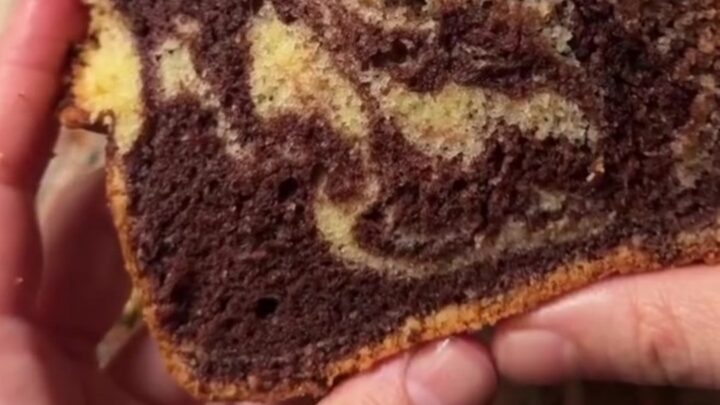
- Create the SwirlRun a knife through the batter in a figure-eight motion to create the marble pattern. Do not over-swirl or the layers will blend completely.Look for You should see distinct ribbons of vanilla and chocolate.Tip Two or three figure-eights are enough.
The loaf pan should be filled with alternating scoops of vanilla and chocolate batter, creating a checkerboard effect. After running the knife through, you should see distinct ribbons of both colors. The batter should be evenly distributed, and the top should be relatively level.
Baking and Finishing
- Bake the CakeBake the loaf in the preheated oven for 45 minutes, or until a toothpick inserted into the center comes out mostly clean. The top should be golden and domed.Look for The cake will be puffed and golden, and the kitchen will smell buttery.Safe temperature 160°F (71°C) internal temperature (egg dishes)Tip If the top browns too quickly, tent with foil.
- Cool and DustLet the cake cool in the pan for 10 minutes, then transfer to a wire rack to cool completely. Dust with confectioners' sugar before slicing.Look for The cake should be cool to the touch.Tip Slice with a serrated knife for clean pieces.
The cake should be golden brown and domed, with a toothpick coming out mostly clean. The kitchen will smell of butter and vanilla. After cooling, the loaf should be firm enough to slice cleanly, revealing the zebra pattern inside.
Common mistakes
One of the most common mistakes is overmixing the batter, which develops the gluten and makes the cake tough. Another is over-swirling the batters, which can turn the marble pattern into a muddy gray.
To avoid this, use a gentle hand and stop after just a few figure-eights. Also, be sure to measure the flour correctly—spoon it into the measuring cup and level it off, rather than scooping directly, which can pack in too much flour and result in a dry cake.
How to tell it’s done
The cake is done when a toothpick inserted into the center comes out with only a few moist crumbs attached, and the top is golden brown and domed. The internal temperature should reach at least 160°F (71°C) to ensure the eggs are fully cooked.
If the top browns too quickly, tent loosely with aluminum foil for the last 10 minutes of baking. Let the cake cool in the pan for 10 minutes, then transfer to a wire rack to cool completely before slicing.
- Egg dishes: 160°F (71°C) in the thickest part
Up next · Part 3 of 3
4 variations · storage & make-ahead · 5 answers · printable card
Tips, FAQ & printable recipe (Part 3)← Back to the ingredients (Part 1)