Desserts · Part 2 of 3: Instructions
Caramelized Kouign-Amann: Buttery Breton Pastry Step-by-step instructions
- Prep
- Cook
- Total
- Serves
- 8
Before you start
Before starting, make sure the butter is cold but pliable—if it's too hard, let it sit at room temperature for 10 minutes. Line a baking sheet with parchment paper and have the ring molds ready.
Measure all ingredients accurately, as the ratio of butter to dough is crucial. Prepare a clean, cool work surface for laminating. Clear plenty of space in the refrigerator for the dough rests.
Ingredients at a glance (7)
- 500 g bread flour (about 4 cups)
- 300 ml water (about 1 1/4 cups)
- 10 g fine sea salt (about 1 1/2 tsp)
- 10 g instant yeast (about 1 tbsp)
- 300 g salted Brittany butter (about 1 1/3 cups, cold)
- 300 g granulated sugar (about 1 1/2 cups)
- 100 g granulated sugar (about 1/2 cup), for coating
Instructions
Dough and Lamination
- Make the doughIn the bowl of a stand mixer, combine the bread flour, water, salt, and instant yeast. Mix on low speed until a shaggy dough forms, then increase to medium and knead for 8 minutes, until smooth and elastic. Cover the bowl with plastic wrap and let rest for 30 minutes.Look for The dough should be smooth and pull away from the sides of the bowl.Tip If the dough feels too stiff, add a teaspoon of water at a time until it comes together.
- First restTransfer the dough to a lightly floured surface and shape it into a rectangle. Wrap in plastic and refrigerate for at least 1 hour, or up to overnight, until firm but not hard.Look for The dough should be chilled and slightly firm to the touch.Tip Chilling the dough makes it easier to laminate.
At the end of this phase, the dough should be smooth and elastic after kneading, and after the first rest, it should be chilled and firm.
The lamination process will result in a dough that is streaked with butter and sugar, with visible layers. The dough should be pliable but still cold; if it starts to soften, chill it again before proceeding.
Shaping and Rising
- Laminate with butter and sugarOn a floured surface, roll the chilled dough into a rectangle about 1/4 inch thick. Spread the 300 g of salted butter evenly over two-thirds of the dough, then sprinkle the 300 g of sugar over the butter. Fold the unbuttered third over the middle, then the other third over that, like a letter. Give the dough a quarter turn and roll it out again to the same size. Repeat the fold and roll process once more, then wrap and refrigerate for 30 minutes.Look for The dough will look streaky with butter and sugar; that's perfect.Tip Work quickly to keep the butter cold; if it starts to soften, chill the dough again.
- Shape the pastriesRoll the laminated dough into a rectangle about 1/2 inch thick. Cut the dough into 8 equal squares. Brush each square with water, then dip them in the extra sugar, coating all sides. Place each sugared square into a ring mold set on a parchment-lined baking sheet. Tuck the corners of the dough into the center of each ring so they overlap slightly.Look for The dough should be well-coated with sugar; the corners tucked will help create the signature shape.Tip Use a pastry brush to apply water evenly—this helps the sugar stick.
- Second restCover the ring molds loosely with plastic wrap and let the pastries rise in a warm place for 1 to 1 1/2 hours, until they are puffy and nearly doubled in size.Look for The dough should look airy and slightly jiggly when gently shaken.Tip If your kitchen is cool, let them rise in a turned-off oven with the light on.
After shaping, the pastries should be neatly tucked into the rings, with corners overlapping in the center. After rising, they should be puffy and nearly doubled in size, with a slightly airy appearance. The sugar coating should be visible on the exterior. They should look light and pillowy, ready for the oven.
Baking and Finishing
- Bake the kouign-amannHeat the oven to 400°F (200°C). Place the baking sheet with the risen pastries in the oven and bake for 25 minutes, until the sugar has melted into a deep amber caramel and the pastries are dark golden brown. The caramel will bubble and sizzle as it bakes.Look for The tops should be deeply caramelized and the edges crisp; the aroma will be buttery and nutty.Tip If the tops brown too quickly, loosely tent with foil for the last 5 minutes.
- Cool briefly and unmoldRemove the baking sheet from the oven and let the kouign-amann cool in the rings for 5 minutes. Then carefully lift each ring and turn the pastries out onto a wire rack. Let them cool for at least 10 minutes before serving—the caramel will be very hot.Look for The bottoms should be glassy and caramelized; the layers will pull apart easily.Tip If the pastries stick, run a thin knife around the edge of the ring to release them.
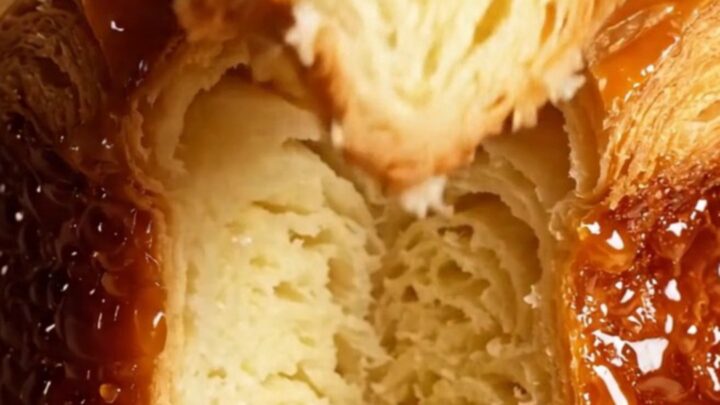
The pastries should be deeply caramelized with a glassy, amber crust. The edges will be crisp, and the layers will pull apart easily. The aroma will be intensely buttery and nutty. After cooling, the bottoms should be crackly and glassy, and the interior should be tender and moist. They are ready to serve when they are just warm, not hot.
Common mistakes
One common mistake is over-working the dough during lamination, which can cause the butter to break through and leak out. If this happens, chill the dough immediately and continue carefully. Another issue is under-baking—if the sugar hasn't turned a deep amber, the pastry will be doughy and not crisp.
Bake for the full 25 minutes, and if the tops brown too quickly, tent with foil. Also, be sure to coat the dough thoroughly in sugar before baking; otherwise, the exterior won't caramelize properly.
How to tell it’s done
The kouign-amann are done when the tops are deeply caramelized to a dark amber color and the edges are crisp. The caramel will bubble and sizzle around the rings, and the pastries should release easily from the molds.
The internal temperature of the dough should be at least 200°F (93°C) to ensure it is fully baked. Let them cool for at least 10 minutes before serving—the caramel is extremely hot and will set as it cools.
Up next · Part 3 of 3
4 variations · storage & make-ahead · 5 answers · printable card
Tips, FAQ & printable recipe (Part 3)← Back to the ingredients (Part 1)