Desserts · Part 1 of 3: Ingredients
Caramelized Kouign-Amann: Buttery Breton Pastry
- Prep
- Cook
- Total
- Serves
- 8
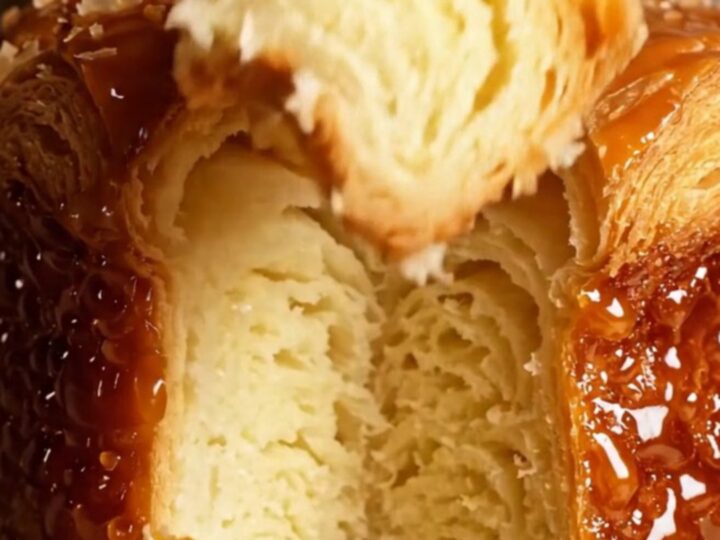
Kouign-amann is the crown jewel of caramelized French pastries. This recipe brings the rustic Breton bakery into your kitchen, with a shattering caramel crust and tender, buttery layers that pull apart in delicate sheets.
The secret is folding salted butter and sugar directly into the laminated dough, then baking in sugared rings until the sugar melts into a dark amber glaze. The result is a pastry that is at once crisp, chewy, and meltingly tender—a true celebration of butter, sugar, and time.
Kouign-amann (pronounced queen-ah-mahn) is a Breton specialty that has won over pastry lovers worldwide. It starts with a simple bread dough, which is laminated with salted butter and sugar—a twist on classic croissant technique that creates a caramelized, crackly exterior and a soft, airy interior.
The video shows the essential steps: folding the butter and sugar into the dough, shaping it into rings, and baking at high heat until the sugar turns into a glassy caramel. This recipe follows that method exactly, using the same proportions and techniques to produce a pastry that is both rustic and refined.
Ingredients
- 500 g bread flour (about 4 cups)
- 300 ml water (about 1 1/4 cups)
- 10 g fine sea salt (about 1 1/2 tsp)
- 10 g instant yeast (about 1 tbsp)
- 300 g salted Brittany butter (about 1 1/3 cups, cold)
- 300 g granulated sugar (about 1 1/2 cups)
For coating
- 100 g granulated sugar (about 1/2 cup), for coating
Why this recipe works
The method works because it combines the science of laminated dough with the magic of caramelization. Folding cold butter into the dough creates thin, distinct layers. As the pastry bakes, the water in the butter turns to steam, pushing the layers apart and creating flakiness. The sugar, folded in at the same time, melts and caramelizes, forming a crisp, glassy crust that contrasts beautifully with the tender interior.
Using salted Brittany butter is key—it has a higher fat content and a distinctive salty flavor that balances the sweetness. The high oven temperature (400°F) ensures the sugar caramelizes quickly before the dough over-bakes.
The ring molds help the pastry hold its shape and rise upward, while the sugar coating on the outside creates that signature crackly shell. Every element works together to deliver a pastry that is both visually stunning and deeply satisfying.
Notes and substitutions
For the best flavor, use a high-quality salted butter with at least 82% fat content. European-style butters like Plugrá or Kerrygold are ideal. If you can't find salted Brittany butter, use regular salted butter and add a pinch of sea salt to the dough. Bread flour gives the pastry a slightly chewier texture, but all-purpose flour will also work—just expect a slightly softer crumb.
You will need eight 3-inch ring molds (or large muffin tins) and a baking sheet. A stand mixer makes kneading easy, but you can knead by hand for about 10 minutes. The dough needs two rests: one before laminating and one after shaping.
Plan ahead, as the total time is about 3 hours, but most of that is hands-off resting. The pastries are best eaten the same day, but they can be stored in an airtight container for up to 2 days.
- salted Brittany butter: Use high-quality European-style salted butter (like Plugrá) for the best flavor and texture; regular salted butter works too.
- bread flour: All-purpose flour can replace bread flour; the crumb will be slightly less chewy but still delicious.
- instant yeast: Active dry yeast can be used; dissolve it in the water first and let it sit for 5 minutes before mixing.
Equipment
- Stand mixer with dough hook
- Large mixing bowl
- Plastic wrap
- Rolling pin
- Pastry brush
- 8 ring molds (3-inch)
- Baking sheet
- Parchment paper
Up next · Part 2 of 3
7 steps · 25 min of cooking · what to look for at each stage
Step-by-step instructions (Part 2)