Dinner · Part 2 of 3: Instructions
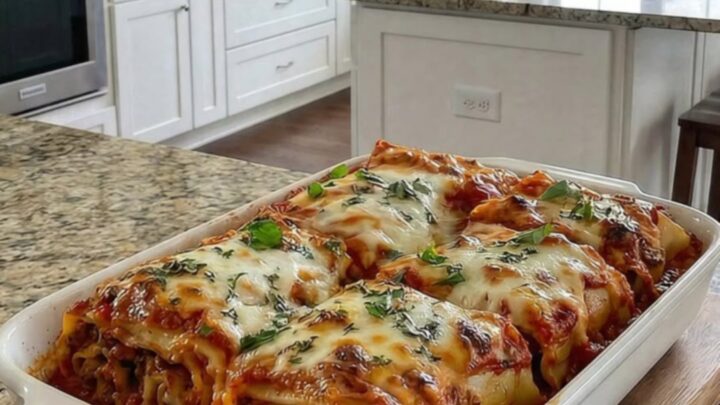
Classic Hearty Beef Lasagna with Rich Sauce Step-by-step instructions
- Prep
- Cook
- Total
- Serves
- 8
Before you start
Before beginning the assembly, ensure that the meat sauce has been prepared and allowed to cool slightly, which makes it easier to handle. Have all ingredients measured and organized on the counter.
The pasta should be boiled and drained, and it is helpful to lay the noodles out on a clean kitchen towel to prevent them from sticking together while waiting to be used. Preheat the oven to the specified temperature early so it is fully ready when the assembly is complete.
Ingredients at a glance (5)
- 1 lb ground beef
- 24 oz marinara sauce
- 12 oz lasagna noodles
- 15 oz ricotta cheese
- 16 oz mozzarella cheese, shredded
Instructions
Preparing the sauce and pasta
- Prepare the sauce and pastaBrown the ground beef in a large skillet over medium-high heat until fully cooked. Drain excess fat if necessary. Stir in the marinara sauce and simmer for 10 minutes. Meanwhile, boil the lasagna noodles in salted water according to package directions until al dente.Look for The sauce should be thick and bubbling, and the meat must reach an internal temperature of 160°F (71°C).Safe temperature 160°F (71°C) internal temperature (ground meat)Tip Ensure the noodles are not overcooked, as they will continue to soften while baking in the sauce.
The meat sauce should be rich, fragrant, and thick enough to coat the back of a spoon. The ground beef must be browned evenly with no pink remaining. The noodles should be tender but still have a slight bite when pressed. Ensure the meat is cooked to 160°F (71°C) before proceeding to assembly to ensure food safety and the best possible flavor base for the dish.
Assembling the layers
- Assemble the lasagnaSpread a thin layer of meat sauce on the bottom of a 9x13 inch baking dish. Place a layer of cooked noodles over the sauce. Spread a portion of ricotta cheese over the noodles, then sprinkle with mozzarella. Repeat these layers until the dish is full, finishing with a generous layer of mozzarella cheese on top.Look for The layers should be even to ensure consistent cooking throughout the entire dish.Tip Use a spatula to spread the ricotta smoothly for better coverage.
Check that the layers are distributed evenly across the baking dish to ensure structural stability. The ricotta should be spread in a thin, uniform layer to prevent the lasagna from becoming too dense.
Verify that the edges are covered with enough sauce to prevent the noodles from drying out during the baking process. The final layer of mozzarella should completely cover the noodles to ensure a consistent, cheesy crust.
Baking and resting
- Bake and servePreheat your oven to 375°F (190°C). Cover the baking dish with foil and bake for 30 minutes. Remove the foil and bake for an additional 15 minutes until the cheese is melted, bubbly, and slightly golden. Let the lasagna rest for 15 minutes before slicing.Look for The cheese should be golden brown and the edges should be bubbling with sauce.Tip Resting is crucial for the layers to set properly, ensuring clean slices.
Watch for the cheese to turn a beautiful golden brown and for the sauce to bubble vigorously around the edges. The lasagna should feel firm when gently pressed with a spatula. Once removed from the oven, allow it to rest for at least 15 minutes. This resting phase is the final checkpoint, ensuring the layers firm up and the dish is ready to be sliced cleanly for serving.
Common mistakes
A common mistake is skipping the resting period after the lasagna comes out of the oven. If cut too soon, the layers will slide apart, and the sauce will run, losing the beautiful structure.
Another error is overcooking the noodles before baking; always aim for al dente, as they will continue to soften in the hot sauce in the oven. Finally, avoid using too much sauce between layers, which can lead to a watery result; a thin, even coat is all that is required.
How to tell it’s done
The lasagna is done when the internal temperature reaches a safe level and the cheese topping is fully melted and golden brown. You should see bubbling sauce around the edges of the dish, which indicates that the heat has reached the center.
If using a thermometer, ensure the center of the lasagna reaches at least 165°F (74°C). The resting period after taking it out of the oven is critical, as it allows the layers to settle and makes cutting into the dish much easier.
- Ground meat: 160°F (71°C) in the thickest part
Up next · Part 3 of 3
2 variations · storage & make-ahead · 3 answers · printable card
Tips, FAQ & printable recipe (Part 3)← Back to the ingredients (Part 1)