Dinner · Part 2 of 3: Instructions
Classic Glazed Meatloaf with Mashed Potatoes Step-by-step instructions
- Prep
- Cook
- Total
- Serves
- 6
Before you start
Before beginning the preparation, gather all of your ingredients and measure them out carefully. Chop the yellow onion very finely so that it blends seamlessly into the meat mixture without leaving large, crunchy pieces.
Mince the garlic cloves and preheat your oven to 375°F (190°C). Line a rimmed baking sheet with aluminum foil or parchment paper for easy cleanup. Having all components ready ensures a smooth, stress-free cooking process.
Ingredients at a glance (15)
- 2 lb lean ground beef
- 1 cup panko breadcrumbs
- 1/2 cup whole milk
- 1 large egg
- 1/2 cup yellow onion, finely chopped
- 2 cloves garlic, minced
- 2 tbsp Worcestershire sauce
- 1 tsp kosher salt
- 1/2 tsp freshly ground black pepper
- 1/2 cup ketchup
- 1/4 cup light brown sugar, packed
- 1 tbsp apple cider vinegar
- 1 tsp yellow mustard
- 4 cups mashed potatoes, warm
- 1 tbsp fresh thyme leaves
Instructions
Preparing the Meatloaf Mixture
- Prepare the PanadeIn a large bowl, combine the panko breadcrumbs and whole milk. Stir the mixture gently and let it sit at room temperature for about 5 minutes until the breadcrumbs have completely absorbed the milk, forming a soft paste.Look for The breadcrumbs should absorb all the milk and form a soft, uniform paste.Tip Using a panade is the secret to keeping your meatloaf incredibly moist and tender.
- Combine the Meatloaf MixtureAdd the lean ground beef, egg, finely chopped yellow onion, minced garlic, Worcestershire sauce, kosher salt, and freshly ground black pepper to the bowl with the soaked breadcrumbs. Gently mix the ingredients together with clean hands just until they are evenly combined.Look for The mixture should be uniform without any large pockets of unmixed ingredients.Tip Do not overwork the meat, as overmixing will make the meatloaf dense and tough.
At the end of this first phase, the breadcrumbs and milk should have formed a soft paste, and the ground beef should be evenly mixed with the aromatics and seasonings. The mixture should look uniform but not overworked, with visible flecks of onion and garlic distributed throughout. It will feel moist and pliable, ready to be shaped.
Shaping and Initial Bake
- Shape the LoafPreheat your oven to 375°F (190°C). Line a rimmed baking sheet with aluminum foil or parchment paper. Transfer the meat mixture onto the prepared baking sheet and shape it with your hands into a neat, uniform 9x5-inch loaf.Look for The loaf should be smooth and evenly thick from end to end.Tip Shaping the loaf on a baking sheet allows the edges to caramelize beautifully.
- Whisk the Sweet Tangy GlazeIn a small bowl, combine the ketchup, light brown sugar, apple cider vinegar, and yellow mustard. Whisk the ingredients together vigorously until the glaze is completely smooth and the sugar has dissolved.Look for The glaze should be smooth, glossy, and uniform in color.Tip You can prepare the glaze ahead of time and store it in the refrigerator.
- Initial Meatloaf BakePlace the shaped meatloaf on the baking sheet into the preheated oven. Bake uncovered for 40 minutes to set the structure of the loaf and cook it partially before applying the glaze.Look for The exterior of the meatloaf should be lightly browned and starting to firm up.Tip Baking uncovered ensures the outside gets nicely browned before glazing.
By the end of this phase, the meatloaf will have been shaped into a neat, compact loaf on the baking sheet and baked for 40 minutes. The exterior of the loaf will be lightly browned and firming up, and the kitchen will be filled with the savory aroma of baked beef, onions, and garlic. The glaze will be prepared and ready to brush on.
Glazing, Final Bake, and Resting
- Glaze and Finish BakingCarefully remove the meatloaf from the oven and brush the prepared glaze generously over the top and sides. Return the meatloaf to the oven and bake for an additional 15 to 20 minutes, or until the glaze is bubbly and caramelized, and the internal temperature of the ground beef reaches 160°F (71°C) on a meat thermometer.Look for The glaze should be sticky, caramelized, and bubbly at the edges.Safe temperature 160°F (71°C) internal temperature (ground meat)Tip A pastry brush works best for applying an even layer of glaze.
- Rest, Slice, and ServeRemove the meatloaf from the oven and let it rest on the baking sheet for 10 minutes. Scoop warm mashed potatoes onto a serving platter, slice the meatloaf, arrange the slices over the potatoes, and garnish with fresh thyme leaves.Look for The meatloaf should slice cleanly without falling apart, releasing steam.Tip Resting the meatloaf allows the juices to redistribute, keeping every bite tender.
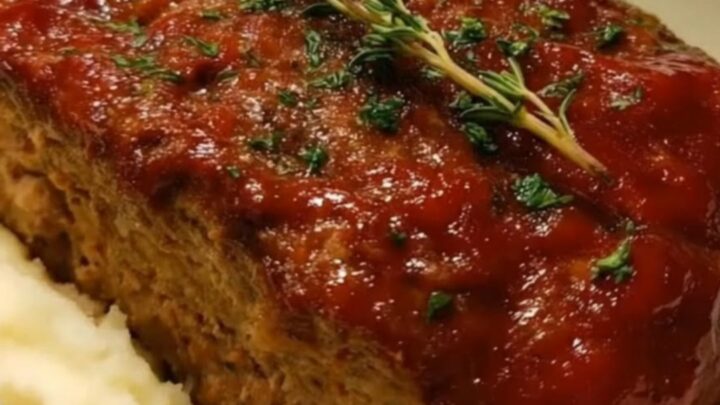
At the end of this final phase, the meatloaf will be coated in a deeply caramelized, sticky red glaze that has bubbled and set in the oven.
When sliced, steam should escape, revealing a tender, juicy interior. The slices will hold their shape beautifully when arranged over a bed of fluffy mashed potatoes and garnished with fresh thyme.
Common mistakes
One of the most common mistakes when making meatloaf is overmixing the meat mixture. When ground beef is worked too much, the proteins bind too tightly, resulting in a dense, rubbery, and tough texture. Mix the ingredients just until they are combined.
Another mistake is using ground beef that is too lean, which leads to a dry loaf. Finally, do not skip the resting period after baking. Cutting into the meatloaf immediately will cause all the delicious juices to run out, leaving the meat dry.
How to tell it’s done
The most reliable way to determine if your meatloaf is fully cooked is by using an instant-read meat thermometer. Insert the probe into the thickest part of the center of the loaf.
The internal temperature must reach 160°F (71°C) to ensure that the ground beef is cooked through and safe to consume. The exterior should have a glistening, sticky, caramelized red glaze, and the loaf should feel firm to the touch when gently pressed in the center.
- Ground meat: 160°F (71°C) in the thickest part
- Egg dishes: 160°F (71°C) in the thickest part
Up next · Part 3 of 3
3 variations · storage & make-ahead · 3 answers · printable card
Tips, FAQ & printable recipe (Part 3)← Back to the ingredients (Part 1)