Dinner · Part 2 of 3: Instructions
Torta Pasqualina: Golden Egg Savory Pie Step-by-step instructions
- Prep
- Cook
- Total
- Serves
- 8
Before you start
Before starting, make sure all ingredients are at room temperature. If using fresh spinach, wash and dry it thoroughly. Grate the Parmesan and measure the ricotta.
Have a 9-inch baking dish and a rolling pin ready. The dough needs to rest for 30 minutes after mixing, so plan accordingly. Preheat the oven only when the pie is assembled, just before baking.
Ingredients at a glance (10)
- 3 1/2 cups all-purpose flour
- 1 tsp kosher salt
- 1/2 cup extra-virgin olive oil
- 3/4 cup warm water
- 2 lb fresh spinach
- 2 cups whole-milk ricotta
- 1/2 cup grated Parmesan
- 1/4 tsp ground nutmeg
- 1/2 tsp black pepper
- 6 large eggs
Instructions
Build the Pastry and Filling
- Make the PastryIn a large bowl, combine the flour and salt. Add the olive oil and warm water, and mix with a fork until a shaggy dough forms. Turn the dough onto a lightly floured surface and knead for about 5 minutes until smooth and elastic. Cover with a damp towel and let rest for 30 minutes.Look for The dough should be smooth, not sticky, and spring back when pressed.Tip Resting the dough relaxes the gluten, making it easier to roll thin.
- Prepare the Spinach FillingHeat a large skillet over medium-high heat. Add the spinach in batches, stirring, until wilted, about 3 minutes. Transfer to a colander and press out excess liquid. Once cool enough to handle, chop the spinach coarsely. In a bowl, combine the chopped spinach, ricotta, Parmesan, nutmeg, and black pepper.Look for The filling should be thick and cohesive, not watery.Tip Squeeze the spinach thoroughly to avoid a soggy pie.
- Roll the Pastry LayersDivide the dough into 6 equal pieces. On a floured surface, roll one piece into a thin circle about 12 inches in diameter. Fit it into a 9-inch baking dish, letting the edges overhang. Brush lightly with olive oil. Repeat with a second piece, placing it over the first and brushing with oil. Continue until 4 layers are in the dish.Look for Each layer should be thin enough to see your hand through.Tip Rolling thin layers creates the signature flaky texture after baking.
At the end of this phase, the dough is smooth and rested, and the spinach ricotta filling is thick and well-seasoned. The pastry layers are rolled thin and fitted into the dish, ready for filling. The kitchen smells of olive oil and fresh spinach. The filling should hold its shape when spooned, with no excess liquid pooling.
Assemble and Bake
- Fill the PieSpread the spinach ricotta filling evenly over the pastry layers. Use the back of a spoon to make six evenly spaced wells in the filling. Crack one egg into each well, being careful not to break the yolk. Season the eggs lightly with salt and pepper.Look for The wells should be deep enough to hold the eggs without spilling.Tip Crack each egg into a small bowl first, then slide it into the well.
- Top with Remaining Pastry LayersRoll out the remaining 2 dough pieces into thin circles. Place one over the filling, brush with olive oil, then place the second on top. Press the edges of the top pastry together with the bottom layers to seal. Trim excess dough and crimp the edges. Brush the top with olive oil and cut a few small slits for steam to escape.Look for The pastry should be tightly sealed to keep the eggs enclosed.Tip Cutting slits prevents the pastry from puffing unevenly.
- Bake the PiePreheat the oven to 375°F (190°C). Place the pie on a baking sheet and bake for 45 to 50 minutes, until the pastry is deep golden brown and crisp. If the top browns too quickly, cover loosely with foil for the last 15 minutes.Look for The crust should be golden and puffed, with visible layers.Safe temperature 160°F (71°C) internal temperature (egg dishes)Tip Baking on a sheet catches any drips and helps the bottom crisp.
The pie is assembled with six eggs nestled into the filling, sealed with the top pastry layers, and brushed with olive oil.
As it bakes, the crust puffs and turns golden brown, and the aroma of baked pastry and cheese fills the kitchen. The top should be deep golden and crisp to the touch, with the filling bubbling gently around the edges.
Rest and Serve
- Rest and SliceRemove the pie from the oven and let it rest on a cooling rack for at least 15 minutes. This allows the filling to set and the pastry to firm up. Slice into wedges with a sharp knife, cutting through the egg yolks to show the golden cross-section.Look for The pie should be firm enough to slice cleanly.Tip Resting is essential for clean slices and to avoid runny filling.
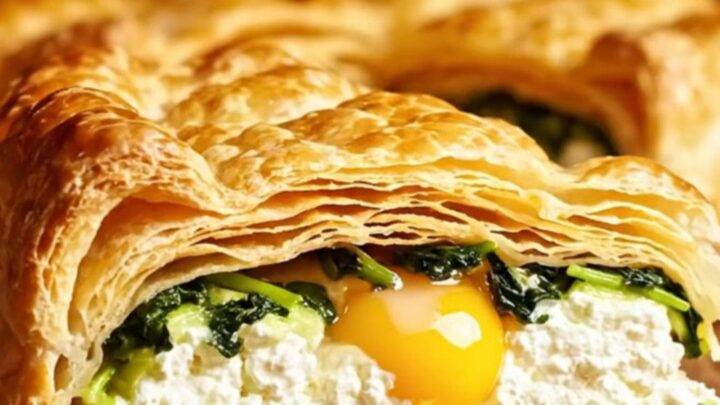
After resting, the pie has firmed up and can be sliced cleanly. Each wedge reveals the beautiful cross-section of emerald spinach, white ricotta, and a golden egg yolk. The pastry is crisp and flaky, and the filling is set but still moist. The pie is ready to serve warm or at room temperature.
Common mistakes
A soggy bottom crust is a common issue. To avoid this, make sure the spinach is thoroughly dried after wilting, and do not overfill the pie with too much ricotta. Another mistake is overworking the dough, which makes it tough.
Knead only until smooth. Also, be careful not to break the egg yolks when adding them to the wells; broken yolks will leak into the filling and ruin the visual effect. Finally, let the pie rest before slicing to allow the filling to set.
How to tell it’s done
The pie is done when the pastry is deep golden brown and crisp all over. The filling should be set, and a knife inserted into the center should come out clean.
To ensure the eggs are fully cooked, the internal temperature of the filling should reach at least 160°F (71°C). If the top browns too quickly, cover loosely with foil and continue baking until the center is cooked through.
- Egg dishes: 160°F (71°C) in the thickest part
Up next · Part 3 of 3
4 variations · storage & make-ahead · 5 answers · printable card
Tips, FAQ & printable recipe (Part 3)← Back to the ingredients (Part 1)