Dinner · Part 2 of 3: Instructions
Classic Diner Rye Patty Melt with Caramelized Onions Step-by-step instructions
- Prep
- Cook
- Total
- Serves
- 1
Before you start
Before starting, make sure you have all your ingredients prepped and within reach. Slice the onions thinly, measure the butter, and have the cheese slices ready.
Set the beef patty out on a plate—it can sit at room temperature for up to 30 minutes before cooking.
Preheat your skillet or griddle so it's screaming hot when you're ready to smash the patty. Have a spatula and a cutting board nearby for the final assembly.
Ingredients at a glance (7)
- 3 tbsp butter, divided
- 2 sweet Vidalia onions, thinly sliced
- 2 tbsp thousand island dressing
- 1 six-ounce oval beef patty
- 2 slices marble rye bread
- 2 slices Swiss cheese
- 2 slices cheddar cheese
Instructions
Caramelize and Prep
- Caramelize the OnionsMelt 2 tablespoons of the butter in a large skillet over medium-low heat. Add the sliced sweet Vidalia onions and cook slowly, stirring occasionally, for about 20 minutes, until they turn deep golden brown and jammy. If they start to stick, add a splash of water. Remove the onions to a bowl and set aside.Look for The onions are mahogany brown and very soft, almost melting.Tip Low heat is key—rushing will burn them before they caramelize.
- Mix the DressingIn a small bowl, whisk the thousand island dressing until smooth. Set aside.Look for The dressing is creamy and uniform.Tip Use a fork or small whisk for a quick, lump-free mix.
The onions should be deep brown, soft, and jammy, with a sweet, nutty aroma. The dressing is whisked and ready. The skillet is hot and waiting. The kitchen smells like butter and caramelized sugar—this is the foundation of the whole sandwich.
Smash and Griddle
- Smash the PattyHeat a cast-iron skillet or griddle over high heat until very hot, about 450°F (232°C). Place the oval beef patty on the hot surface and smash it down firmly with a spatula. Cook for 2 minutes without moving, until a deep brown crust forms. Flip and cook for another minute on the second side.Look for The patty has a dark, crispy crust on the first side.Safe temperature 160°F (71°C) internal temperature (ground meat)Tip Don't press on the patty after smashing—that squeezes out juices.
- Assemble the SandwichSpread the remaining 1 tablespoon butter on one side of each rye slice. Place one slice, buttered side down, on the griddle. Layer with 1 slice Swiss, the cooked patty, the caramelized onions, the remaining Swiss and the cheddar. Top with the second rye slice, buttered side up.Look for The bread is in place and the cheese starts to melt at the edges.Tip Keep the heat at medium so the bread toasts without burning.
- Griddle the MeltCook the assembled sandwich on the griddle at 350°F (175°C) for about 3 to 4 minutes per side, flipping carefully, until the bread is golden and crisp and the cheese is fully melted. Press gently with a spatula while cooking to help the layers meld.Look for The bread is golden brown and the cheese oozes out slightly.Tip Use a wide spatula to flip without losing the filling.
The patty has a dark, crispy crust on both sides, and the bread is golden and crisp. The cheese is bubbling at the edges and melting into the layers. The sandwich holds together when you lift it, and the bottom slice is toasted but not burnt.
Slice and Serve
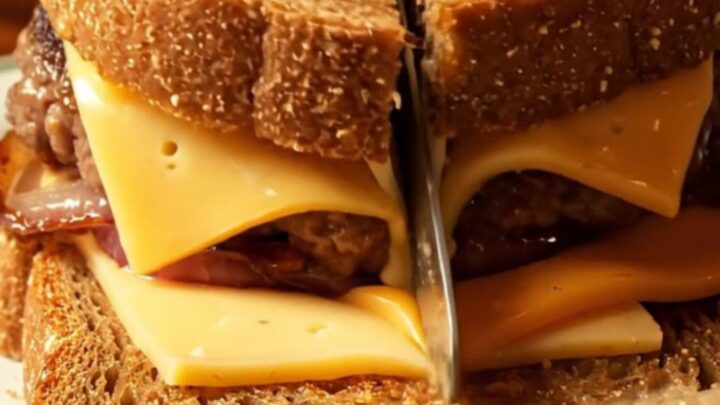
- Slice and ServeTransfer the patty melt to a cutting board. Let it rest for 1 minute, then slice diagonally with a chef's knife. The cheese should pull apart in long, molten strands. Serve hot.Look for The cheese stretches as the knife cuts through.Tip A sharp knife gives clean cuts without squishing the sandwich.
The sandwich is sliced diagonally, and the cheese pulls in long, stretchy strands. The rye crust crunches softly when pressed. The filling is hot and cohesive, with the onions and beef in every bite. Serve immediately for the best texture.
Common mistakes
One common mistake is rushing the onions—if the heat is too high, they'll burn before they soften. Keep them on low and be patient. Another is not smashing the patty firmly enough, which leaves it too thick and undercooked.
Also, avoid pressing on the sandwich while it cooks after the initial flip; that squeezes out the cheese and juices. Use a lid or a heavy pan to press gently if needed.
How to tell it’s done
The patty is done when it reaches an internal temperature of 160°F (71°C) in the thickest part. The bread should be deeply golden and crisp, and the cheese should be fully melted with no visible solid pieces.
When you press the sandwich, it should feel firm but springy. Let it rest for a minute before slicing so the cheese sets slightly and doesn't all pour out.
- Ground meat: 160°F (71°C) in the thickest part
- Steaks, chops and roasts: 145°F (63°C) in the thickest part, then a 3-minute rest
Up next · Part 3 of 3
4 variations · storage & make-ahead · 5 answers · printable card
Tips, FAQ & printable recipe (Part 3)← Back to the ingredients (Part 1)