Dinner · Part 2 of 3: Instructions
Christmas Herb-Roasted Lemon Chicken with Crispy Skin Step-by-step instructions
- Prep
- Cook
- Total
- Serves
- 6
Before you start
Before beginning, retrieve the whole chicken from the refrigerator and thoroughly pat the entire surface dry with paper towels, paying close attention to the crevices around the wings and thighs.
Keep the chicken refrigerated until ready to assemble. Soften the spiced herb butter so it spreads smoothly, and slice the fresh lemons into thick, even rounds.
Ingredients at a glance (4)
- 1 whole chicken, approximately 4 to 5 pounds
- 1/2 cup spiced herb butter, store-bought or made ahead
- 2 lemons, sliced into thick rounds
- 4 fresh rosemary sprigs
Instructions
Prep and Buttering
- Season the Chicken and Arrange PanGently loosen the skin over the breast of the whole chicken. Rub half of the spiced herb butter directly under the skin onto the breast meat. Rub the remaining spiced herb butter over the entire exterior skin of the chicken. Arrange the sliced lemons and fresh rosemary sprigs in the bottom of a roasting pan, and place the buttered chicken directly on top of the lemon bed.Look for The chicken should be evenly coated in butter, resting securely on the layer of sliced lemons.Tip Patting the chicken completely dry with paper towels beforehand helps the butter adhere to the skin.
The chicken is fully prepped when the spiced herb butter is evenly distributed under the skin of the breasts and rubbed thoroughly over the entire exterior.
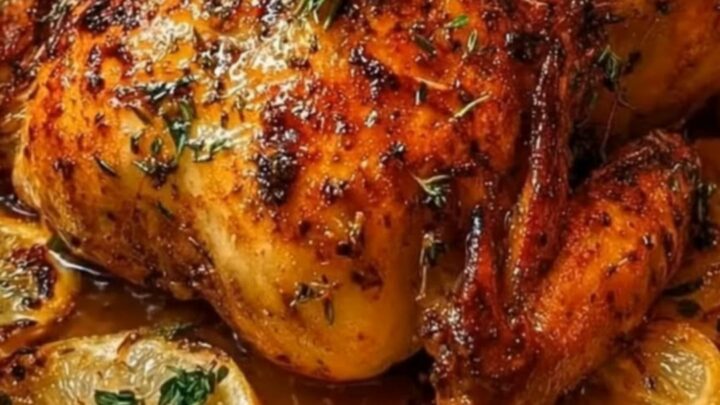
The bird should be nestled securely on a colorful bed of sliced lemons and fresh rosemary sprigs in the roasting pan, ready to enter the hot oven with no loose moisture remaining on the skin.
Roasting and Basting
- Roast the ChickenPreheat the oven to 400°F (200°C). Slide the roasting pan with the chicken onto the middle rack. Roast uncovered for about one hour, allowing the skin to brown and the lemon slices beneath the bird to caramelize and release their juices.Look for The skin should begin to turn golden brown and the pan juices should start to bubble.Tip Avoid opening the oven door frequently during the first half of roasting to maintain a consistent cooking temperature.
- Baste and Finish CookingCarefully spoon the bubbling pan juices over the top of the chicken to baste it. Continue roasting for another twenty to thirty minutes, or until the skin is deeply golden and crispy, and a meat thermometer inserted into the thickest part of the thigh reads 165°F (74°C).Look for The skin will look crackling and golden, and the juices will run completely clear when the thigh is pierced.Safe temperature 165°F (74°C) internal temperature (poultry)Tip Basting during the last fifteen minutes of roasting adds a beautiful, glossy sheen to the finished bird.
At the end of this phase, the kitchen will be filled with a rich, savory aroma of roasted garlic, caramelized lemons, and bubbling butter. The chicken skin should appear deeply golden and taut, and the pan juices at the bottom of the roasting pan should be vigorously bubbling and sizzling, indicating the fat has rendered beautifully.
Resting and Carving
- Rest and CarveRemove the roasting pan from the oven and transfer the chicken to a warm carving board. Let the chicken rest uncovered for fifteen minutes to allow the juices to redistribute throughout the meat. Carve into pieces and serve warm alongside the caramelized lemons.Look for The chicken skin should make a distinct crackling sound when sliced, and the meat should remain incredibly juicy.Tip Do not tent the chicken tightly with foil while resting, as the trapped steam will soften the crispy skin.
After resting, the roasted chicken will look incredibly succulent, with a glossy, crackling skin that has settled slightly. When carved with a sharp knife, the skin should make a distinct crackling sound, and hot, clear juices should burst out from the meat, confirming that the moisture has been successfully locked inside.
Common mistakes
One common mistake is roasting a chicken that is still damp, which leads to soggy, pale skin instead of a crispy golden crust. Always dry the bird thoroughly inside and out. Another error is carving the chicken immediately after removing it from the oven.
Without a proper resting period, all the hot juices will run out onto the cutting board, leaving the breast meat dry and tough. Lastly, avoid overcrowding the roasting pan with too many extra vegetables, which can trap steam and prevent the chicken skin from crisping.
How to tell it’s done
Determining the perfect doneness requires a digital meat thermometer inserted into the thickest part of the thigh, avoiding the bone. The chicken is fully cooked and safe to eat when the internal temperature reaches exactly 165°F (74°C).
The juices should run completely clear when the thigh is pierced, and the drumsticks should move easily in their joints, indicating the connective tissue has softened.
- Poultry: 165°F (74°C) in the thickest part
Up next · Part 3 of 3
2 variations · storage & make-ahead · 4 answers · printable card
Tips, FAQ & printable recipe (Part 3)← Back to the ingredients (Part 1)