Dinner · Part 2 of 3: Instructions
Chipotle Pineapple Beef Barbacoa in the Crockpot Step-by-step instructions
- Prep
- Cook
- Total
- Serves
- 6
Before you start
Before you start, make sure you have a 6-quart slow cooker. Cut the beef chuck into 2-inch cubes if not already cubed, and pat them dry with paper towels. Drain the pineapple tidbits well, pressing out excess liquid. Mince the chipotle peppers.
Soften the cream cheese at room temperature for about 30 minutes, and shred the cheddar if using a block. Have your cilantro-lime rice ready or start it before the beef finishes cooking, so everything is hot at the same time.
Ingredients at a glance (6)
- 2 1/2 lb beef chuck cubes
- 20 oz pineapple tidbits, drained
- 2 tbsp chipotle peppers in adobo sauce, minced
- 8 oz cream cheese, softened
- 2 cups shredded sharp cheddar cheese
- cilantro-lime rice, for serving
Instructions
Layer and Set
- Layer the beef and pineapplePlace the beef chuck cubes in the bottom of a 6-quart slow cooker in an even layer. Scatter the drained pineapple tidbits over the beef, then add the minced chipotle peppers in adobo. Stir gently to coat the beef with the pineapple and chipotle.Look for The beef is lightly coated with pineapple and chipotle, with some tidbits resting on top.Tip For a milder heat, use fewer chipotle peppers; for more smoky kick, add an extra teaspoon of adobo sauce.
- Add the cheesesPlace the softened cream cheese in the center of the slow cooker, then sprinkle the shredded sharp cheddar over the top. Do not stir; the cheeses will melt and blend during cooking.Look for The cream cheese sits in the middle, surrounded by cheddar.Tip Soften the cream cheese at room temperature for about 30 minutes so it melts more evenly.
At this stage, the raw beef is coated with pineapple and chipotle, with the cream cheese and cheddar sitting on top. The slow cooker is full of contrasting colors: deep red-brown beef, golden pineapple, white cream cheese, and bright yellow cheddar.
The aroma is fresh and slightly spicy. Before moving on, make sure the cheese is evenly distributed over the meat, and that the cream cheese is in the center where it will melt nicely.
Slow Cook
- Cook low and slowCover the slow cooker and cook on low for 8 to 10 hours, or on high for 4 to 5 hours, until the beef is fork-tender and shreds easily. Do not open the lid during cooking to avoid losing heat. Let it rest for 3 minutes before slicing.Look for The sauce is bubbling gently and the beef is tender enough to shred with a fork.Safe temperature 145°F (63°C) internal temperature (steaks, chops and roasts)Tip For the most tender result, always choose the low setting; the longer cooking time breaks down the collagen in the chuck.
After 8 to 10 hours on low, the slow cooker is bubbling gently around the edges. The cheese has melted into a golden sauce, and the beef is visibly tender, starting to fall apart. The kitchen smells of smoky chipotle and sweet pineapple. Use a fork to test a piece of beef—it should pull apart easily. If it’s still tough, cover and cook for another 30 to 60 minutes.
Shred and Serve
- Shred the beefOnce the beef is fully cooked, remove it from the slow cooker to a cutting board and let it rest for at least 3 minutes. Shred the beef with two forks, discarding any large pieces of fat. Return the shredded beef to the slow cooker and stir it into the sauce.Look for The beef pulls apart easily into moist, tender strands.Safe temperature 145°F (63°C) internal temperature (steaks, chops and roasts)Tip If the sauce seems thin, simmer the shredded beef in the slow cooker uncovered for 15 minutes to thicken.
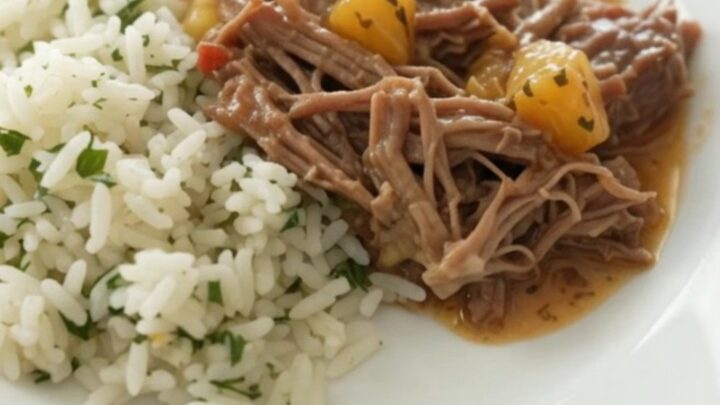
- Serve over riceSpoon the hot beef barbacoa over cilantro-lime rice on plates or in bowls. Serve immediately, spooning extra sauce over the top.Look for The beef is coated in a creamy, smoky-sweet sauce, with melted cheddar throughout.Tip Top with fresh cilantro, diced onion, or a squeeze of lime, if desired.
The beef is shredded and stirred back into the sauce, which is thick, creamy, and speckled with chipotle. The sauce coats the beef evenly, and the pineapple pieces have softened into the mixture. Serve over rice immediately, and enjoy the rich, savory-sweet flavor with a gentle heat. The final dish should be moist, not dry, with a glossy sheen.
Common mistakes
One common mistake is opening the slow cooker lid during cooking, which releases heat and extends the cooking time. Avoid lifting the lid for the first 8 hours if possible. Another pitfall is using pre-shredded cheddar, which can result in a grainy sauce due to anti-caking agents.
Also, do not skip draining the pineapple—too much liquid will make the sauce thin. Finally, be patient: if the beef isn't shredding after the suggested time, cook it for another hour.
How to tell it’s done
The beef is done when it is fork-tender and shreds easily with no resistance. The internal temperature should reach at least 145°F (63°C) for whole cuts of beef, but because it cooks low and slow, it will likely be much higher.
Let the beef rest for at least 3 minutes after removing it from the slow cooker before shredding. The sauce should be thick and creamy, not watery, and the aroma will be intensely savory and slightly sweet.
- Steaks, chops and roasts: 145°F (63°C) in the thickest part, then a 3-minute rest
Up next · Part 3 of 3
4 variations · storage & make-ahead · 5 answers · printable card
Tips, FAQ & printable recipe (Part 3)← Back to the ingredients (Part 1)