Dinner · Part 1 of 3: Ingredients
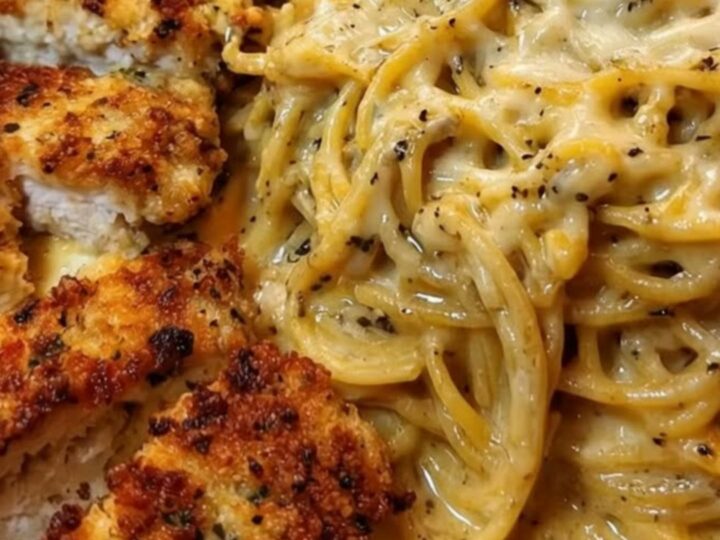
Cheesy Garlic Chicken Spaghetti with Crispy Parmesan Crust
- Prep
- Cook
- Total
- Serves
- 4
Crispy parmesan-crusted chicken piled over glossy, cheese-pulled spaghetti — this is the kind of dinner that makes everyone drift toward the stove asking when it will be ready. A quick pan sear gives the chicken a golden garlic crust while the sauce comes together in the very same skillet, so cleanup stays light. Everything lands on the table in about 45 minutes, and the leftovers might honestly be the best part.
Cheesy garlic chicken spaghetti is exactly what it sounds like: tender chicken cutlets with a shattering parmesan-panko crust, served over long strands of spaghetti coated in a mozzarella cream sauce built on butter, fresh garlic, and the browned bits the chicken left behind. The method is deliberately simple.
The chicken sears first, the pasta boils while it rests, and the sauce comes together in the same pan in the time it takes the spaghetti to drain. Two kinds of cheese do different jobs — parmesan in the crust and the sauce for sharp, salty depth, mozzarella for that long, stretchy pull. A cup of starchy pasta water ties the sauce to the noodles so nothing slides off. It is a weeknight recipe with company-dinner results.
Ingredients
- 1 1/2 lb boneless skinless chicken breasts
- 1/2 cup all-purpose flour
- 3/4 cup panko breadcrumbs
- 3/4 cup grated parmesan cheese, divided
- 1 tsp garlic powder
- 1 1/2 tsp kosher salt, divided
- 1/2 tsp black pepper
- 3 tbsp olive oil
- 12 oz spaghetti
- 3 tbsp unsalted butter
- 6 cloves garlic, minced
- 1 cup heavy cream
- 1 1/2 cups shredded mozzarella cheese
- Chopped fresh parsley, for serving
Why this recipe works
Pounding the chicken to an even 3/4 inch is the step most recipes skip, and it is the one that decides dinner. A breast that tapers from thick to thin cooks unevenly: the thin end dries out while the thick end is still climbing toward temperature.
An even cutlet means the crust and the interior finish together, so the outside is deep golden at the exact moment the inside reaches a safe 165°F (74°C). The flour in the dredge is not just for bulk — it absorbs surface moisture and creates a dry, rough landscape that the egg-free panko mixture can grip.
The sauce works because it borrows flavor twice. First, the fond — those browned crumbs of crust and chicken juices stuck to the skillet — dissolves into the butter and garlic, turning the pan itself into seasoning. Second, the reserved pasta water, full of released starch, is stirred into the finished sauce with the noodles.
That starch acts like edible glue, emulsifying the cream and cheese into a glossy coating that clings to each strand instead of pooling in the bottom of the bowl. Cheese added off the boil melts smoothly rather than splitting into strings.
Notes and substitutions
Buy block parmesan and block mozzarella and grate them at home. Pre-shredded mozzarella is dusted with anti-caking starches that resist melting smoothly, which is the difference between a glossy sauce and a grainy one. Panko beats plain breadcrumbs here because its large, flaky crumbs fry into a crust that actually crackles.
For the garlic, fresh cloves bloomed in butter taste rounder than powder alone; the powder goes in the dredge, where it seasons the crust from within. Heavy cream is the most forgiving base for a cheese sauce — it will not break the way milk can over heat.
A 12-inch heavy skillet, cast iron or stainless, is the one piece of equipment that matters; it holds heat steady for the sear and has room for the pasta toss. An instant-read thermometer takes the guesswork out of the chicken. If the crust browns before the interior is done, slide the cutlets onto a sheet pan in a 300°F (150°C) oven for a few minutes rather than pushing the pan heat higher. Salt the pasta water until it tastes like the sea — this is the only chance to season the noodles themselves.
- panko breadcrumbs: Plain breadcrumbs or crushed crackers work, though panko gives the crispest crust. Pulse the crackers fine so the coating clings evenly.
- heavy cream: Half-and-half thickened with an extra handful of mozzarella makes a lighter sauce, but keep the heat low so it does not curdle.
- spaghetti: Linguine, fettuccine, or penne all work. Short shapes catch the cheese sauce in their ridges and hollows.
- chicken breasts: Boneless chicken thighs stay juicier and cook a little faster; check them at the same internal temperature of 165°F (74°C).
Equipment
- large skillet
- large pot for pasta
- kitchen mallet or rolling pin
- shallow dish for dredging
- tongs
- instant-read thermometer
- box grater
Up next · Part 2 of 3
10 steps · 25 min of cooking · what to look for at each stage
Step-by-step instructions (Part 2)