Dinner · Part 1 of 3: Ingredients
Cheesy Baked Lasagna with an Epic Cheese Pull
- Prep
- Cook
- Total
- Serves
- 8
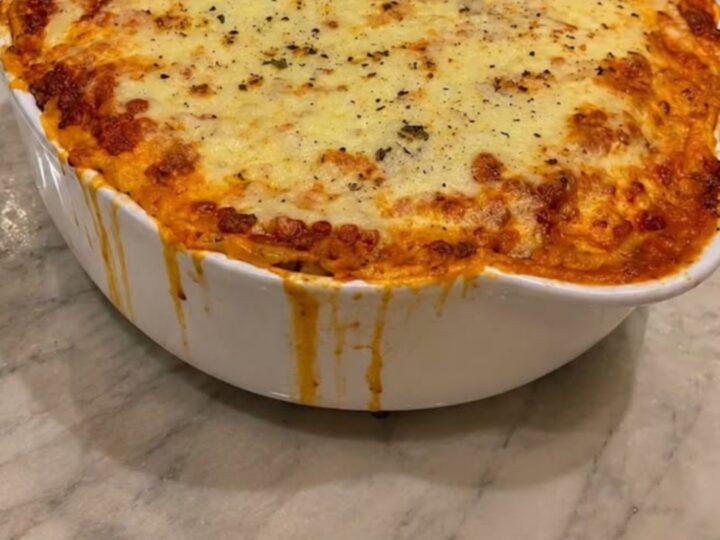
That moment when the spatula lifts a slice and the mozzarella stretches in one long, molten ribbon is what lasagna dreams are made of. This cheesy baked lasagna delivers exactly that: rich meat sauce, creamy ricotta layered with egg and Parmesan, and a blanket of mozzarella browned until it crackles. Every slice comes out thick, saucy and steaming, with layers that hold together from dish to plate to fork.
Lasagna has a reputation for being a weekend project, but this version keeps things simple without cutting corners on flavor. A quick meat sauce simmers while the noodles boil, the ricotta filling comes together in one bowl, and the whole dish bakes in under an hour. The method is deliberately straightforward: three even layers, plenty of sauce, and cheese all the way to the edges.
The result is a bubbling, golden-topped pan of lasagna with clean slices, an epic cheese pull and a sauce so rich the fork barely needs encouragement. It feeds a crowd generously, reheats beautifully, and tastes even better the next day, which makes it just as suited to a quiet Sunday as to a table full of hungry guests.
Ingredients
- 2 tbsp olive oil
- 1 yellow onion, finely chopped (about 1 cup)
- 4 garlic cloves, minced
- 1 lb ground beef (85% lean)
- 2 tbsp tomato paste
- 4 cups marinara sauce (two 15-oz jars)
- 2 tsp dried oregano
- 1 tsp kosher salt, plus more for the pasta water
- 1/2 tsp freshly ground black pepper
- 12 lasagna noodles
Ricotta filling
- 15 oz whole-milk ricotta cheese
- 1 large egg
- 3 cups shredded mozzarella, divided
- 1 cup grated Parmesan, divided
- Fresh basil leaves, for serving (optional)
Why this recipe works
The method works because each component is built for its job. The meat sauce is simmered down until it is thick enough to coat a spatula, which matters more than any single ingredient: a watery sauce is the number one reason lasagna layers slide apart.
Browning the beef properly and blooming the tomato paste deepens the flavor in minutes, so the sauce tastes long-simmered even though it takes barely twenty minutes on the stove.
Undercooking the noodles by two minutes is the second key move. They finish hydrating in the oven, absorbing sauce as they bake, which means tender noodles that hold their shape instead of a mushy pan.
Baking covered first, then uncovered, steams the center through before the top browns, so the ricotta sets fully and the mozzarella turns golden without burning. The rest before slicing is what turns a good pan into clean, dramatic slices.
Notes and substitutions
Choose whole-milk ricotta for the filling; it bakes creamy rather than chalky. Low-moisture mozzarella, sold in blocks or pre-shredded, melts into that long stretchy pull better than fresh mozzarella, which releases water and can make the top soggy.
Grate the Parmesan finely so it disperses through the ricotta and browns evenly on top. An 85% lean ground beef gives enough fat for a rich sauce without a greasy layer floating on top.
A 9x13-inch ceramic or glass baking dish heats evenly and shows off those crusty edges. A deep skillet keeps the sauce from splattering. If using no-boil noodles, add about half a cup of extra sauce and expect a slightly softer texture. Leftover lasagna keeps well and reheats in the oven or microwave; see the storage notes at the end of the page for the details.
- ground beef: Use ground Italian sausage, or half beef and half sausage, for a deeper, spicier sauce.
- marinara sauce: Swap in 4 cups of your favorite homemade tomato sauce; keep it fairly thick so the layers hold together.
- ricotta cheese: Cottage cheese works well; pulse it smooth in a food processor before mixing in the egg.
- fresh lasagna noodles: No-boil noodles are fine; add about 1/2 cup extra sauce so they hydrate fully while baking.
Equipment
- 9x13-inch ceramic or glass baking dish
- large deep skillet
- large pot for the noodles
- medium mixing bowl
- sharp knife and cutting board
- aluminum foil
- spatula
Up next · Part 2 of 3
10 steps · 1 h of cooking · what to look for at each stage
Step-by-step instructions (Part 2)