Dinner · Part 2 of 3: Instructions
Cast-Iron Garlic Butter T-Bone Steak Step-by-step instructions
- Prep
- Cook
- Total
- Serves
- 2
Before you start
Before you begin, ensure your steak is removed from the refrigerator at least 30 minutes before cooking to come to room temperature.
This promotes even cooking throughout the thickness of the meat. Pat the surface of the steak completely dry with paper towels to ensure a superior sear.
Prepare your garlic by smashing the cloves with the side of a knife to release their essential oils, and gather your rosemary sprigs and butter so they are ready to add to the pan during the final stage of cooking.
Ingredients at a glance (4)
- 2 lbs T-bone steak, thick cut
- 3 tbsp unsalted butter
- 3 cloves garlic cloves, smashed
- 2 sprigs fresh rosemary
Instructions
The Sear
- Sear the steakHeat a heavy cast-iron skillet over high heat until it begins to smoke slightly. Place the seasoned T-bone steak into the hot pan and sear undisturbed for 4 to 5 minutes until a deep brown crust develops on the first side.Look for The steak should release easily from the pan surface when a crust has formed.Tip Ensure the steak is dry before adding to the pan to maximize browning.
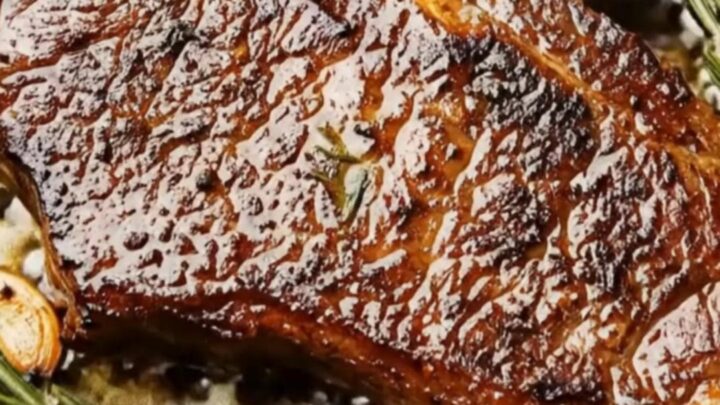
The steak should have a dark, mahogany-colored crust on the first side. The kitchen will smell like high-heat cooking, and the meat should have released from the pan surface naturally without any sticking. If it sticks, give it another minute of searing before attempting to flip.
The Baste
- Baste with aromaticsFlip the steak and reduce the heat to medium. Add the butter, garlic, and rosemary sprigs to the skillet. Once the butter is melted and foaming, tilt the pan slightly and use a large spoon to repeatedly baste the steak with the hot, flavorful butter.Look for The butter should be foaming and smell intensely fragrant from the garlic and rosemary.Tip Do not burn the garlic; keep the butter foaming but not brown.
The butter should be bubbling vigorously and foaming around the steak. The garlic and rosemary should be softening, and the aroma should be noticeably pungent and buttery. Check that the butter is not turning dark brown; if it does, lower the heat slightly to maintain the gentle foam.
The Finish
- Final cook and restContinue cooking until the internal temperature reaches 145°F (63°C) for medium-rare. Remove the steak from the skillet and transfer it to a warm plate. Let the steak rest for at least 10 minutes before slicing against the grain to serve.Look for The center should be a consistent warm pink color with juices pooling during the rest.Safe temperature 145°F (63°C) internal temperature (steaks, chops and roasts)Tip Resting is crucial for redistributing the juices throughout the meat.
The steak should feel firm but springy when touched. Use the thermometer to confirm the 145°F (63°C) internal temperature. The exterior should be evenly browned on all sides, and the butter-herb mixture should look glossy and serve as a fragrant glaze over the meat.
Common mistakes
Avoid the common mistake of overcrowding the pan or using a cold skillet, as this will cause the meat to steam rather than sear, resulting in a gray, dull color instead of a beautiful crust. Furthermore, do not skip the resting phase.
Cutting into the steak too soon will cause all the flavorful juices to run out onto the cutting board, leaving the meat dry and tough. Finally, ensure the heat is controlled during the butter-basting stage to prevent the butter from burning and turning bitter.
How to tell it’s done
To determine when the steak is finished, use an instant-read thermometer inserted into the thickest part of the meat, avoiding the bone. The steak reaches a perfect medium-rare doneness when the internal temperature hits 145°F (63°C).
The surface should be deeply browned and caramelized, and the meat should feel firm yet yielding to the touch. Always allow the steak to rest for at least 10 minutes, as this ensures the juices redistribute and the meat remains tender when sliced.
- Steaks, chops and roasts: 145°F (63°C) in the thickest part, then a 3-minute rest
Up next · Part 3 of 3
2 variations · storage & make-ahead · 3 answers · printable card
Tips, FAQ & printable recipe (Part 3)← Back to the ingredients (Part 1)