Dinner · Part 2 of 3: Instructions
Cast-Iron Garlic Butter Lobster Tails in 10 Minutes Step-by-step instructions
- Prep
- Cook
- Total
- Serves
- 4
Before you start
Before starting, preheat your oven to 425°F (220°C) and position a rack in the middle. Remove the lobster tails from the refrigerator and pat them dry with paper towels. If they are frozen, thaw them completely. Set out your cast-iron skillet, kitchen shears, and a small bowl for the butter.
Mince the garlic, chop the parsley, and squeeze the lemon juice. Melt the butter in a small saucepan or in the microwave until fully liquid. Combine the melted butter with the garlic, paprika, lemon juice, and parsley, and stir well. Have your instant-read thermometer ready for checking doneness.
Ingredients at a glance (6)
- 4 Maine lobster tails (about 5 oz each)
- 1 stick unsalted butter, melted
- 6 cloves garlic, minced
- 1 tsp smoked paprika
- 1 tbsp fresh lemon juice
- 2 tbsp fresh parsley, chopped
Instructions
Prep and Sear
- Butterfly the Lobster TailsUsing kitchen shears, cut down the top shell of each lobster tail, stopping at the tail fin. Gently lift the meat up and over the shell, keeping it attached at the base. This creates a 'piggyback' shape that cooks evenly. Pat the meat dry with paper towels.Look for The meat sits on top of the shell, exposed and ready for searing.Tip Cut through the shell but not the meat underneath; use the shears' tip to separate the shell from the flesh.
- Mix the Garlic ButterIn a small bowl, combine the melted butter, minced garlic, smoked paprika, lemon juice, and chopped parsley. Stir until well blended. Set aside at room temperature so the butter stays liquid.Look for The butter is fragrant with garlic and lemon, with a reddish tint from the paprika.Tip Mince the garlic finely so it distributes evenly; no need to cook it first.
At the end of this phase, the lobster tails are butterflied and the garlic butter is mixed. The skillet is smoking hot, and the tails are seared flesh-side down for 90 seconds until a golden crust forms. The kitchen smells of rich, toasty lobster, and the butter is fragrant with garlic and lemon. The meat is slightly opaque at the edges but still raw in the center. The tails are ready to be flipped and baked.
Butter and Bake
- Sear the Lobster TailsHeat a cast-iron skillet over high heat until it is smoking hot. Place the lobster tails flesh-side down in the dry skillet. Sear for 90 seconds, pressing gently to ensure even contact. The flesh should develop a golden-brown crust.Look for The flesh sizzles immediately and turns opaque at the edges.Tip Do not move the tails during searing; let the crust form.
- Flip and Add ButterFlip the tails so the shell side is down. Pour the garlic butter mixture over the tails, letting it pool in the skillet and foam around the meat. Spoon some butter over the exposed flesh.Look for The butter foams and sizzles as it hits the hot skillet.Tip Use a spoon to baste the meat generously; this keeps it moist.
The tails are now shell-side down in the skillet, and the garlic butter has been poured over them. The butter foams and sizzles as it hits the hot pan, releasing an irresistible aroma.
The skillet goes into the oven, and during baking, the butter continues to bubble around the tails. Halfway through, you baste the meat with the butter. The kitchen fills with the scent of garlic and lemon. The meat is turning opaque and firming up.
Finish and Serve
- Bake and BasteTransfer the skillet to an oven preheated to 425°F (220°C). Bake for 6 minutes, basting the lobster tails with the foaming butter halfway through. The tails are done when the internal temperature reaches 140°F (60°C) and the meat is opaque and firm to the touch.Look for The butter bubbles and the meat turns snowy white.Safe temperature 145°F (63°C) internal temperature (shellfish)Tip Use an instant-read thermometer inserted into the thickest part of the meat to check doneness.
- Finish and ServeRemove the skillet from the oven. Spoon any remaining butter over the tails. Squeeze a charred lemon wedge over the top if desired. Serve immediately, spooning extra garlic butter from the skillet over each tail.Look for The lobster is glossy with butter and the garlic is fragrant.Tip Let the tails rest for 2 minutes to allow juices to redistribute, but serve warm.
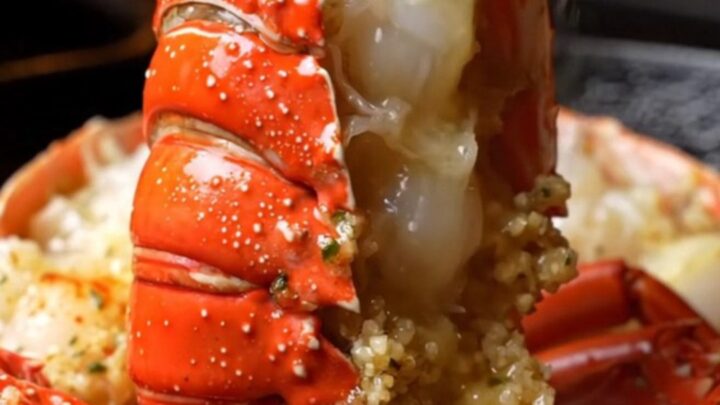
After 6 minutes in the oven, the lobster tails are cooked through, reaching an internal temperature of 140°F (60°C). The meat is pearly white, tender, and glistening with butter. The garlic is soft and fragrant, and the paprika gives a warm reddish hue. The tails are lifted from the skillet, dripping with golden butter, and a squeeze of charred lemon brightens the dish. Serve immediately, spooning extra butter over the top.
Common mistakes
One common mistake is overcooking the lobster, which makes the meat tough. Use a thermometer to avoid this. Another is not drying the tails thoroughly before searing, which prevents a good crust. Make sure to pat them dry. Also, be careful when cutting the shell with kitchen shears—cut only the shell, not the meat.
If the butter burns, it's because the skillet is too hot or the butter is added too early. Lower the heat slightly when adding the butter. Finally, do not skip the basting step; it is essential for keeping the meat moist and flavorful.
How to tell it’s done
The lobster tails are done when the internal temperature reaches 140°F (60°C) in the thickest part of the meat. The meat should be opaque, pearly white, and firm to the touch, but still moist. If you insert a knife into the center, the juices should run clear.
Be careful not to overcook, as lobster becomes tough and rubbery when cooked beyond 145°F (63°C). The butter should be bubbling and the garlic fragrant. When you lift a tail, the meat should easily separate from the shell in one piece. Rest the tails for 2 minutes before serving to allow the juices to redistribute.
- Shellfish: 145°F (63°C) in the thickest part
Up next · Part 3 of 3
4 variations · storage & make-ahead · 5 answers · printable card
Tips, FAQ & printable recipe (Part 3)← Back to the ingredients (Part 1)