Desserts · Part 2 of 3: Instructions
Caramelized Turkish Baked Rice Pudding with a Blistered Crust Step-by-step instructions
- Prep
- Cook
- Total
- Serves
- 6
Before you start
Before starting, gather all ingredients and equipment. Rinse the rice under cold water until the water runs clear. Measure the milk, sugar, cornstarch, and cold milk. Separate the egg yolk and set it aside.
Have a large heavy-bottomed saucepan, a whisk, a small bowl, six clay or ceramic ramekins, and a deep roasting pan ready. Fill a kettle or pot with water to heat for the water bath. Preheat the broiler to high when you are ready to bake.
Ingredients at a glance (9)
- 3/4 cup Baldo or other short-grain rice
- 2 cups water
- 4 cups whole milk
- 1 cup granulated sugar
- 3 tbsp cornstarch
- 1/4 cup cold milk
- 1 large egg yolk
- 1 tbsp pure vanilla extract
- 1/2 cup crushed roasted hazelnuts
Instructions
Simmer and Thicken
- Simmer the RiceIn a large heavy-bottomed saucepan, combine the rice and water. Bring to a boil over medium-high heat, then reduce the heat to low and simmer, stirring occasionally, for about 15 minutes, until the rice is tender and most of the water is absorbed. The rice should be soft and plump but not mushy.Look for The rice is tender and the water is mostly absorbed; the grains are plump and separate.Tip Stir gently to avoid breaking the grains; the rice will continue to soften as it cooks in the milk.
- Add Milk and SugarPour the 4 cups whole milk into the saucepan with the rice. Add the sugar and stir to dissolve. Bring the mixture to a gentle simmer over medium heat, then reduce the heat to low. Cook, stirring frequently, for about 20 minutes, until the mixture is slightly thickened and the rice is very soft.Look for The mixture is steaming and slightly thickened; the rice is very soft and the milk is lightly colored.Tip Stir often to prevent the milk from scorching on the bottom of the pan.
- Make the Cornstarch SlurryIn a small bowl, whisk together the cornstarch and the 1/4 cup cold milk until smooth and free of lumps. Add the egg yolk and whisk until completely combined. The mixture will be pale yellow and slightly thick.Look for The slurry is smooth, with no dry cornstarch or streaks of yolk.Tip Whisk thoroughly to avoid lumps that would make the pudding grainy.
- Temper the Egg MixtureSlowly ladle about 1 cup of the hot milk-rice mixture into the cornstarch-egg mixture while whisking constantly. This raises the temperature of the egg gradually so it doesn't scramble. Then pour the tempered mixture back into the saucepan, whisking continuously.Look for The mixture is smooth and slightly thickened; no scrambled egg bits appear.Tip Whisk without stopping while adding the hot liquid to keep the egg from cooking too quickly.
- Thicken the PuddingReturn the saucepan to medium heat and cook, stirring constantly with a whisk, for about 5 minutes, until the pudding is thick and glossy. It should coat the back of a spoon and hold its shape briefly when you lift the whisk. Remove from heat and stir in the vanilla extract.Look for The pudding is thick, glossy, and coats a spoon; it leaves a trail when you stir.Tip Keep stirring to prevent scorching; the pudding will thicken more as it cools.
After this phase, the rice is tender and the pudding is thick and glossy, coating the back of a spoon. The mixture should have a pleasant vanilla aroma and a pale cream color. It should be thick enough to hold a trail when stirred but still pourable. The egg and cornstarch mixture should be fully incorporated with no lumps, and the pudding should be smooth and silky.
Bake and Caramelize
- Ladle into Clay BowlsDivide the hot pudding evenly among six small clay or ceramic ramekins (about 6 ounces each). Smooth the tops with a spatula or the back of a spoon. The pudding should fill each bowl to about 1/4 inch from the rim.Look for The pudding is evenly distributed and the tops are smooth.Tip Wipe any drips from the rims to ensure even caramelization.
- Set Up the Water BathPlace the filled ramekins in a deep roasting pan or baking dish. Carefully pour hot water into the pan until it reaches halfway up the sides of the ramekins. This water bath insulates the puddings and helps them cook gently without curdling.Look for The water level is about halfway up the ramekins and they sit stable.Tip Use hot tap water to speed up the process; be careful not to splash water into the puddings.
- Broil Until CaramelizedPreheat the broiler to high. Place the roasting pan with the ramekins on an oven rack positioned about 6 inches from the broiler. Broil for 8 to 10 minutes, watching closely, until the tops are deeply browned and blistered in spots. Rotate the pan halfway through for even color.Look for The tops are dark amber with blistered, caramelized spots; the pudding is bubbling around the edges.Safe temperature 160°F (71°C) internal temperature (egg dishes)Tip Broilers vary widely; start checking at 6 minutes to avoid burning.
The puddings are baked in a water bath and then broiled until the tops are deeply browned with blistered, caramelized spots. The edges may bubble and darken slightly. The surface should look like a crème brûlée, with a hard, crackly shell. The pudding underneath should be set but still slightly jiggly in the center, as it will firm up during chilling.
Chill and Serve
- Chill the PuddingsCarefully remove the roasting pan from the oven. Using tongs, transfer the ramekins to a wire rack and let cool to room temperature, about 30 minutes. Then refrigerate for at least 4 hours, or overnight, until the puddings are fully chilled and set. The tops will become firm and the custard will be creamy.Look for The puddings are fully chilled and the tops are firm to the touch.Tip Chilling allows the caramelized crust to set and the flavors to meld.
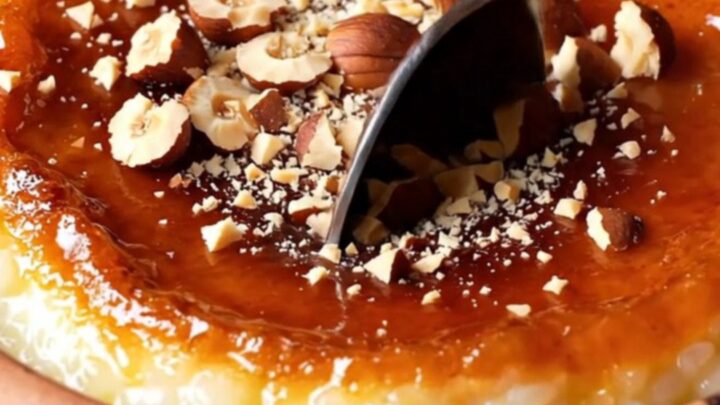
- Top with Hazelnuts and ServeJust before serving, sprinkle the crushed roasted hazelnuts evenly over the chilled puddings. Serve directly in the clay bowls. The contrast of the crackly caramelized crust, the creamy vanilla pudding, and the crunchy nuts is the signature of this dessert.Look for The hazelnuts are evenly scattered and the crust is visibly caramelized.Tip Add the nuts right before serving to keep them crunchy.
After chilling for at least 4 hours, the puddings should be fully set and cold. The tops should be firm and the custard creamy and sliceable. When you tap the top, it should sound hollow.
The hazelnuts are sprinkled on just before serving to maintain their crunch. The final dessert has a dramatic, caramelized crust that cracks open to reveal a smooth, vanilla-scented pudding.
Common mistakes
One common mistake is not stirring the pudding frequently enough on the stove, which can cause scorching on the bottom. Another is adding the egg mixture without tempering, which can result in scrambled eggs.
Overcooking the pudding on the stove can make it too thick before baking, so aim for a slightly loose consistency that will set in the oven. Skipping the water bath can lead to curdled or unevenly cooked puddings. Finally, not watching the broiler closely can result in burnt tops, so keep an eye on it.
How to tell it’s done
The pudding is done when the tops are deeply caramelized with blistered spots and the edges are bubbling. The internal temperature of the pudding should reach 160°F (71°C) to ensure the egg is fully cooked.
After chilling, the pudding should be firm to the touch and sliceable with a spoon. The crust should crackle when broken, revealing a creamy, thick custard underneath. If the tops are not browned enough after the broiling time, continue broiling in 1-minute increments, watching closely.
- Egg dishes: 160°F (71°C) in the thickest part
Up next · Part 3 of 3
4 variations · storage & make-ahead · 5 answers · printable card
Tips, FAQ & printable recipe (Part 3)← Back to the ingredients (Part 1)