Desserts · Part 1 of 3: Ingredients
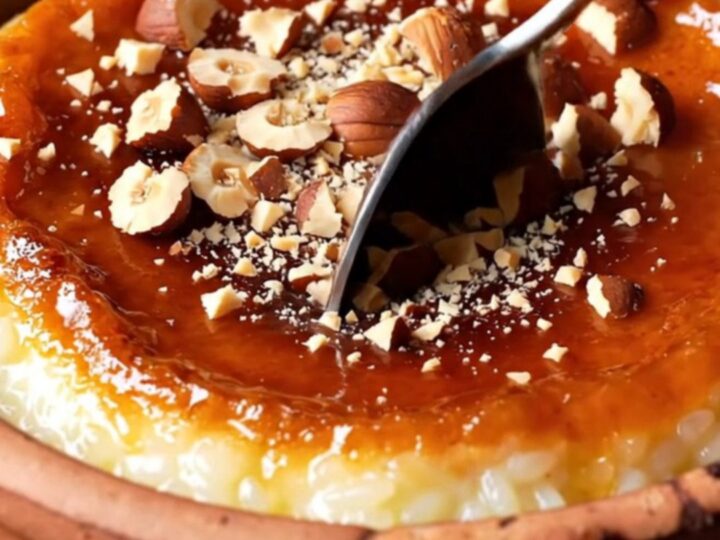
Caramelized Turkish Baked Rice Pudding with a Blistered Crust
- Prep
- Cook
- Total
- Serves
- 6
Turkish baked rice pudding, or fırın sütlaç, is a beloved dessert that pairs a silky, vanilla-scented custard with a dramatic, blistered caramelized crust.
This version captures the authentic technique: short-grain rice simmered in milk, thickened with a touch of cornstarch and egg yolk, then baked in clay bowls under a fierce broiler. The result is a make-ahead dessert that looks as stunning as it tastes, with a satisfying crackle when you break through the top.
This recipe delivers a truly authentic Turkish experience, right down to the clay bowls and the deeply caramelized top. The pudding is gently cooked on the stove, then finished in the oven with a water bath and a hot broiler to create that signature smoky, blistered crust.
Chilled until set, it becomes a creamy, spoonable dessert with a dramatic presentation. Crushed roasted hazelnuts add a final touch of crunch and nutty flavor. Whether served after a family dinner or at a special gathering, this baked rice pudding is sure to impress.
Ingredients
- 3/4 cup Baldo or other short-grain rice
- 2 cups water
- 4 cups whole milk
- 1 cup granulated sugar
- 3 tbsp cornstarch
- 1/4 cup cold milk
- 1 large egg yolk
- 1 tbsp pure vanilla extract
Topping
- 1/2 cup crushed roasted hazelnuts
Why this recipe works
The method of simmering short-grain rice in water first, then adding milk, allows the rice to soften fully and release its starch, creating a naturally creamy base. The addition of a cornstarch and egg yolk slurry, tempered with hot milk, thickens the pudding to a luxurious consistency without scrambling. This two-stage cooking ensures a silky texture that holds up beautifully when baked.
Baking the puddings in a water bath protects them from the direct heat of the oven, allowing them to set gently and evenly. The final broiling step is what creates the iconic caramelized crust, as the sugars on the surface brown and blister under high heat.
Chilling the puddings afterward firms the custard and lets the flavors meld, resulting in a dessert that is both creamy and crackly, with a beautiful contrast of textures.
Notes and substitutions
Baldo rice is the traditional choice for sütlaç, but any short-grain rice, such as Arborio, works well. The high starch content is key to the pudding's creamy texture. Whole milk provides richness; using lower-fat milk will result in a thinner pudding. The cornstarch and egg yolk act as stabilizers, ensuring a smooth set. Pure vanilla extract adds a warm, aromatic note that complements the caramelized top.
Clay or ceramic ramekins are essential for authenticity, as they conduct heat evenly and give the dessert its rustic appeal. If you don't have clay bowls, any oven-safe ramekins or small baking dishes will work.
The water bath is crucial—it prevents the puddings from curdling and helps them cook gently. For the caramelized crust, a hot broiler is non-negotiable; watch closely to achieve deep browning without burning.
- Baldo rice: Arborio or another short-grain rice; the starch helps thicken the pudding.
- Whole milk: 2% milk works, but the pudding will be slightly less rich and may need a touch more cornstarch.
- Crushed roasted hazelnuts: Chopped pistachios or sliced almonds for a different crunch.
- Granulated sugar: Coconut sugar can replace it, but the caramelization will be less pronounced.
Equipment
- Large heavy-bottomed saucepan
- Whisk
- 6 small clay or ceramic ramekins (about 6 oz each)
- Roasting pan or deep baking dish
- Fine-mesh strainer (optional)
- Aluminum foil
Up next · Part 2 of 3
10 steps · 45 min of cooking · what to look for at each stage
Step-by-step instructions (Part 2)