Appetizers · Part 1 of 3: Ingredients
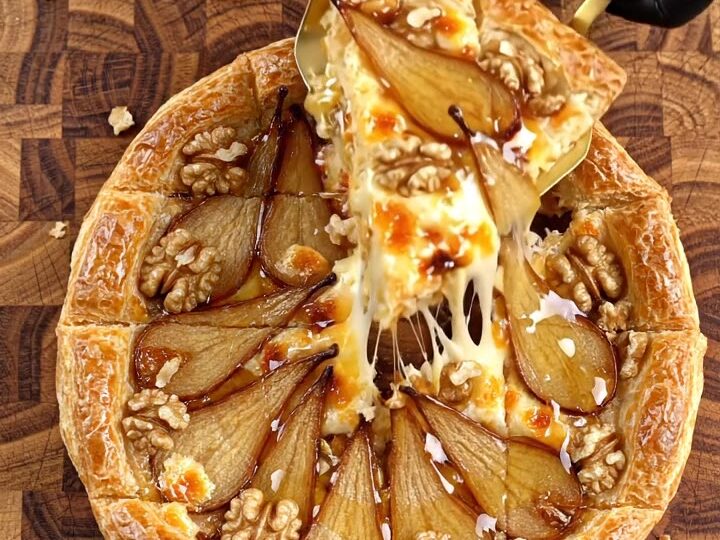
Caramelized Pear Walnut Honey Gorgonzola Puff Pastry Squares
- Prep
- Cook
- Total
- Serves
- 8
This caramelized pear, walnut, honey, and Gorgonzola puff pastry is a showstopper that comes together in under an hour. Golden pears are sliced into delicate fans, layered over a bed of melted aged Gouda and creamy blue cheese, then scattered with toasted walnuts and fresh rosemary. A warm drizzle of wildflower honey ties it all together, creating a sweet-savory balance that feels both elegant and comforting. Serve it as an appetizer, a brunch centerpiece, or a light dessert.
This recipe transforms simple ingredients into a stunning pastry that looks like it came from a French patisserie. The combination of sweet, caramelized pears, nutty aged Gouda, tangy blue cheese, and aromatic honey is a classic pairing that never fails to impress.
The puff pastry bakes to a golden, flaky crisp, while the cheeses melt into a creamy, savory layer. Fresh rosemary adds an earthy note that cuts through the richness, making each bite perfectly balanced. Whether served warm from the oven or at room temperature, these squares are guaranteed to disappear quickly.
Ingredients
- 1 sheet puff pastry, thawed
- 3 firm ripe pears (such as Bosc or Anjou)
- 1 1/2 cups shredded aged Dutch honey Gouda
- 1/2 cup crumbled creamy blue cheese (such as Gorgonzola)
- 1/2 cup toasted walnuts, chopped
- 1/4 cup wildflower honey, warmed
- 1 tbsp fresh rosemary, finely chopped
Why this recipe works
The method here is built on contrasts: the flaky, buttery puff pastry provides a crisp base that holds up to the creamy cheeses and juicy pears. Slicing the pears thinly and fanning them not only looks beautiful but also ensures they cook through evenly, becoming tender and slightly caramelized in the oven.
The aged Gouda melts into a smooth, nutty layer, while the blue cheese adds sharp, tangy pockets of flavor. Toasting the walnuts enhances their crunch and brings out their natural sweetness, which pairs perfectly with the honey drizzle.
Baking the pastry at a high temperature ensures that the puff pastry rises dramatically and turns golden and crisp without becoming soggy from the pear juices. The honey is drizzled on top before baking, so it caramelizes slightly, creating a glossy, sticky finish that locks in the flavors.
The fresh rosemary is added just before baking, so its essential oils infuse the dish without burning. Each element is prepared with care—the pears are fanned, the walnuts chopped cleanly, the cheese grated fresh—so that every bite has the right texture and flavor.
Notes and substitutions
Choose pears that are ripe but still firm, such as Bosc or Anjou, so they hold their shape during baking. If the pears are too soft, they may turn mushy. Aged Dutch honey Gouda is ideal for its sweet, nutty flavor and excellent melting properties; if unavailable, regular Gouda or a mild Swiss cheese can be substituted.
For the blue cheese, Gorgonzola is classic, but any creamy blue cheese will work—adjust the amount to taste. Toasted walnuts add essential crunch; toast them in a dry skillet over medium heat until fragrant, then chop coarsely.
Puff pastry should be thawed according to package instructions, usually overnight in the refrigerator or at room temperature for about 30 minutes. Keep it chilled until ready to use to ensure it puffs properly. Wildflower honey is preferred for its floral notes, but any mild honey will work. Fresh rosemary is best; if using dried, reduce the amount by half and crush it to release the oils. For a more pronounced honey flavor, you can brush the finished pastry with additional honey just before serving.
- aged Dutch honey Gouda: regular Gouda or aged Swiss cheese
- creamy blue cheese: feta or goat cheese for a milder flavor
- wildflower honey: any mild honey, such as clover or orange blossom
- fresh rosemary: 1 teaspoon dried rosemary, crushed
Equipment
- Box grater
- Sharp knife
- Cutting board
- Baking sheet
- Parchment paper
- Pastry brush
- Small saucepan
Up next · Part 2 of 3
6 steps · 25 min of cooking · what to look for at each stage
Step-by-step instructions (Part 2)