Desserts · Part 1 of 3: Ingredients
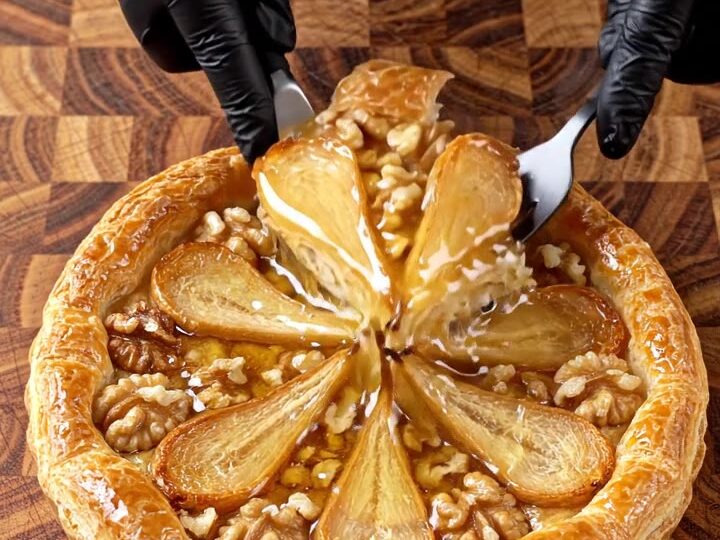
Caramelized Pear Tart with Honey and Walnuts in Puff Pastry
- Prep
- Cook
- Total
- Serves
- 8
Few desserts look this impressive for so little effort. A sheet of puff pastry, a few ripe pears and a handful of walnuts turn into a golden tart with glossy caramelized slices. The grated butter melts into the fruit as it bakes, adding richness without any fuss. Finish with honey and rosemary, then cut into wedges and serve warm or at room temperature.
This caramelized pear tart is built on store-bought puff pastry, which bakes into flaky layers with very little work. Ripe pears are sliced thinly and fanned across the pastry, then dotted with chopped toasted walnuts and small curls of cold butter.
As the tart bakes, the butter melts into the fruit, the sugars in the pears darken, and the pastry rises and turns crisp at the edges.
A final drizzle of honey adds gloss and a mild floral sweetness. The method uses one sheet, one baking tray and a short list of ingredients, so it suits a weeknight dessert or a simple gathering. Each wedge shows golden pastry, caramelized pear and toasted walnut in every bite, which makes the tart both easy to prepare and attractive to serve.
Ingredients
- 1 sheet puff pastry, store-bought or made ahead, thawed
- 3 ripe pears, such as Bosc or Anjou, cored and thinly sliced
- 2 tbsp cold unsalted butter, grated on the large holes of a box grater
- 1/2 cup walnut halves, chopped and toasted
- 2 tbsp honey, for drizzling
- 2 sprigs fresh rosemary
- 1 egg, beaten with 1 tbsp water, for brushing the edges
Why this recipe works
Puff pastry rises in the oven because of the thin layers of butter trapped between sheets of dough. Placing the pears on top keeps the fruit from making the pastry soggy, and the sheet stays crisp underneath while the edges puff and turn deep golden. Starting with a cold sheet is important, because the butter in the dough melts slowly and creates the lift you want.
Grated cold butter works differently from a single pat. Its fine curls spread across the pears and melt quickly into small pools as the tart heats.
The butter carries heat into the fruit, helping the natural sugars in the pears caramelize at the edges of each slice. The result is a tart with glossy, lightly browned fruit that tastes rich without any added sauce or cream.
Notes and substitutions
Choose pears that are ripe but still firm, such as Bosc or Anjou. Very soft pears release too much juice and make the base wet, while hard pears stay crunchy after baking. Slice them thinly so they fan easily and cook through at the same speed as the pastry. Walnuts should be toasted before chopping, which brings out their flavor and keeps them crisp under the honey.
You need a wooden cutting board for slicing and building the tart, a sharp knife, and a four-sided box grater for the butter. A parchment-lined baking sheet keeps the pastry from sticking and makes the tart easy to move once it has rested.
A pastry brush helps spread the egg wash evenly on the border. Use a serving board and a knife and fork to present the tart neatly at the table.
- Bosc pears: Anjou or Concorde pears, firm but ripe
- Walnut halves: Pecan halves or sliced almonds
- Fresh rosemary: A pinch of dried rosemary, or omit
Equipment
- Wooden cutting board
- Sharp knife
- Four-sided box grater
- Parchment-lined baking sheet
- Pastry brush
- Small bowl for egg wash
- Serving board and knife and fork
Up next · Part 2 of 3
5 steps · 35 min of cooking · what to look for at each stage
Step-by-step instructions (Part 2)