Desserts · Part 2 of 3: Instructions
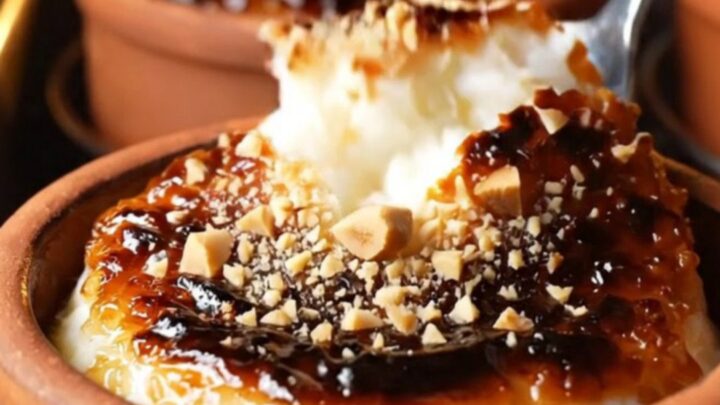
Caramelized Oven-Baked Rice Pudding with a Crackly Crust Step-by-step instructions
- Prep
- Cook
- Total
- Serves
- 6
Before you start
Before starting, measure all ingredients and set them within reach. You will need a medium saucepan, a whisk, six small terracotta bowls or ramekins, and a deep roasting pan large enough to hold them.
Fill a kettle or pot with water to have hot water ready for the water bath. If using a vanilla bean, split and scrape it now. The rice should be rinsed under cold water until the water runs clear to remove excess starch, which helps prevent gummy pudding.
Ingredients at a glance (9)
- 1/2 cup Baldo rice (or other short-grain rice)
- 1 cup water
- 4 cups whole milk
- 1/2 cup granulated sugar
- 2 tbsp cornstarch
- 1/2 cup cold whole milk
- 1 large egg yolk
- 1 tsp vanilla extract
- 1/4 cup roasted hazelnuts, finely crushed
Instructions
Cook and Thicken
- Cook the RiceIn a medium saucepan, combine the rice and 1 cup of water. Bring to a boil over medium-high heat, then reduce to a simmer. Cook, stirring occasionally, until the rice is tender and most of the water is absorbed, about 10 to 12 minutes.Look for The rice is tender and the water is mostly absorbed.Tip Do not drain; any remaining water will be absorbed during the milk simmer.
- Simmer with Milk and SugarPour in the 4 cups of whole milk and add the sugar. Increase the heat to medium and bring to a gentle simmer, stirring frequently. Let it simmer for 10 minutes, allowing the rice to absorb the milk and the mixture to become fragrant.Look for The mixture is steaming and slightly thickened; the rice is soft.Tip Stir often to prevent sticking to the bottom.
- Make the SlurryIn a small bowl, whisk together the cornstarch, cold milk, and egg yolk until smooth. While stirring the simmering pudding constantly, slowly stream in the slurry. Continue whisking for another 2 to 3 minutes, until the pudding thickens and becomes glossy.Look for The pudding coats the back of a spoon and has a glossy sheen.Safe temperature 160°F (71°C) internal temperature (egg dishes)Tip Whisk constantly to avoid lumps from the egg.
- Finish with VanillaRemove the pot from the heat and stir in the vanilla extract. The pudding should be thick but pourable. Let it cool for 5 minutes, stirring occasionally to prevent a skin from forming.Look for The pudding is thick enough to coat a spoon but still flows.Tip Cooling slightly makes it easier to ladle without splashing.
By the end of this phase, the rice is tender and the pudding has thickened to a glossy, pourable consistency. The mixture should smell sweet and milky, with a hint of vanilla. The egg yolk is fully cooked, reaching 160°F (71°C) to ensure safety.
The pudding should coat the back of a spoon and leave a clear trail when you run a finger through it. If it seems too thin, simmer for another minute or two, but do not over-thicken as it will continue to set during baking.
Bake and Caramelize
- Ladle into BowlsPlace the terracotta bowls in a deep roasting pan. Ladle the warm pudding evenly into the bowls, filling each almost to the top. The pudding should be about 1/2 inch below the rim to allow for the caramelized skin.Look for All bowls are filled evenly with warm pudding.Tip Wipe any drips from the rims for a clean presentation.
- Bake in a Water BathPour cold water into the roasting pan to reach about 1 inch up the sides of the bowls. Carefully transfer the pan to the oven and bake at 450°F (230°C) on the top rack for 12 minutes, until the tops are deeply caramelized and blistered.Look for The tops are dark golden-brown with dark spots; the pudding is bubbling around the edges.Tip The water bath ensures even cooking and prevents curdling.
After baking, the tops should be deeply browned with dark, blistered spots and a slightly cracked surface. The pudding will look bubbly around the edges and the smell will be intensely caramelized and nutty. The water bath should have prevented curdling, so the pudding should be smooth and creamy on the inside. Carefully remove the bowls from the water bath—they will be very hot. Allow them to cool for at least 30 minutes before refrigerating.
Chill and Serve
- Chill CompletelyRemove the roasting pan from the oven and carefully lift the bowls out. Let them cool on a wire rack for 30 minutes, then transfer to the refrigerator. Chill for at least 4 hours, or until fully cold and set.Look for The puddings are cold and firm to the touch.Tip Chilling is essential for the skin to crack properly.
- Garnish and ServeJust before serving, sprinkle the crushed hazelnuts over the top of each pudding. Use a spoon to crack through the caramelized skin and scoop out the creamy pudding underneath.Look for The skin cracks with a delicate pop, revealing the creamy interior.Tip Serve cold for the best texture contrast.
The puddings are fully chilled and set after at least 4 hours in the refrigerator. The tops should be firm and crackly to the touch, and the pudding should be cold and creamy. When you crack the top with a spoon, it should make a delicate popping sound and reveal a smooth, pale interior. The hazelnuts add a pleasant crunch and nutty flavor. Serve immediately, as the pudding will soften if left at room temperature for too long.
Common mistakes
One common mistake is not stirring the pudding frequently enough while it simmers, which can cause the milk to scorch on the bottom. Another is adding the egg slurry without whisking constantly, leading to lumps of cooked egg.
Overbaking can dry out the pudding or make the crust bitter; stick to the recommended 12 minutes and watch closely. Also, avoid using bowls that are too large, as they will produce a thin layer of pudding and a less creamy interior. Finally, do not skip the chilling step—the pudding needs time to set properly for the best texture.
How to tell it’s done
The pudding is done when the tops are deeply caramelized with dark brown spots and a slightly blistered surface. The edges may look slightly darker and the pudding should be bubbling gently around the sides. When you tap the top, it should feel firm but the pudding underneath will still be a bit soft.
After chilling for at least 4 hours, the pudding should be fully set and cold. The egg yolk in the pudding is cooked through when the internal temperature reaches 160°F (71°C) during the simmering step, ensuring food safety.
- Egg dishes: 160°F (71°C) in the thickest part
Up next · Part 3 of 3
4 variations · storage & make-ahead · 5 answers · printable card
Tips, FAQ & printable recipe (Part 3)← Back to the ingredients (Part 1)