Desserts · Part 3 of 3: Tips & recipe card
Caramel Apple Turnovers: Flaky Puff Pastry Hand Pies with Warm Caramel Tips, FAQ & printable recipe
- Prep
- Cook
- Total
- Serves
- 6
Tips for success
Keep the puff pastry cold from start to finish. Cold butter in the layers creates steam during baking, which lifts the dough into flaky, separated sheets.
If the pastry becomes warm or sticky while you work, slide the tray back into the refrigerator for ten minutes before you bake. Working in small batches keeps the dough firm and makes the turnovers easier to fold neatly.
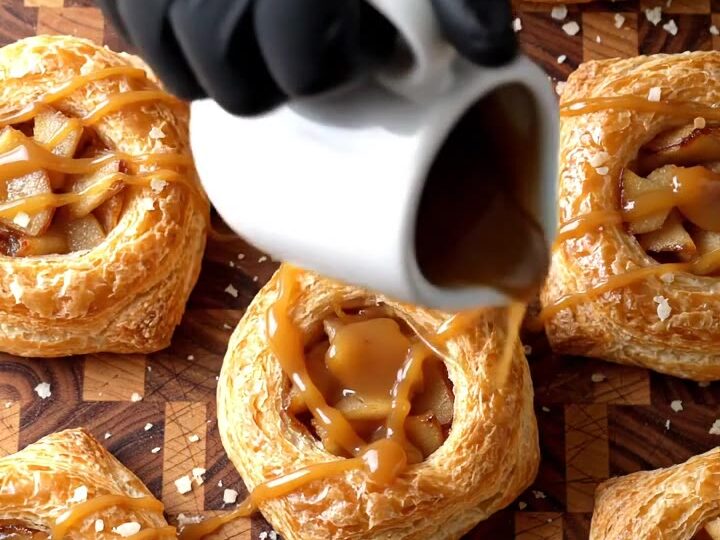
Warm the caramel sauce gently just before you drizzle it. A sauce that is too hot will sink into the pastry instead of running down the sides, while one that is too cool will stiffen and cling in thick clumps.
Pour it slowly over each turnover with a spoon so it coats the top and drips in glossy streaks. A light sprinkle of flaky sea salt added right after the drizzle keeps the flavors bright and balanced.
Variations
- Cinnamon Apple: Add half a teaspoon of ground cinnamon to the brown sugar before tossing it with the apples. The warm spice deepens the flavor and pairs naturally with the caramel drizzle.
- Pear Version: Replace the red apples with firm ripe pears, diced small and tossed with brown sugar. The filling bakes into a softer, more perfumed fruit center.
- Nutty Crunch: Sprinkle a tablespoon of finely chopped toasted pecans over the apple filling before folding. The nuts add a toasty crunch that contrasts with the soft fruit inside.
- Mini Turnovers: Cut the pastry into smaller squares for bite-size turnovers. Reduce the baking time by a few minutes and watch for deep golden color across the tops.
Storage and make-ahead
- Fridge
- Refrigerate leftover turnovers in a covered container for up to three days.
- Freezer
- Freeze unbaked, assembled turnovers on a tray until firm, then transfer them to a sealed bag for up to one month.
- Reheat
- Warm leftover turnovers in a 350°F (175°C) oven for 5 to 7 minutes until the pastry is crisp again. Avoid the microwave, which softens the layers.
Store leftover turnovers in an airtight container at room temperature for up to one day to keep the pastry as crisp as possible. For longer storage, refrigerate them in a covered container for up to three days, and bring them to room temperature before serving.
Keep the caramel sauce separate in its own jar, since it can make the pastry soft if it sits on the turnovers. Leftovers should be refrigerated within two hours of baking, and any fully cooled turnovers should go into the refrigerator promptly.
You can prepare the components ahead and bake the turnovers when you are ready to serve. The apple filling can be diced and tossed with brown sugar up to a day in advance and kept covered in the refrigerator. Fold and seal the turnovers, then place them on the lined baking sheet, cover them loosely, and chill for up to four hours before brushing with egg wash and baking.
Caramel sauce can be made a few days ahead, stored in a sealed jar in the refrigerator, and rewarmed gently before drizzling. Baking from cold gives the best puff, so do not let the assembled turnovers sit at room temperature.
Serving ideas
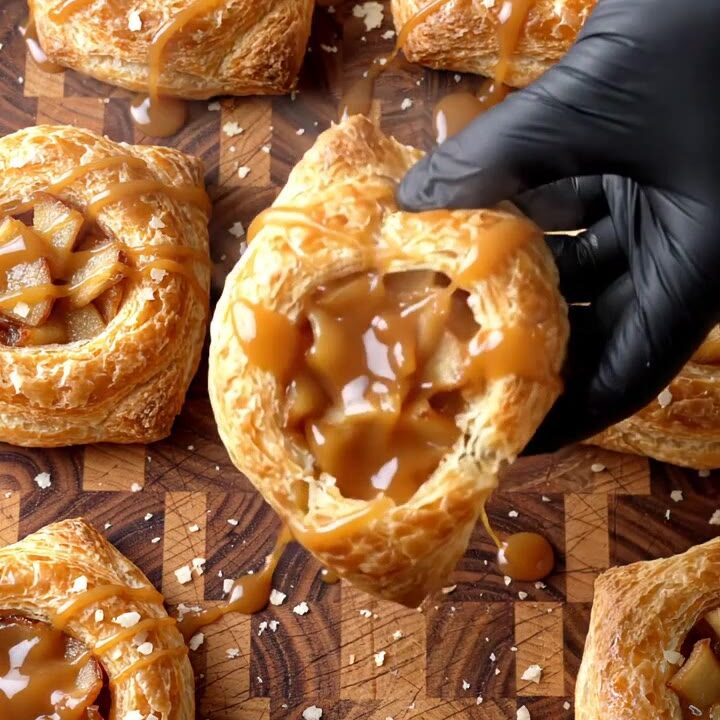
Serve the turnovers warm on a wooden board, with the filling visible through the opening at the top. A small plate or a napkin keeps the caramel from dripping onto the table, and a scoop of vanilla ice cream or a dollop of lightly whipped cream makes a pleasant contrast with the warm pastry. Offer a little extra caramel on the side for guests who want more.
For a relaxed dessert table, arrange the turnovers in a single layer and finish them just before people sit down. Their size makes them easy to share, and they pair well with coffee or a cup of hot tea. Because they are best eaten the day they are baked, plan to serve them within a few hours of finishing, while the pastry is still crisp and the caramel is glossy.
Frequently asked questions
Can the caramel sauce be made ahead?
Which apples work best for caramel apple turnovers?
Why did your puff pastry not rise properly?
Can these turnovers be frozen?
How do you know when the egg wash is cooked through?
Caramel Apple Turnovers: Flaky Puff Pastry Hand Pies with Warm Caramel
Ingredients
- 3 fresh red apples, quartered and cut into small dice
- 1/3 cup packed brown sugar
- 1 sheet store-bought puff pastry, thawed (about 9 oz), or 2 sheets for 6 turnovers
- 1 large egg, beaten with 1 tbsp water, for egg wash
- 1/2 cup warm caramel sauce, store-bought or made ahead
- flaky sea salt, for finishing, to taste
Instructions
- Core the red apples, cut them into quarters, then slice each quarter into small dice. Place the diced apples in a bowl and add the brown sugar. Toss well so every piece is coated.
- Heat the oven to 400°F (200°C) and line a baking sheet with parchment paper. Unfold the thawed puff pastry on a lightly floured board and cut it into six equal squares. Keep the pastry cold until you fill it.
- Spoon a portion of the apple filling onto the center of each pastry square, leaving a border. Fold each square into a triangle or envelope, press the edges together, and seal them firmly with a fork.
- Arrange the turnovers on the lined baking sheet. Cut two or three small slits or a simple pleated pattern on the top of each one. Brush the tops with the beaten egg wash until glossy.
- Bake the turnovers for 20 to 22 minutes, until deep golden brown and fully puffed. Cook the egg wash until set, then transfer them to a rack and let them rest for about 10 minutes.
- Warm the caramel sauce until pourable. Drizzle it generously over the warm turnovers so it runs down the sides. Finish each one with a light sprinkle of flaky sea salt and serve.
Estimated nutrition per serving
- Calories
- 420
- Protein
- 5 g
- Carbohydrates
- 56 g
- Fat
- 20 g
- Fiber
- 2 g
- Sugar
- 30 g
- Sodium
- 260 mg
Next recipe
Pina Colada Tres Leches Cake with Toasted Coconut and Cherries
See the recipe → →This recipe is based on a short cooking video and is published under the pen name Clara Weller. It was checked before publication, but errors can slip through. Nutrition, when shown, is an estimate. Read more in our editorial policy and on our food safety page.
More recipes to try
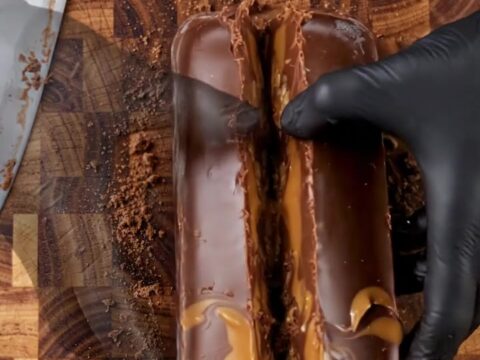
Peanut Butter Caramel Crunch Dark Chocolate Fudge Bars
Total time: 2 h 40 min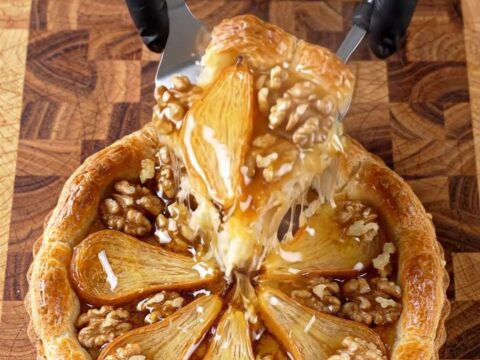
Caramelized Pear Tart with Honey Walnuts on Puff Pastry
Total time: 1 h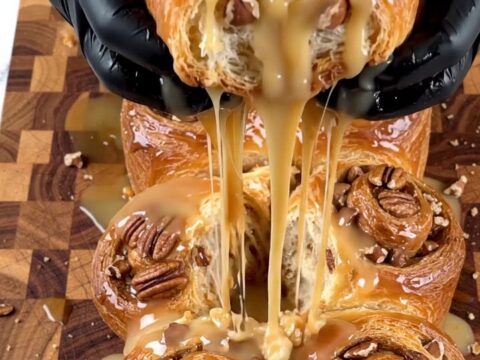
Maple Pecan Sticky Buns with Caramel Shavings and Warm Maple Caramel Sauce
Total time: 1 h 10 min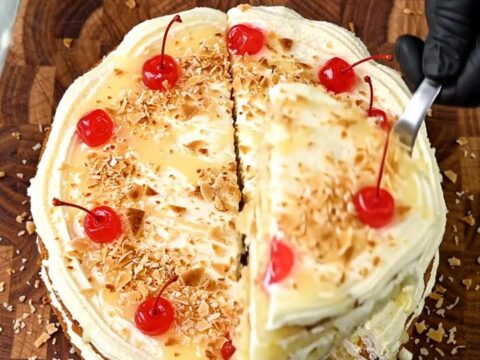
Pina Colada Tres Leches Cake with Toasted Coconut and White Chocolate
Total time: 5 h 15 min
Caramelized Pear Tart with Honey and Walnuts in Puff Pastry
Total time: 1 h 10 min