Dinner · Part 2 of 3: Instructions
Cajun Blackened Salmon with Creamy Shrimp Skillet Step-by-step instructions
- Prep
- Cook
- Total
- Serves
- 4
Before you start
Before you start, dice the bell peppers and celery into small pieces. Pat the salmon fillets dry and coat them, along with the shrimp, with Cajun seasoning.
Grate the Parmesan cheese and set aside. Have the crawfish cream sauce measured and ready. Heat a large cast iron skillet over medium-high heat so it's hot when you're ready to sear.
Ingredients at a glance (9)
- 1 cup diced bell peppers (about 1 medium)
- 1/2 cup diced celery (about 2 stalks)
- 4 salmon fillets (6 oz each)
- 1 lb large shrimp, peeled and deveined
- 2 tbsp Cajun seasoning
- 1/2 cup freshly grated Parmigiano-Reggiano cheese
- 1 1/2 cups rich spiced crawfish cream sauce
- 2 tbsp unsalted butter
- 2 tbsp chopped fresh parsley
Instructions
Prep and Season
- Prep the vegetables and proteinDice the bell peppers and celery into small, even pieces. Pat the salmon fillets dry with paper towels. Place the salmon and shrimp in separate bowls. Sprinkle the Cajun seasoning over both, rubbing it evenly onto all sides. Set aside while you prepare the cheese.Look for The spices should coat the fish and shrimp evenly, with no bare spots.Tip Use a generous hand with the rub—it creates the blackened crust.
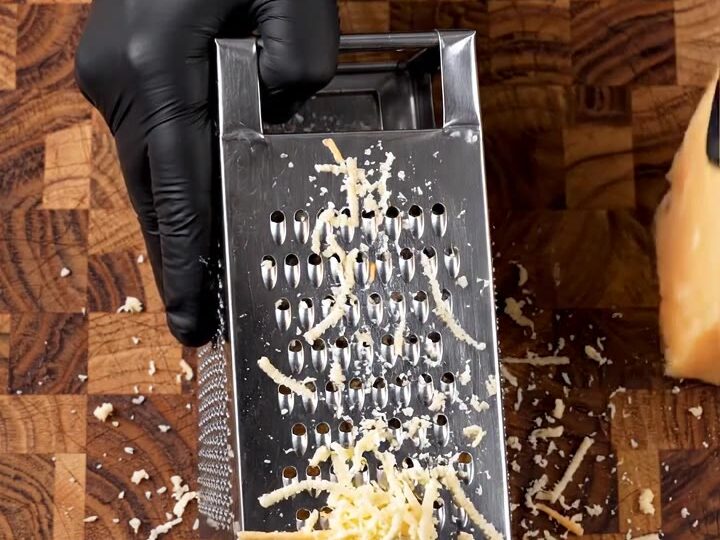
- Grate the ParmesanUsing a box grater, grate the wedge of Parmigiano-Reggiano into a fluffy pile. Measure out 1/2 cup for the sauce and any extra for garnish.Look for The cheese should be light and airy, not packed down.Tip Grate fresh from a wedge for the best melt and flavor.
The vegetables are diced, the salmon and shrimp are coated in a thick layer of Cajun seasoning, and the Parmesan is grated into a fluffy pile. The spices should look vibrant and cling to the protein. The kitchen starts to smell of paprika and garlic.
Sear and Sauce
- Sear the salmon and shrimpHeat a large cast iron skillet over medium-high heat. Add the butter and let it melt until foaming. Place the salmon fillets in the skillet, skin-side down if they have skin, and sear for 3-4 minutes until a dark crust forms. Flip the salmon and add the shrimp to the skillet. Cook the shrimp for 2-3 minutes per side until pink and opaque. Remove the shrimp to a plate and continue cooking the salmon until it reaches an internal temperature of 145°F (63°C), about 3-4 more minutes.Look for The salmon should have a deep brown crust and flake easily; the shrimp should be pink and curled.Safe temperature 145°F (63°C) internal temperature (fish)Tip Don't crowd the pan—cook in batches if needed to get a good sear.
- Make the cream saucePour the crawfish cream sauce into the skillet, scraping up any browned bits from the bottom. Bring to a simmer and let it thicken slightly, about 2 minutes. Stir in the grated Parmesan until melted and smooth.Look for The sauce should be creamy and slightly thickened, with the cheese fully melted.Tip Simmer gently to avoid curdling the cream.
- Return the shrimp to the skilletAdd the cooked shrimp back to the skillet, nestling them into the sauce. Spoon some of the sauce over the salmon fillets. Cook for another minute until everything is heated through.Look for The sauce should bubble gently around the shrimp and salmon.Safe temperature 145°F (63°C) internal temperature (shellfish)Tip Be careful not to overcook the shrimp—they should be just firm.
The salmon has a deep brown crust and flakes easily, the shrimp are pink and curled, and the sauce is bubbling with melted Parmesan. The aroma is rich with butter, cream, and spices. The sauce should be smooth and slightly thickened.
Finish and Serve
- Finish and serveSprinkle the chopped parsley over the salmon and shrimp. Lift a glistening, butter-basted piece of salmon onto a plate, spoon extra sauce and shrimp over the top, and serve immediately.Look for The parsley adds a fresh green contrast to the rich, dark sauce.Tip Serve with crusty bread or rice to soak up the sauce.
The parsley adds a fresh green contrast, and the sauce glistens on the salmon and shrimp. The dish looks vibrant and inviting, with the creamy sauce pooling around the seafood. Serve immediately to enjoy the best texture and flavor.
Common mistakes
One common mistake is overcrowding the skillet, which lowers the temperature and prevents a good sear.
Cook the salmon and shrimp in batches if necessary. Another pitfall is overcooking the shrimp—they cook quickly and become rubbery if left too long.
Also, be careful not to burn the Cajun seasoning; if the skillet gets too hot, reduce the heat slightly. Finally, make sure to grate the Parmesan fresh for the smoothest sauce.
How to tell it’s done
The salmon is done when it flakes easily with a fork and reaches an internal temperature of 145°F (63°C) in the thickest part. The shrimp should be pink and opaque, with no gray spots, and just firm to the touch.
The sauce should be thickened and coat the back of a spoon. If the sauce seems thin, let it simmer a little longer; if it's too thick, add a splash of broth or water.
- Fish: 145°F (63°C) in the thickest part
- Shellfish: 145°F (63°C) in the thickest part
Up next · Part 3 of 3
4 variations · storage & make-ahead · 5 answers · printable card
Tips, FAQ & printable recipe (Part 3)← Back to the ingredients (Part 1)