Dinner · Part 1 of 3: Ingredients
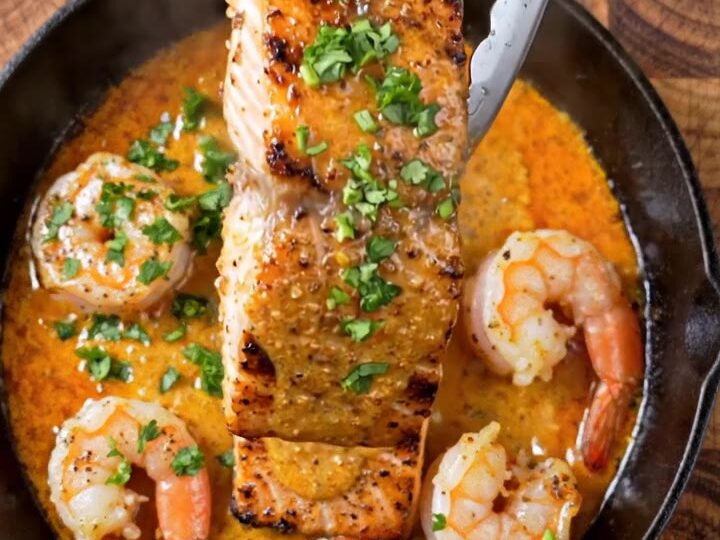
Cajun Blackened Salmon with Creamy Shrimp Skillet
- Prep
- Cook
- Total
- Serves
- 4
This Cajun blackened salmon with creamy shrimp skillet brings together two seafood favorites in one rich, spiced sauce. The salmon gets a dark, flavorful crust from a generous Cajun rub, while the shrimp turn pink and tender in the same pan.
A creamy crawfish sauce, finished with Parmesan, ties everything together with a silky texture and a gentle kick. It's a bold, satisfying dinner that feels special but comes together quickly, making it perfect for a weeknight or a casual weekend meal.
Blackening is a classic Cajun technique that gives fish a deeply browned, spicy crust. Here, salmon fillets are coated with Cajun seasoning and seared in a hot cast iron skillet until charred on the outside and flaky inside.
Shrimp join the pan for a quick cook, then everything is enveloped in a creamy sauce made with crawfish cream and Parmesan. The result is a one-skillet meal that's rich, savory, and full of Louisiana-inspired flavor. Serve it with rice, crusty bread, or a simple green salad.
Ingredients
- 1 cup diced bell peppers (about 1 medium)
- 1/2 cup diced celery (about 2 stalks)
- 4 salmon fillets (6 oz each)
- 1 lb large shrimp, peeled and deveined
- 2 tbsp Cajun seasoning
- 1/2 cup freshly grated Parmigiano-Reggiano cheese
- 1 1/2 cups rich spiced crawfish cream sauce
- 2 tbsp unsalted butter
- 2 tbsp chopped fresh parsley
Why this recipe works
The high heat of a cast iron skillet is essential for blackening. It creates a dark, flavorful crust on the salmon while keeping the interior moist and tender.
The Cajun seasoning forms a spicy, aromatic coating that infuses the fish as it sears, giving every bite a bold, peppery kick. Cooking the shrimp in the same pan picks up those browned bits, adding depth to the sauce.
The cream sauce is built on the fond left from searing, which carries the Cajun spices and seafood flavor. Simmering the crawfish cream sauce with Parmesan thickens it into a velvety, savory sauce that clings to the fish and shrimp.
The cheese adds a salty, nutty note that balances the heat, while the parsley brightens the dish at the end.
Notes and substitutions
Use a good-quality Cajun seasoning that includes paprika, garlic, onion, cayenne, and herbs. Adjust the amount to your heat preference—start with less if you're sensitive to spice. Freshly grated Parmigiano-Reggiano is key; pre-shredded cheese often contains anti-caking agents that prevent smooth melting.
A cast iron skillet is ideal for blackening because it retains high heat and distributes it evenly. If you don't have one, a heavy stainless steel skillet works. The crawfish cream sauce can be store-bought or homemade; if using a plain cream sauce, add extra Cajun seasoning to taste.
- Cajun seasoning: Use a store-bought Cajun rub or make a blend of paprika, garlic powder, onion powder, cayenne, oregano, and thyme.
- Crawfish cream sauce: If crawfish cream sauce is unavailable, substitute with a mixture of heavy cream and a splash of seafood stock, seasoned with Cajun spices.
- Parmigiano-Reggiano: Pecorino Romano or Grana Padano can be used for a similar salty, nutty flavor.
- Salmon fillets: Firm white fish like cod or halibut works well, but adjust cooking time as needed.
Equipment
- Box grater
- Large cast iron skillet
- Cutting board
- Chef's knife
- Measuring cups and spoons
- Spatula
- Tongs
Up next · Part 2 of 3
6 steps · 20 min of cooking · what to look for at each stage
Step-by-step instructions (Part 2)