Dinner · Part 2 of 3: Instructions
Cajun Blackened Salmon with Creamy Gulf Shrimp Skillet in One Pan Step-by-step instructions
- Prep
- Cook
- Total
- Serves
- 4
Before you start
Start by setting out every ingredient so the pace stays steady once the pan is hot. Pat the salmon fillets dry with paper towels, then season both sides generously with Cajun seasoning. Keep the fish refrigerated until you are ready to cook, and never leave it out for more than 30 minutes. Dice the red bell pepper, yellow bell pepper and celery finely so they cook evenly with the shrimp.
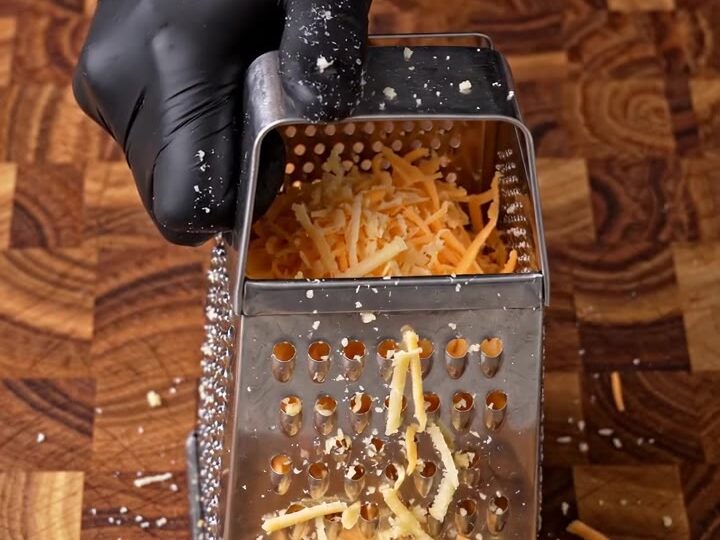
Set the peeled shrimp on a plate, grate the parmesan and cheddar over a box grater and keep both cheeses in a bowl nearby. Measure the heavy cream and have a wooden spoon, tongs and a plate ready for the salmon. Finally, turn on your kitchen ventilation, because cajun spices produce smoke in a hot pan and the fan will keep the room comfortable.
Ingredients at a glance (11)
- 4 thick salmon fillets, about 6 oz each, skin removed
- 2 tbsp Cajun seasoning, or more to taste
- 3 tbsp unsalted butter
- 1 lb peeled shrimp
- 1/2 cup finely diced red bell pepper
- 1/2 cup finely diced yellow bell pepper
- 1/2 cup finely diced celery
- 1 cup heavy cream
- 1/2 cup finely grated hard parmesan cheese
- 1/2 cup finely grated cheddar cheese
- fresh parsley, chopped, for serving
Instructions
Crust and sear the salmon
- Prepare the salmon and vegetablesPat the salmon fillets dry with paper towels. Season both sides generously with Cajun seasoning. Keep the fillets refrigerated until the pan is hot, and no longer than 30 minutes out of the fridge before cooking. Finely dice the red and yellow bell peppers and the celery.Look for Salmon is dry to the touch and evenly coated in a red-brown spice layer.Tip Dry fillets brown faster and build a darker, crisper blackened crust.
- Grate the cheesesSet a box grater over the cutting board and grate the hard parmesan and the cheddar. Let the shreds fall onto the board so they are ready to add to the sauce without delay. Keep the cheeses cold until they go into the pan.Look for Fine, fluffy shreds of both cheeses are piled on the board.Tip Grate the cheese straight from the block for better melting than pre-shredded.
The salmon should have a dark, almost black crust on both sides and opaque edges. The butter should smell toasty and spiced, not burnt. Check the thickest part of the fillet with a thermometer before moving on, aiming for 145°F (63°C). The fish should release easily from the pan when the crust is set. If the spices begin to burn, lower the heat slightly before cooking the shrimp, and do not wipe the pan, because the browned bits will flavor the cream sauce later.
Cook the shrimp and vegetables
- Blacken the salmonHeat the cast iron skillet over medium-high heat and melt the butter until foaming. Add the salmon and sear for about 4 minutes, until a dark, blackened crust forms. Flip carefully and sear the other side for 3 to 4 minutes, until the fish is cooked through.Look for The crust is deep brown and the edges of the fish turn opaque.Safe temperature 145°F (63°C) internal temperature (fish)Tip Keep the fan on and ventilate well, since the spices will smoke.
- Set the salmon asideTransfer the salmon fillets to a plate and tent them loosely with foil to keep warm. Leave the butter and browned spices in the skillet for the sauce. Do not wipe the pan clean.Look for Browned bits and spiced butter remain in the bottom of the pan.Tip Those browned bits add the deep flavor the sauce needs.
- Cook the shrimp and vegetablesAdd the shrimp, diced red and yellow bell peppers and celery to the buttery pan. Cook over medium-high heat, stirring, for 3 to 4 minutes, until the shrimp turn pink and the vegetables soften slightly. Remove the shrimp as soon as it is opaque.Look for Shrimp are pink and curled, and the peppers are tender.Safe temperature 145°F (63°C) internal temperature (shellfish)Tip Shrimp cook quickly, so watch them closely to avoid rubbery texture.
The shrimp should be pink, curled into C shapes and opaque throughout, and the peppers and celery should be softened but still hold their shape. You should smell sweet, aromatic vegetables in the buttery pan. Stir often so nothing sticks or scorches.
Remove the shrimp promptly once it turns opaque, since overcooked shrimp becomes firm and rubbery. Confirm the shrimp reaches 145°F (63°C) before the final simmer, and keep the heat moderate so the vegetables soften without browning.
Build the golden cream sauce
- Simmer the cream saucePour the heavy cream into the skillet and bring it to a gentle simmer. Cook for 3 to 4 minutes, stirring, until the sauce thickens and turns golden. Return the shrimp to the pan so it heats through.Look for The cream coats the back of a spoon and turns golden orange.Tip Keep the heat at a steady simmer so the cream does not scorch.
- Finish with cheese and parsleyStir in the grated parmesan until it melts into the sauce. Sprinkle the cheddar over the top and let it melt. Return the salmon to the center of the skillet, spooning sauce around it. Garnish with chopped parsley and serve from the skillet.Look for The sauce is smooth, glossy and clinging to the salmon.Tip Remove the pan from heat before adding parsley to keep it bright green.
The cream should be bubbling gently at the edges, reducing and thickening, and turning a warm golden orange from the spices and butter. A spoon dragged across the bottom of the skillet should leave a clear trail. Once the cheeses melt in, the sauce should look smooth, glossy and cling to the salmon and shrimp. If it looks thin after a few minutes, let it simmer a little longer, and if it looks grainy, lower the heat before stirring in more cheese.
Common mistakes
The most common error is a crowded or cool pan, which steams the salmon instead of blackening it. Preheat the skillet fully and cook in a single layer. Another frequent problem is overcooking the shrimp, which turns tough within moments, so add it only after the salmon is set aside and pull it as soon as it turns pink.
Boiling the cream vigorously can separate the sauce or scorch its milk solids, so keep a steady simmer. Adding the cheese over high heat can make it clump, so reduce the heat before stirring in the parmesan and cheddar. Finally, avoid pre-shredded cheese, which blocks smooth melting. Taste the sauce before serving and adjust the salt, since Cajun blends vary in strength.
How to tell it’s done
The salmon is done when the thickest part flakes easily with a fork and reaches 145°F (63°C) on an instant-read thermometer. The flesh should look opaque with a slightly translucent center if you prefer it medium. The shrimp is cooked when it is pink on the outside and opaque all the way through, and it also reaches 145°F (63°C).
The sauce is ready when it is thick enough to coat a spoon, golden in color and smooth without any grainy cheese. Serve the dish as soon as the sauce is glossy, because the cream continues to thicken as it cools. Keep the parsley for the final garnish so it stays fresh and green.
- Fish: 145°F (63°C) in the thickest part
- Shellfish: 145°F (63°C) in the thickest part
Up next · Part 3 of 3
4 variations · storage & make-ahead · 5 answers · printable card
Tips, FAQ & printable recipe (Part 3)← Back to the ingredients (Part 1)