Dinner · Part 2 of 3: Instructions
Butter-Basted Lobster Tails with Asparagus Step-by-step instructions
- Prep
- Cook
- Total
- Serves
- 2
Before you start
Before you start, make sure the lobster tails are thawed and patted dry. Split them in half lengthwise with a sharp chef's knife, cutting through the shell and meat. Trim the asparagus and set aside. Mince the garlic and chop the herbs.
Measure the butter and cut it into small pieces so it melts quickly. Have the Parmigiano-Reggiano grated and the lemon halved. Heat the cast iron skillet over medium-high heat for a few minutes until it's hot. Everything should be prepped and ready to go because the cooking goes fast.
Ingredients at a glance (9)
- 2 lobster tails (about 6 oz each), split in half lengthwise
- 1 bunch asparagus, trimmed
- 4 tbsp unsalted butter, cut into pieces
- 3 cloves garlic, minced
- 2 tbsp mixed fresh herbs (such as thyme, parsley, chives), chopped
- 1/4 cup freshly grated Parmigiano-Reggiano
- 1 lemon, halved
- kosher salt, to taste
- freshly ground black pepper, to taste
Instructions
Sear the Lobster and Asparagus
- Prepare the Skillet and ButterPlace a large cast iron skillet over medium-high heat and let it get hot. Pat the split lobster tails dry with paper towels and season the cut side with salt and pepper. Trim the asparagus and set aside. In a small bowl, combine the butter pieces, garlic, and chopped herbs.Look for The skillet is hot when a drop of water sizzles and evaporates immediately.Tip Splitting the tails in half lengthwise helps them cook quickly and evenly.
- Sear the Lobster and AsparagusAdd the butter mixture to the hot skillet. Once the butter foams, place the lobster tails cut-side down in the skillet and add the asparagus alongside. Sear for 2-3 minutes until the lobster meat begins to turn opaque and the asparagus is bright green.Look for The butter is foaming and the lobster is starting to color.Tip Don't overcrowd the pan; cook in batches if needed.
- Flip and Baste the LobsterFlip the lobster tails so the shell side is down and the meat faces up. Continue to cook, using a spoon to continuously baste the lobster meat with the foaming garlic herb butter. Cook for another 3-4 minutes, basting frequently, until the lobster meat is just opaque and reaches an internal temperature of 145°F (63°C).Look for The lobster meat is firm to the touch and the butter is golden and fragrant.Safe temperature 145°F (63°C) internal temperature (shellfish)Tip Basting keeps the meat moist and infuses it with flavor.
The butter is foaming, the lobster is starting to turn opaque and golden on the cut side, and the asparagus is bright green and sizzling. The kitchen smells of garlic and herbs.
The lobster should be just beginning to firm up. Check that the asparagus is not burning—reduce the heat if needed. The butter should be golden, not brown.
Add the Cheese and Char the Lemon
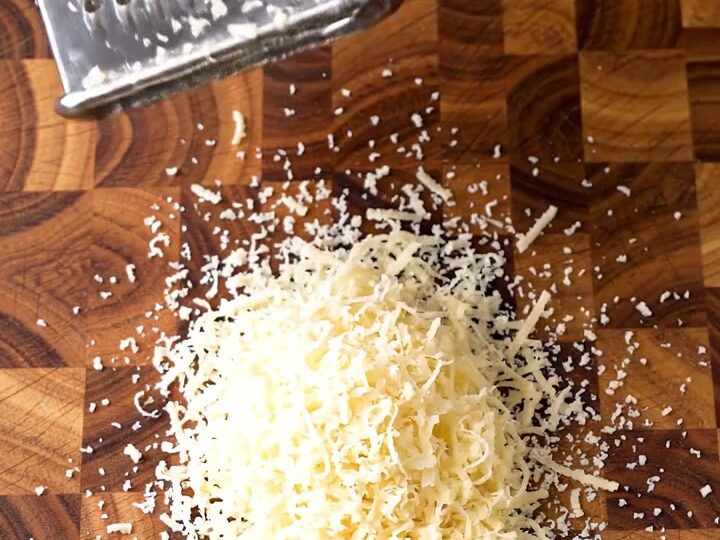
- Add the Parmigiano-ReggianoSprinkle the freshly grated Parmigiano-Reggiano evenly over the lobster meat and asparagus. Let it melt slightly, about 30 seconds. The cheese will form a golden crust on the lobster.Look for The cheese is melting and starting to brown slightly.Tip Use a fine grater for a light, even snowfall of cheese.
- Char the LemonPush the lemon halves cut-side down into the skillet, pressing gently. Let them char for 1-2 minutes until the cut surface is browned and the juice begins to sizzle.Look for The lemon is caramelized and the juice bubbles up.Tip Charring the lemon adds a smoky depth to the juice.
The Parmigiano-Reggiano has melted into a golden crust on the lobster and asparagus. The lemon halves are charred and their juice is bubbling in the pan. The lobster is fully opaque and firm. The butter is infused with cheese and lemon. The aroma is rich and savory with a bright citrus note.
Finish and Serve
- Finish and ServeSqueeze the charred lemon halves over the lobster and asparagus. Use tongs to transfer the lobster tails and asparagus to a serving platter. Spoon any remaining butter and juices from the skillet over the top. Serve immediately.Look for The dish is glossy with butter and lemon, with a hint of char.Tip Serve right away while the lobster is hot and the butter is liquid.
The lobster and asparagus are glossy with butter and cheese, and the charred lemon juice has brightened the dish. The lobster is tender and juicy, the asparagus is crisp-tender. The platter is ready to serve, with extra butter spooned over the top. The dish looks and smells like a celebration.
Common mistakes
One common mistake is overcooking the lobster, which turns it rubbery. Keep a close eye on it and use a thermometer if you're unsure. Another is overcrowding the skillet—if the pan is too full, the lobster will steam instead of sear. Cook in batches if needed.
Also, don't skip patting the lobster dry; moisture will prevent a good sear. Finally, don't add the cheese too early or it will burn; it only needs a few seconds to melt. And be careful with the hot butter—it splatters, so use tongs and a long spoon for basting.
How to tell it’s done
The lobster is done when the meat is opaque and firm to the touch, and an instant-read thermometer inserted into the thickest part registers 145°F (63°C). The asparagus should be crisp-tender—bright green and easily pierced with a fork but still with a slight bite.
The butter should be foamy and golden, the cheese melted and lightly browned. The lemon should be charred on the cut side and juicy. If the lobster is cooked through but the asparagus needs more time, remove the lobster and continue cooking the asparagus briefly.
- Shellfish: 145°F (63°C) in the thickest part
Up next · Part 3 of 3
4 variations · storage & make-ahead · 5 answers · printable card
Tips, FAQ & printable recipe (Part 3)← Back to the ingredients (Part 1)