Dinner · Part 2 of 3: Instructions
Brown Sugar Honey Hickory Spare Ribs: Easy Slow Cooker Dinner Step-by-step instructions
- Prep
- Cook
- Total
- Serves
- 6
Before you start
Before you start, make sure your slow cooker is clean and ready to use. There is no need to brown the ribs first; the slow cooker does all the work. If you have time, you can remove the thin membrane from the back of the ribs for even more tender results, but it's optional.
Have your brown sugar, smoked paprika, onions, and barbecue sauce measured and ready to go. This recipe is truly dump-and-go, so you can have everything in the slow cooker in less than ten minutes.
Ingredients at a glance (5)
- 4 lb St. Louis style pork spare ribs
- 1/2 cup dark brown sugar
- 2 tbsp smoked paprika
- 2 medium yellow onions, sliced
- 1 1/2 cups honey hickory barbecue sauce
Instructions
Season and Sauce
- Season the RibsPlace the St. Louis style pork spare ribs in the slow cooker insert. Sprinkle the dark brown sugar and smoked paprika evenly over the ribs, using your hands to rub the mixture into the meat on all sides. Scatter the sliced yellow onions over the top.Look for The ribs are coated with a thick brown sugar rub and topped with onion slices.Tip Remove the membrane from the back of the ribs for more tender results, if desired.
- Add the Barbecue SaucePour the honey hickory barbecue sauce generously over the entire surface of the ribs, spreading it to cover the meat and onions evenly. The sauce should pool slightly around the ribs.Look for The ribs are completely covered in a thick, glossy layer of barbecue sauce.Tip No need to stir; the slow cooker will blend the flavors as it cooks.
At this point, the ribs are coated in a thick, sweet-smelling brown sugar rub and topped with raw onions and a generous layer of barbecue sauce. The slow cooker is full of vibrant color and promise. The onions are still crisp, and the sauce is glossy. This stage takes just a few minutes, but it sets the foundation for the rich, caramelized flavors to come.
Slow Cook to Perfection
- Slow Cook on LowCover the slow cooker and cook on low for 8 hours, or until the ribs are fork-tender and the meat easily pulls away from the bone. The sauce will bubble gently and the onions will caramelize. Let it rest for 3 minutes before slicing.Look for The sauce is bubbling around the edges and the meat is starting to shrink from the bones.Safe temperature 145°F (63°C) internal temperature (steaks, chops and roasts)Tip Avoid lifting the lid during cooking to maintain a steady temperature.
After 8 hours on low, the kitchen will be filled with the irresistible aroma of barbecue. The sauce is bubbling gently around the edges, and the ribs have visibly shrunk from the bones.
The onions have melted into the sauce, and the meat is so tender that it nearly falls apart when touched with a fork. The sauce has thickened and darkened, clinging to the meat in a sticky glaze.
Rest and Serve
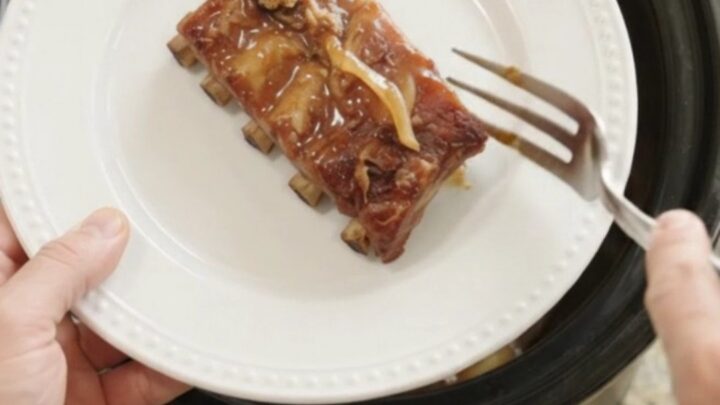
- Rest and ServeTurn off the slow cooker. Using a fork, carefully transfer the ribs to a clean cutting board or serving plate. Let the meat rest for at least 3 minutes before serving. Spoon some of the caramelized onions and sauce from the slow cooker over the ribs.Look for The ribs are glistening and the meat is pulling away from the bone easily.Safe temperature 145°F (63°C) internal temperature (steaks, chops and roasts)Tip Resting helps the juices redistribute, making the meat even more tender.
The ribs have rested and are ready to serve. They are glistening with a thick, caramelized sauce, and the meat is pulling away from the bones with ease. The onions are soft and sweet, and the sauce has a deep, smoky-sweet flavor. The ribs are so tender that they practically melt in your mouth. Serve them hot, with extra sauce spooned over the top.
Common mistakes
One common mistake is lifting the lid to check on the ribs during cooking. This releases heat and can extend the cooking time. Trust the process and keep the lid on. Another mistake is using a barbecue sauce that is too thin, which can result in a watery sauce.
Look for a thick, high-quality sauce. Also, don't skip the rest time after cooking; letting the ribs rest for at least 3 minutes helps the juices redistribute, making the meat even more tender. Finally, be careful not to overcook the ribs, as they can become mushy if left too long.
How to tell it’s done
The ribs are done when the meat is fork-tender and easily pulls away from the bone. You can test this by inserting a fork into the thickest part of the meat—it should slide in with no resistance.
The internal temperature of the meat should reach at least 145°F (63°C) for food safety, but because it cooks for so long, it will likely be much higher, which is fine. The sauce should be thickened and clinging to the ribs, and the onions should be soft and caramelized.
- Steaks, chops and roasts: 145°F (63°C) in the thickest part, then a 3-minute rest
Up next · Part 3 of 3
4 variations · storage & make-ahead · 5 answers · printable card
Tips, FAQ & printable recipe (Part 3)← Back to the ingredients (Part 1)