Dinner · Part 1 of 3: Ingredients
Brown Sugar Honey Hickory Spare Ribs: Easy Slow Cooker Dinner
- Prep
- Cook
- Total
- Serves
- 6
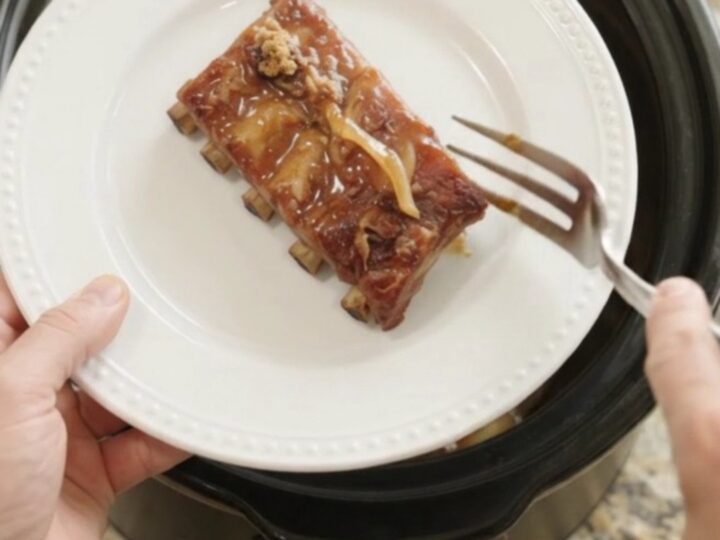
These Brown Sugar Honey Hickory Spare Ribs are the ultimate set-it-and-forget-it dinner. You simply place the ribs in the slow cooker, sprinkle on a sweet brown sugar rub, pile on sliced onions, and pour over a generous amount of honey hickory barbecue sauce. Then you walk away for eight hours. When you come back, the meat is so tender it falls off the bone, and the sauce has transformed into a thick, caramelized glaze.
Slow cooker ribs are a game-changer for busy home cooks. This recipe uses St. Louis style spare ribs, which are meaty and rich, and pairs them with a simple brown sugar and smoked paprika rub. The onions add sweetness and depth as they slowly caramelize in the sauce.
The honey hickory barbecue sauce brings a perfect balance of sweet and smoky flavors. After hours of gentle cooking, the ribs become incredibly tender, and the sauce reduces into a sticky glaze that coats every bite. Serve these ribs straight from the slow cooker for a crowd-pleasing meal that feels indulgent but couldn't be easier.
Ingredients
- 4 lb St. Louis style pork spare ribs
- 1/2 cup dark brown sugar
- 2 tbsp smoked paprika
- 2 medium yellow onions, sliced
- 1 1/2 cups honey hickory barbecue sauce
Why this recipe works
The slow cooker works magic on tough cuts like spare ribs. The low, steady heat breaks down the connective tissue over several hours, turning the meat into a fork-tender, pull-apart delight. Because the ribs are submerged in a flavorful liquid, they stay moist and absorb the sweet and smoky notes of the rub and sauce. This method requires zero babysitting, making it perfect for busy days when you want dinner to be ready without any fuss.
The combination of brown sugar, smoked paprika, and honey hickory barbecue sauce creates a deeply caramelized, sweet-tangy glaze. The sugar in the rub and sauce helps the ribs develop a beautiful color and a sticky texture as it cooks down.
The onions, which are added raw, slowly melt into the sauce, adding a subtle savory sweetness that balances the richness of the pork. The result is a dish that tastes like it simmered all day, because it did.
Notes and substitutions
St. Louis style spare ribs are the best choice for this recipe because they are meaty and have a good amount of fat, which keeps them moist during the long cooking time. If you can only find baby back ribs, they will work too, but reduce the cooking time to 6–7 hours to prevent them from becoming too soft.
For the rub, dark brown sugar has a deeper molasses flavor than light brown sugar, but either will work. Smoked paprika adds a layer of smokiness that complements the barbecue sauce.
Honey hickory barbecue sauce is widely available in most supermarkets. Look for one that lists honey and hickory smoke as primary flavors. If you prefer a spicier sauce, you can use a spicy barbecue sauce or add a pinch of cayenne to the rub.
This recipe is very forgiving, so feel free to adjust the amount of sauce to your liking. You can also add a splash of apple cider vinegar to the slow cooker for extra tang, but it's not necessary.
- St. Louis style spare ribs: Baby back ribs can be used; reduce cook time to 6-7 hours on low.
- honey hickory barbecue sauce: Any sweet and smoky barbecue sauce works, such as a brown sugar or honey BBQ variety.
- smoked paprika: Regular paprika plus a pinch of liquid smoke can mimic the smoky flavor.
Equipment
- 6-quart slow cooker
- Mixing bowl
- Cutting board
- Chef's knife
- Serving plate
Up next · Part 2 of 3
4 steps · 8 h of cooking · what to look for at each stage
Step-by-step instructions (Part 2)