Dinner · Part 1 of 3: Ingredients
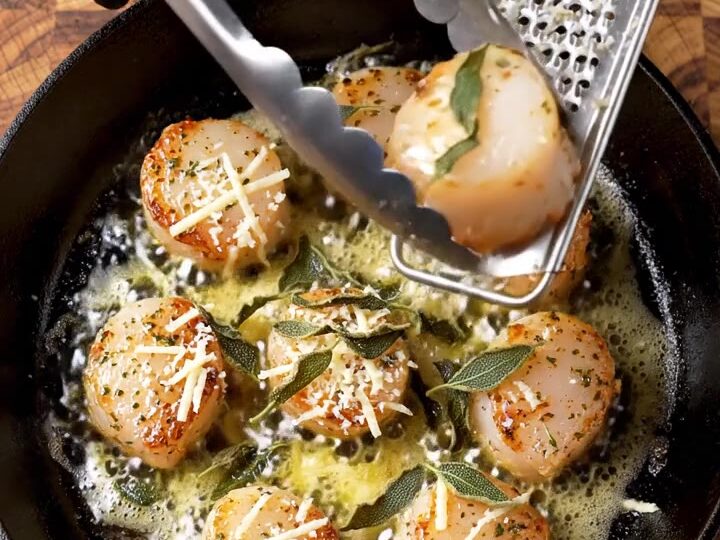
Brown Butter Seared Scallops with Butternut Squash and Crispy Sage
- Prep
- Cook
- Total
- Serves
- 2
Scallops are one of the fastest proteins you can cook, and this skillet version turns them into something special. Butter foams, then turns nutty and brown, carrying sweet caramelized squash and crisp sage leaves. A handful of grated hard cheese finishes it, and the whole dinner comes together in one pan in under forty minutes.
This dish brings together a deep golden scallop crust, caramelized butternut squash and crispy sage in glossy brown butter. It is a restaurant-style dinner that depends on heat control and timing rather than long preparation. Dry the scallops well, cut the squash into small even cubes, and have the sage ready before the pan goes on the heat.
Once the cooking starts, the sequence moves quickly, so the work is in staying alert and spooning the butter over the food. The result is a plate with contrasting textures: a crisp, browned exterior on the scallops, soft and sweet squash, and brittle sage that shatters against the tender shellfish. A final shower of finely grated hard cheese melts slightly into the warm butter and adds a savory, salty finish that ties the components together.
Ingredients
- 12 oz large sea scallops, patted very dry
- 1 cup butternut squash, diced into small cubes
- 8 fresh sage leaves
- 3 tbsp unsalted butter
- kosher salt, to taste
- freshly ground black pepper, to taste
Finish
- 1/4 cup finely grated hard cheese, such as Parmesan
Why this recipe works
The method works because scallops need a hot, dry surface to form a crust. Patting them dry removes surface moisture that would otherwise steam the scallops and keep them pale. Searing them in a single layer, with space between each one, lets the heat concentrate on the bottom of each scallop so that it browns deeply without overcooking the center. The squash cubes share the same skillet, so they absorb the butter and pick up its nutty flavor while they soften and caramelize against the hot cast iron.
Browning butter is the key flavor step in this recipe. Butter is mostly water and milk solids, and as the water evaporates the milk solids toast and turn amber, producing a rich, nutty aroma. Adding sage leaves to the foaming butter lets their oils infuse into the fat while the leaves crisp at the edges.
Spooning the butter over the scallops continuously basts them and distributes the flavor evenly, which is why the process is repeated rather than done once. The grated cheese goes in last, so it melts gently instead of burning in the hot pan.
Notes and substitutions
Sea scallops are the right choice for this dish. Look for large dry-packed scallops, which have no added water and sear to a much deeper golden color than wet-packed ones. The size matters, because larger scallops keep their centers tender while the outside browns.
Thaw frozen scallops completely in the refrigerator and dry them thoroughly before seasoning, since any moisture left in the flesh will prevent a good crust from forming. The butternut squash should be cut into small cubes so that it cooks through in roughly the same time the scallops take to sear, and so each piece gets plenty of contact with the butter.
A 12-inch cast iron skillet is the best piece of equipment here, because it holds heat evenly and gives the scallops a consistent crust across the bottom. A stainless steel pan works too, though the butter may brown a little less evenly.
You will also need a sharp chef's knife and a wooden cutting board for the squash and sage, a fine grater for the cheese, and a fish spatula or tongs to turn the scallops without tearing their crust. Paper towels are essential for drying the scallops and the sage. Keep the cheese finely grated so it melts quickly against the warm butter rather than sitting in clumps on top of the scallops.
- Sea scallops: Large dry-packed diver scallops, which sear to a deeper golden color
- Butternut squash: Peeled acorn squash or sweet potato cubes, cooked for the same time
- Hard cheese: Aged Pecorino Romano, which is saltier and sharper
Equipment
- 12-inch cast iron skillet
- Wooden cutting board
- Chef's knife
- Fine grater
- Fish spatula or tongs
- Paper towels
Up next · Part 2 of 3
7 steps · 15 min of cooking · what to look for at each stage
Step-by-step instructions (Part 2)